
Home Organization: Everything You Need to Know to Get Started and Stay on Track
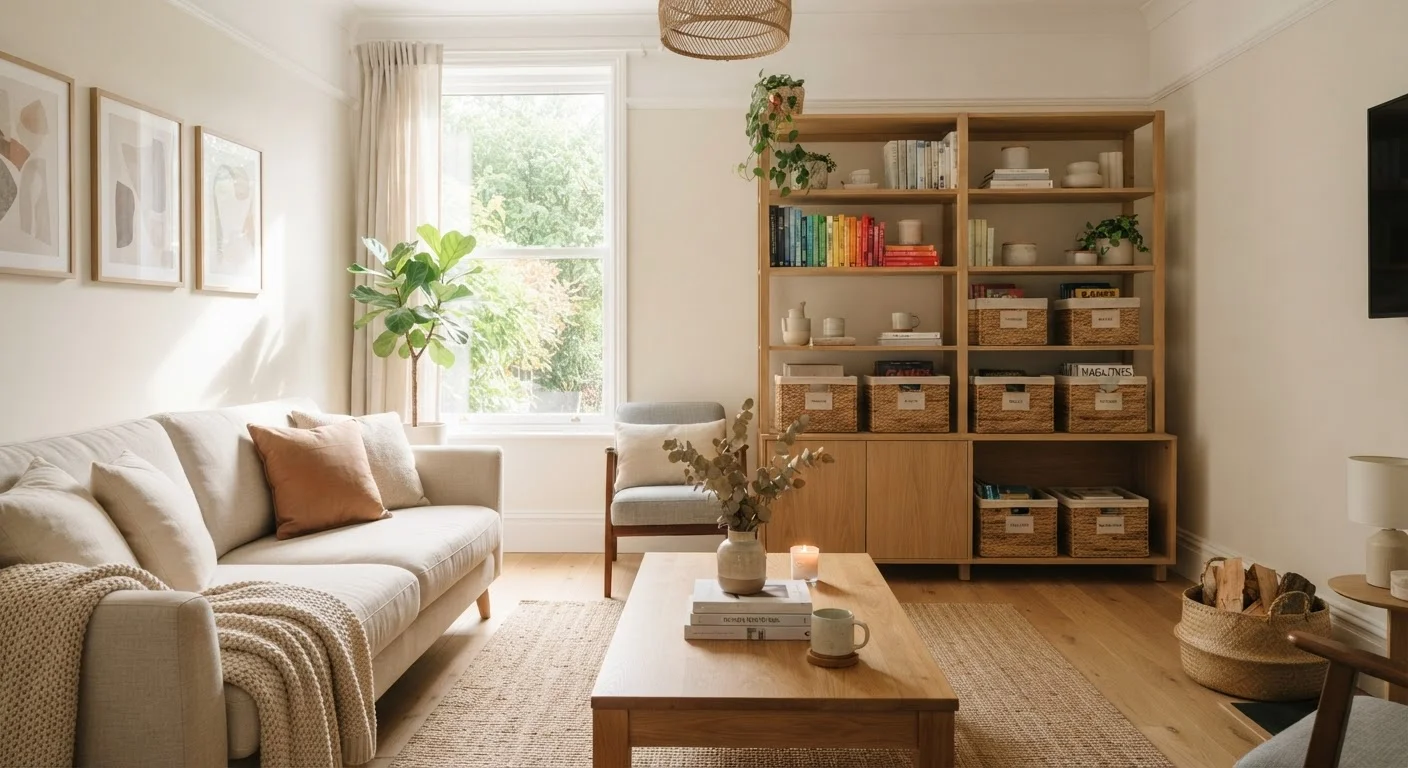
Photo credit: SearchLynk.net | Search Made Easier
In this article
From first declutter to long-term maintenance, this end-to-end guide covers the principles, room-by-room tactics, and mindset shifts that make organization stick.
Key Takeaways
- Decluttering always comes before organizing - containers won't fix too much stuff.
- Zone-based systems help every household member know where things belong.
- Room-by-room progress is often more sustainable than whole-home overhauls.
- Maintenance habits - not one-time purges - are what keep spaces functional long term.
- Shared homes require agreed-upon standards, not perfection from everyone.
Why Home Organization Matters Beyond Aesthetics
A disorganized home isn't just visually cluttered - it creates friction in daily life. Misplaced keys, overstuffed drawers, and counters buried under mail all add small but real cognitive burdens each day. Research in environmental psychology suggests that cluttered environments are associated with elevated stress and difficulty focusing, though individual responses vary considerably.
Getting organized isn't about achieving a magazine-worthy interior. It's about creating a home that works with you - where you spend less time searching and more time doing. When your space supports your routines rather than fighting them, even small organizational wins can make daily life noticeably calmer. For a broader look at how your environment connects to stress levels, see our stress management guide.
1 in 4
Americans with a clutter problem in their home
According to a survey by the National Association of Professional Organizers, roughly one in four American adults say clutter is a significant problem in their home.
~40%
Of housework time linked to disorganization
The National Soap and Detergent Association has estimated that eliminating clutter could reduce the time spent on household tasks by a meaningful margin, though exact figures vary by study.
The Foundation: Decluttering Before You Organize
The most common organizing mistake is buying storage solutions before deciding what to keep. Bins, baskets, and shelving units are only useful once you know how much you actually own and what belongs in your home. Organizing clutter just gives it a tidier hiding spot.
The decluttering step means sorting every item in a space into one of three categories: keep, donate/sell, or discard. Be honest about what you actually use. A useful rule of thumb: if you wouldn't buy it again today, it's a candidate for removal.
One of the biggest decisions is whether to tackle your whole home at once or proceed one room at a time. Both approaches have merit depending on your schedule, energy, and household size. Our article decluttering all at once vs. room by room walks through the trade-offs of each method in detail.
Start your declutter session with a timer set for 20 minutes and one single drawer or shelf. Finishing a small zone completely feels far more motivating than stalling on where to begin in a whole room.
Completing a contained task creates a sense of accomplishment that builds momentum - a well-documented effect in behavioral psychology sometimes called the 'progress principle.'
When deciding whether to keep an item, ask 'Where will this live?' rather than 'Do I like this?' If you can't name a specific home for it in your space, that's a strong signal it doesn't belong.
Items without designated storage locations are the primary source of surface clutter. Decision-making grounded in spatial reality is more actionable than emotional attachment alone.
Room-by-Room Organization Strategies
Once you've decluttered a space, the organizing work begins. Each room in your home has distinct function requirements, which should drive how you structure storage.
Kitchen
Group items by task: prep tools near the cutting board, baking supplies together, everyday dishes within easy reach. Clear countertops reduce visual noise and speed up cooking. If your kitchen feels chaotic from the start, our kitchen organization walkthrough provides a step-by-step beginner approach.
Living Areas
Designate a home for every category of item - remotes, books, blankets, chargers. Use closed storage for items you want out of sight, and open shelving only for things you're comfortable displaying.
Bedrooms
Keep surfaces clear as a general goal. Drawers and closets work best when organized by category (tops together, bottoms together) rather than by outfit, which makes getting dressed faster.
Paper and Documents
Paper clutter is notoriously stubborn. A simple system - inbox tray, an action folder, and a filing spot - handles most of the flow. Our paper clutter room-by-room plan covers bills, mail, and documents in detail.
Building Systems That Actually Stick
The difference between an organized home and a repeatedly re-organized one is systems. A system is any reliable, repeatable method for handling a category of items - from where incoming mail lands to how groceries get put away.
Effective systems share a few qualities:
- Every item has a designated home. If something doesn't have a place, it becomes clutter by default.
- The system fits real behavior. If everyone in your household drops keys by the door, put a hook by the door - don't fight the habit, channel it.
- Maintenance is low-effort. A system that takes five minutes to maintain is far more durable than one requiring thirty.
Before investing in storage products, sketch out what zones each room needs and what volume of items each zone must hold. This prevents over-buying containers you don't need.
Label Everything - Even If It Feels Obvious
Labels on bins, baskets, and drawers are one of the highest-return investments in any organizational system. They remove the cognitive work of remembering where things go, and they make it far easier for other household members - including kids - to maintain the system without prompting. Even simple handwritten labels work well.
Maintaining Order Over Time
Even a well-organized home will drift back toward disorder without maintenance habits. The goal isn't a one-time transformation - it's a set of small, regular actions that reset your space.
Consider building these lightweight habits:
- Daily reset (5-10 minutes): Return items to their homes before bed. This prevents accumulation from becoming overwhelming.
- Weekly pass: During a routine cleaning, check each room for anything out of place or categories that are overflowing.
- Seasonal review: A few times a year, reassess whether your systems still match your life. Households change - organization should adapt.
Use our full home organization audit to walk through each room and identify where friction is building before it becomes a problem.
Organizing in a Shared Household
Organization becomes more complex when multiple people share a space - especially when those people have different clutter tolerances or habits. Imposing a rigid system on a household member who doesn't share your standards usually leads to conflict without lasting results.
Practical approaches for shared homes include agreeing on a minimum standard for shared areas (like kitchen counters and the entryway) while allowing more personal latitude in private spaces. Visible, labeled storage reduces the learning curve for everyone. Our article on organizing shared spaces with different standards offers targeted strategies for navigating these dynamics.
Finally, remember that home organization is an ongoing practice rather than a destination. A home that functions well for the people in it - even if it's not perfectly tidy - is the real goal. Start with one room, build one system, and let that success inform the next step.

Author
Home & Garden Editorial Team
Home & Garden Editorial Team is the collective byline for our editorial team and contributor network. Articles published under this byline or an editorial pen name are researched, written, and reviewed according to our editorial standards for clarity, consistency, and independence before publication.
View all articles →