
Paper Clutter: A Room-by-Room Plan for Taming Bills, Mail, and Documents
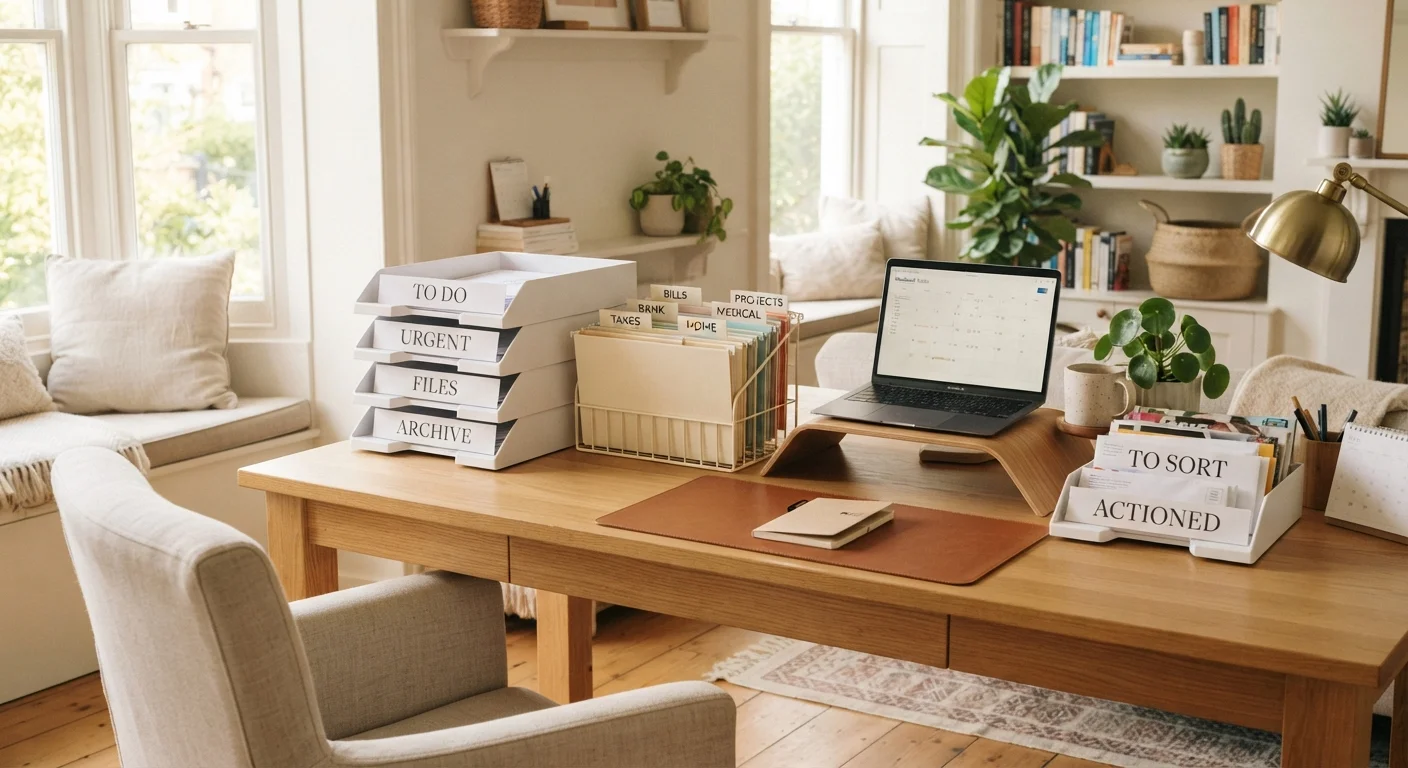
Photo credit: SearchLynk.net | Search Made Easier
In this article
Paper piles up fast and resists most generic organizing advice. Here's a practical plan for dealing with mail, files, and documents in every part of your home.
Key Takeaways
- Paper clutter grows fastest without a dedicated landing zone for incoming mail.
- Each room in your home has distinct paper management needs that call for tailored solutions.
- A simple triage system - act, file, or shred - handles most incoming paper effectively.
- Going paperless for bills and statements significantly reduces the volume to manage.
- Regular 10-minute weekly maintenance prevents piles from rebuilding after an initial sort.
Why Paper Clutter Is a Special Problem
Paper doesn't behave like other clutter. It arrives daily, carries emotional weight (think tax documents and medical bills), and hides in plain sight once it stacks up. Generic decluttering advice often falls short because it treats paper like old clothing or unused gadgets - but paper requires a processing system, not just a storage solution.
The core issue is usually a missing first-touch decision: mail comes in, gets set down "for a moment," and joins a pile that grows for months. The fix is to build intentional habits into the rooms where paper actually accumulates - not just your home office.
If you're also working with limited square footage, the storage strategies for compact homes guide offers complementary ideas for keeping surfaces clear without sacrificing function.
The One-Touch Rule Saves the Most Time
Every time you pick up a piece of paper, make a decision about it - act, file, or discard. Setting it down to decide later is how piles form. The one-touch habit is simple in concept but requires deliberate practice in the first few weeks until it becomes automatic.
Setting Up Your System: Tools and Triage
Before you tackle each room, establish a simple three-category triage rule for every piece of paper you touch:
- Act: Requires a response or payment within 30 days. Goes into an "action" folder or tray.
- File: Worth keeping for reference - tax records, warranties, medical summaries. Goes into a labeled file system.
- Shred or recycle: Junk mail, outdated statements, duplicates. Leaves your home immediately.
Making this decision at first touch - rather than setting paper down to decide later - is the single most effective habit change you can make.
What you will need
To understand how different household members interact with clutter differently, the organizing a shared home guide can help you build a system everyone will actually use.
Room-by-Room Plan
Entryway or Front Door Area
This is ground zero for mail. Place a small wall-mounted sorter or tray near the entry point with three slots: Action, File Later, and Recycle. Open every piece of mail at the door. Junk mail goes directly into the recycling bin - never deeper into the house.
Kitchen
Kitchens accumulate school notices, takeout menus, grocery lists, and coupons. Designate one drawer or a slim folder on the counter for active papers only. Cull it weekly. Anything not acted on within two weeks is either filed or discarded.
Home Office or Desk Area
This is your filing hub. Use a two-drawer file cabinet or a set of hanging folders labeled by category: Taxes, Insurance, Medical, Home, Financial Accounts, Vehicle. Keep an inbox tray for unprocessed paper and commit to clearing it once a week. For financial records especially, knowing what to keep matters - a budgeting basics resource can clarify which statements are worth archiving.
Bedroom
Bedrooms gather reading material, receipts, and miscellaneous notes. A small beside caddy or single drawer is enough. Set a rule: nothing paper-related stays on top of the dresser or nightstand longer than one week.
Children's Spaces
School papers, artwork, and permission slips need their own mini-system. A two-pocket folder per child - one for action items, one for keepsakes - works well. Review it weekly with your child and photograph artwork before recycling originals if you'd like to preserve memories without the bulk.
Gather all paper in your home into one place
Do a full sweep - every room, drawer, and surface. Bring everything to one table. This reveals the true scope of the problem and prevents you from creating a system around only the paper you remember having.
Sort into three categories: Act, File, or Shred
Work through the pile using the triage rule. Place each item in one of three physical groups. Don't read documents in depth - glance, decide, move on. Aim for speed at this stage; perfectionism slows the process significantly.
Set up a filing structure for keepers
Label hanging folders or a binder by broad category: Taxes, Insurance, Medical, Home & Utilities, Financial Accounts, Vehicle, and Miscellaneous. File all "keep" documents now. Resist creating too many subcategories - simplicity makes the system easier to maintain.
Create action stations in each key room
Place a small tray, folder, or sorter at each paper-accumulation point: entryway, kitchen, and desk. Label them clearly. Each station should hold only active, current-week items - not archives.
Opt into paperless billing and statements
Log into your accounts for utilities, banks, credit cards, and insurance and switch to electronic delivery where available. This removes a significant portion of incoming paper before it ever reaches your door.
Schedule a weekly 10-minute paper reset
Pick a consistent day - Sunday evening or Monday morning work well - to process action items, file anything that accumulated during the week, and clear all room stations back to empty. This weekly reset is what prevents the system from reverting to piles.
Maintaining the System Over Time
An initial sort is only the beginning. Without regular upkeep, paper will rebuild itself within weeks. A sustainable maintenance routine looks like this:
- Daily (2 minutes): Open mail at the entry, triage immediately, place into the right slot.
- Weekly (10 minutes): Move action items from entry to desk, pay or respond to due items, file the "File Later" pile.
- Annually (30-60 minutes): Purge old files. Most financial records can be discarded after 3-7 years depending on type; consult a tax professional for guidance specific to your situation.
Going paperless wherever possible dramatically reduces volume. Most utilities, banks, and insurers offer electronic statements - opting in removes a large category of mail entirely.
For a broader look at how your paper system fits into overall home organization, consider working through a full home organization audit to identify other friction points room by room. And if you're deciding whether to tackle your whole home at once or focus one space at a time, this comparison of decluttering approaches can help you choose the right pace.

Author
Home & Garden Editorial Team
Home & Garden Editorial Team is the collective byline for our editorial team and contributor network. Articles published under this byline or an editorial pen name are researched, written, and reviewed according to our editorial standards for clarity, consistency, and independence before publication.
View all articles →