
Shared Spaces, Different Standards: Organizing a Home When Everyone Has Different Habits
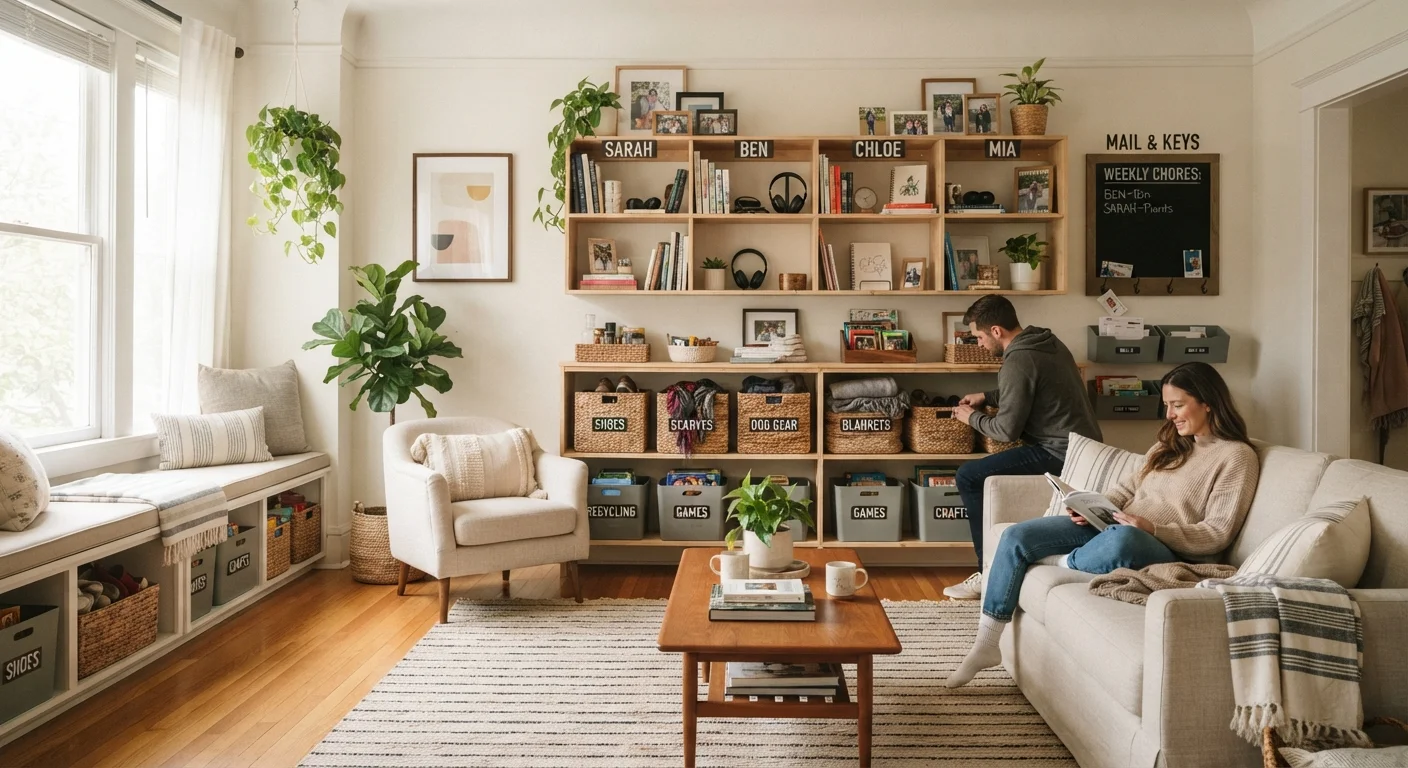
Photo credit: SearchLynk.net | Search Made Easier
In this article
When people in the same household have different clutter tolerances, conflict is common. These strategies help build systems everyone can realistically stick to.
Key Takeaways
- Shared homes work better when organization systems are designed around everyone's actual habits, not just one person's standards.
- Defining personal zones within shared spaces reduces friction without requiring uniform tidiness levels from all household members.
- Simple, low-effort systems are more likely to be maintained consistently by people with different clutter tolerances.
- Regular, brief household check-ins keep shared spaces functional without turning organization into a source of conflict.
- Visible and hidden storage choices can be tailored to match the habits of different household members in the same room.
Why One Person's 'Clean' Is Another's 'Chaos'
Every household has at least one person who views a clear counter as essential to calm, and at least one who considers a few items left out to be perfectly fine. Neither perspective is wrong - clutter tolerance varies widely from person to person, shaped by upbringing, personality, and daily routine. The problem is that most home organization systems are designed by one person, for one standard, and then imposed on everyone else.
When systems don't account for different habits, they tend to collapse. The tidier person grows resentful; the less tidy person feels perpetually criticized. Understanding that this tension is structural - not a character flaw on either side - is the starting point for building something that actually works. For a broader foundation on how organization systems succeed or fail, see our end-to-end home organization guide.
Best Practices for Organizing a Shared Home
The following approaches are grounded in what consistently works when households contain people with genuinely different standards - not just slightly different preferences, but meaningfully different tolerances for visual clutter, different natural tidying rhythms, and different ideas about what counts as "done."
Negotiate shared standards for common areas only, and leave personal spaces to each person's own preference.
Trying to enforce one tidiness standard across the entire home creates ongoing conflict and resentment. Limiting shared expectations to genuinely shared spaces - the kitchen, living room, bathroom - makes agreements more achievable and respects individual autonomy.
Design systems around the least-structured person's natural behavior, then add options for those who want more order.
A system that requires the messiest household member to take the most steps is the first to fail. Building the baseline around the path of least resistance for everyone - then layering on additional structure for those who want it - means the floor stays functional even on the hardest days.
Use visual boundaries to define personal zones within shared rooms.
When everyone knows which physical space is "theirs" in a shared room, the tidier household member isn't responsible for the whole space, and the less tidy person isn't being judged for using their zone as they choose. This reduces the sense that one person is constantly policing another.
Make the tidy choice the easy choice by reducing the number of steps required to put things away.
Most clutter accumulates not because people are lazy, but because the storage solution requires more effort than leaving something out. Removing lids from bins, placing hooks near where items are naturally dropped, and keeping storage physically close to where things are used all lower the barrier significantly.
Agree on a shared reset routine rather than ongoing tidiness expectations.
Expecting all household members to maintain a particular standard throughout the day is unrealistic for most people. Agreeing on a specific daily or weekly reset - a short period when everyone tidies shared spaces - sets a clear, bounded expectation rather than an ambient, unspoken one.
Choose storage solutions that work with visible and hidden storage preferences simultaneously.
Some people feel calmer when everything is out of sight; others need to see their belongings to remember them and feel comfortable. A shared space can accommodate both by using closed storage for communal items and open storage or trays for items belonging to people who prefer visibility.
Quick Actions You Can Take This Week
You don't need to redesign your entire home to start reducing conflict over clutter. These focused actions can shift how your shared space functions almost immediately.
For households navigating tight square footage on top of different habits, the strategies in our guide to storage in small homes and apartments offer practical ways to build flexibility into limited space.
Shared Spaces With Kids in the Mix
Children add another layer of complexity, because their organizational capabilities change rapidly with age. A system that works for a ten-year-old won't suit a five-year-old, and adult-designed systems often fail entirely in children's spaces because they don't match how kids think or move through a room.
Children's Organization Needs Are Developmentally Different
Young children cannot be expected to maintain the same organizational systems as adults, and systems that work for older kids often don't suit younger ones. Bins with pictures instead of words, fewer categories, and storage at child height are all adjustments that make genuine participation possible. Expecting children to use adult systems without modification usually results in adults doing all the resetting.
If children are part of your household, consider reading our guide on building organization systems kids can actually maintain before extending your household system into their rooms. Matching the system to the child's developmental stage reduces the burden on adults to constantly re-tidy those spaces.
In shared common areas, designate a clearly marked "drop zone" - a basket, bin, or shelf - where kids can put their things when they come in. This gives them a low-effort path to participation that doesn't require them to navigate a complex adult system.
Maintaining the System Without Constant Conflict
Even well-designed systems drift over time. Schedules change, new items enter the home, and habits that once felt easy start to slip. A brief monthly check-in - fifteen minutes or less - where household members can flag what isn't working prevents small friction points from becoming entrenched resentment.
Framing these conversations around the system, not individual behavior, keeps them productive. "The entryway shelf fills up faster than we empty it - should we add a basket, or do a weekly clear-out?" lands differently than "You always leave things on the shelf."
If certain shared spaces keep reverting to disorder despite good intentions, it may be a layout problem rather than a habits problem. Zone-based organization - dividing rooms into functional areas that reflect how people actually move through them - can resolve stubborn clutter patterns that willpower alone won't fix.
Frame Resets as Routines, Not Rules
Household tidying works better when it's treated as a shared ritual rather than a standard someone is failing to meet. Tying a reset to an existing habit - like tidying before dinner or before a weekend morning activity - makes it feel natural rather than punitive. Consistency over time matters more than perfection on any single day.

Author
Home & Garden Editorial Team
Home & Garden Editorial Team is the collective byline for our editorial team and contributor network. Articles published under this byline or an editorial pen name are researched, written, and reviewed according to our editorial standards for clarity, consistency, and independence before publication.
View all articles →