
Building a Balanced Plate Without Counting Every Calorie
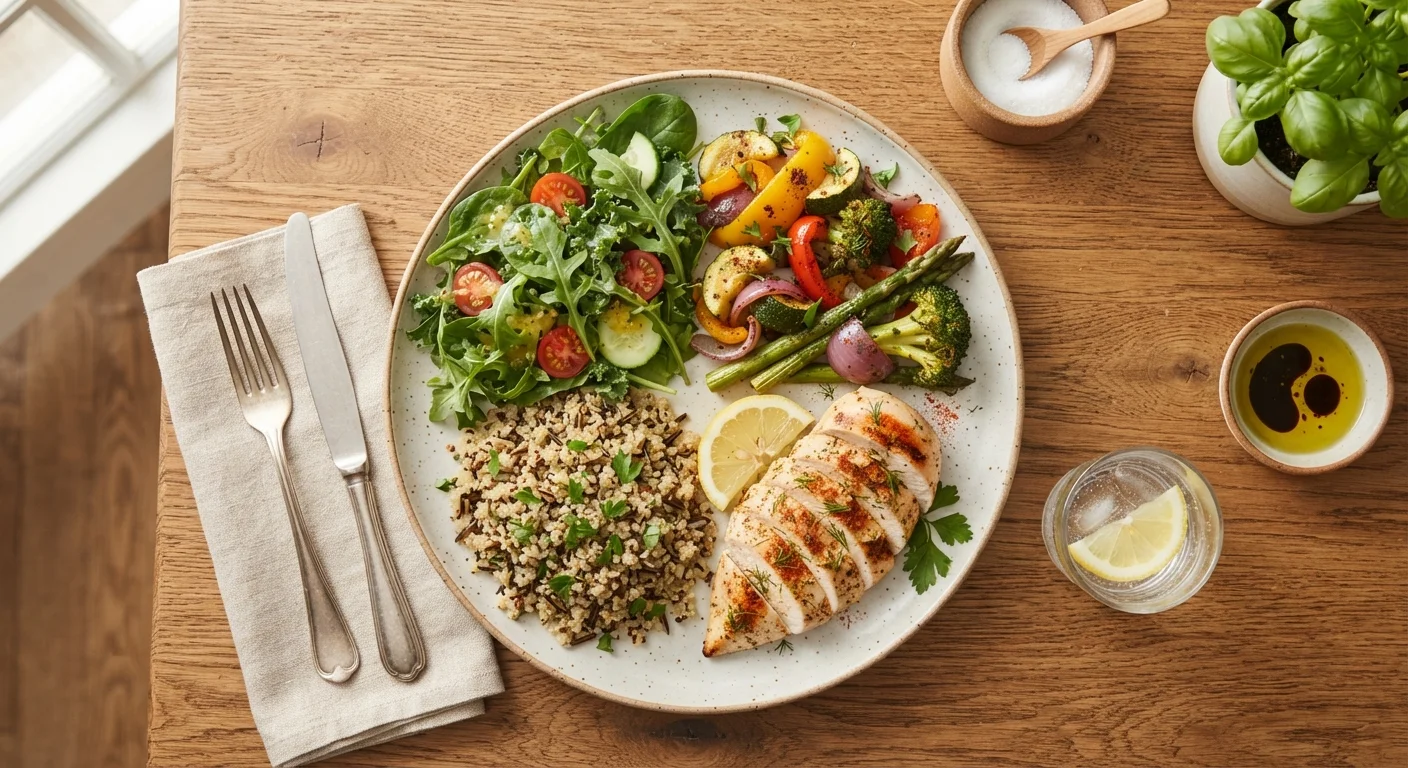
Photo credit: SearchLynk.net | Search Made Easier
In this article
Learn practical portion and food-group strategies that help you eat well at every meal — no calorie tracking app required.
Key Takeaways
- Half your plate with vegetables and fruit is a reliable foundation for most meals.
- Visual portioning cues replace the need for calorie tracking apps.
- Protein and whole grains together promote satiety and support stable energy.
- Consistent plate patterns over time matter more than perfecting any single meal.
- Healthy fats and adequate hydration are easy-to-overlook parts of a balanced plate.
Why Calorie Counting Isn't the Only Path to Eating Well
Calorie tracking apps have helped many people become more aware of what they eat, but they're not the only - or even the most practical - tool for building healthier habits. Calorie counts don't capture food quality, and the mental overhead of logging every bite can make mealtimes feel like a chore rather than something to enjoy.
A more durable approach focuses on food composition and proportion: what's on your plate and roughly how much space each category takes up. This strategy aligns with guidance from public health institutions like the USDA, which uses a plate-based visual model to communicate nutrition basics to the general public.
If you're curious about why highly restrictive approaches often don't stick, our article on why crash diets tend to backfire explores the research behind rebound eating and what more sustainable patterns look like instead.
What you will need
What Goes on a Balanced Plate
Before following the steps below, it helps to understand the core food categories and the role each plays:
- Non-starchy vegetables (leafy greens, broccoli, peppers, cucumbers): high in fiber, vitamins, and minerals with relatively few calories per serving.
- Lean or plant-based protein (beans, lentils, fish, poultry, tofu, eggs): supports tissue repair, immune function, and feelings of fullness.
- Whole grains and starchy vegetables (brown rice, quinoa, whole-wheat bread, sweet potatoes): provide sustained energy and dietary fiber.
- Healthy fats (avocado, olive oil, nuts, seeds): support nutrient absorption and cardiovascular health in appropriate amounts.
- Fruit: provides natural sugars alongside fiber, vitamins, and antioxidants - a nutritious alternative to processed sweets.
Water or low-sugar beverages complete the picture. Sugary drinks can add significant calories without providing meaningful nutrition, so keeping them occasional rather than routine is generally advisable.
Standard dinner plate (9-10 inches)
Serves as the primary visual portioning tool - its sections guide food group proportions without measuring.
Measuring cups or spoons
Useful for initially calibrating what a serving of grains or fats looks like before you develop an eye for it.
Meal planning notepad or app
Helps plan meals across the week so balanced plates become a consistent pattern rather than a one-off effort.
How to Build Your Balanced Plate - Step by Step
The steps below apply whether you're cooking at home or assembling a meal from a cafeteria or buffet. No app or scale required.
Start with vegetables - fill half your plate
Before adding anything else, cover roughly half your plate with non-starchy vegetables or a mix of vegetables and fruit. This single habit reliably increases fiber intake, adds volume that promotes fullness, and crowds out less nutritious options without requiring any measuring.
Variety matters: different colors generally signal different nutrients, so rotating your choices across the week is more beneficial than eating the same vegetable every day.
Add a quality protein source - roughly one quarter of the plate
Dedicate about a quarter of your plate to a protein source. A palm-sized portion is a practical visual guide for most adults, though individual needs vary based on age, activity level, and health status.
Good options include legumes (beans, lentils, chickpeas), fish, poultry, eggs, tofu, or low-fat dairy. Red and processed meats can be included occasionally, but most nutrition guidance suggests keeping them less frequent than plant or seafood-based proteins.
Fill the remaining quarter with whole grains or starchy vegetables
The last quarter of your plate works best when filled with a whole grain or starchy vegetable: brown rice, whole-wheat pasta, quinoa, oats, sweet potato, or corn. Whole grains retain more fiber and micronutrients than their refined counterparts, which helps moderate the blood sugar response after eating.
Portion size here matters more than with vegetables, since grains and starches are more calorie-dense. A serving roughly the size of a cupped hand is a reasonable visual reference.
Incorporate a small amount of healthy fat
Healthy fats help your body absorb fat-soluble vitamins (A, D, E, and K) and contribute to satiety. A drizzle of olive oil on vegetables, a few slices of avocado, or a small handful of nuts or seeds is enough to cover this category at most meals.
Because fats are calorie-dense, this is the category where portion awareness matters most - a little goes a long way nutritionally.
Choose a low-sugar beverage to complete the meal
What you drink alongside your plate is part of your overall nutritional picture. Water is the most straightforward choice. Unsweetened tea, black coffee, or sparkling water are solid alternatives. Limiting sugar-sweetened beverages - sodas, sweetened juices, energy drinks - is one of the easiest adjustments to reduce added sugar intake without changing what you eat at all.
This article provides general nutrition education and is not a substitute for personalized dietary advice. If you have a health condition, food allergy, or specific nutritional concern, consult a registered dietitian or qualified healthcare professional before making significant changes to your diet.
Making It Work in Real Life
Building a balanced plate consistently is easier when your kitchen is stocked with versatile staples. Our nutritious pantry checklist walks through exactly what to keep on hand so that healthy choices are always within reach. If cost is a concern, eating well on a budget offers practical strategies for nutritious meals without overspending.
Keep in mind that no single meal defines your overall diet. If one plate ends up unbalanced - heavy on starch, light on vegetables - the next meal is simply an opportunity to recalibrate. Consistency across the week matters far more than perfection at any one sitting. Over time, these visual habits become second nature, removing the cognitive load that makes stricter tracking methods hard to sustain.
Progress Over Perfection
Aim to apply the balanced-plate model most of the time, not every single meal. Eating out, social occasions, and busy nights will naturally produce exceptions - that's normal and fine. Research on dietary patterns consistently shows that overall habits across weeks and months matter far more than the composition of any individual meal.

Author
Health & Wellness Editorial Team
Health & Wellness Editorial Team is the collective byline for our editorial team and contributor network. Articles published under this byline or an editorial pen name are researched, written, and reviewed according to our editorial standards for clarity, consistency, and independence before publication.
View all articles →