
Buying in Bulk: When It Actually Saves Money and When It Doesn't
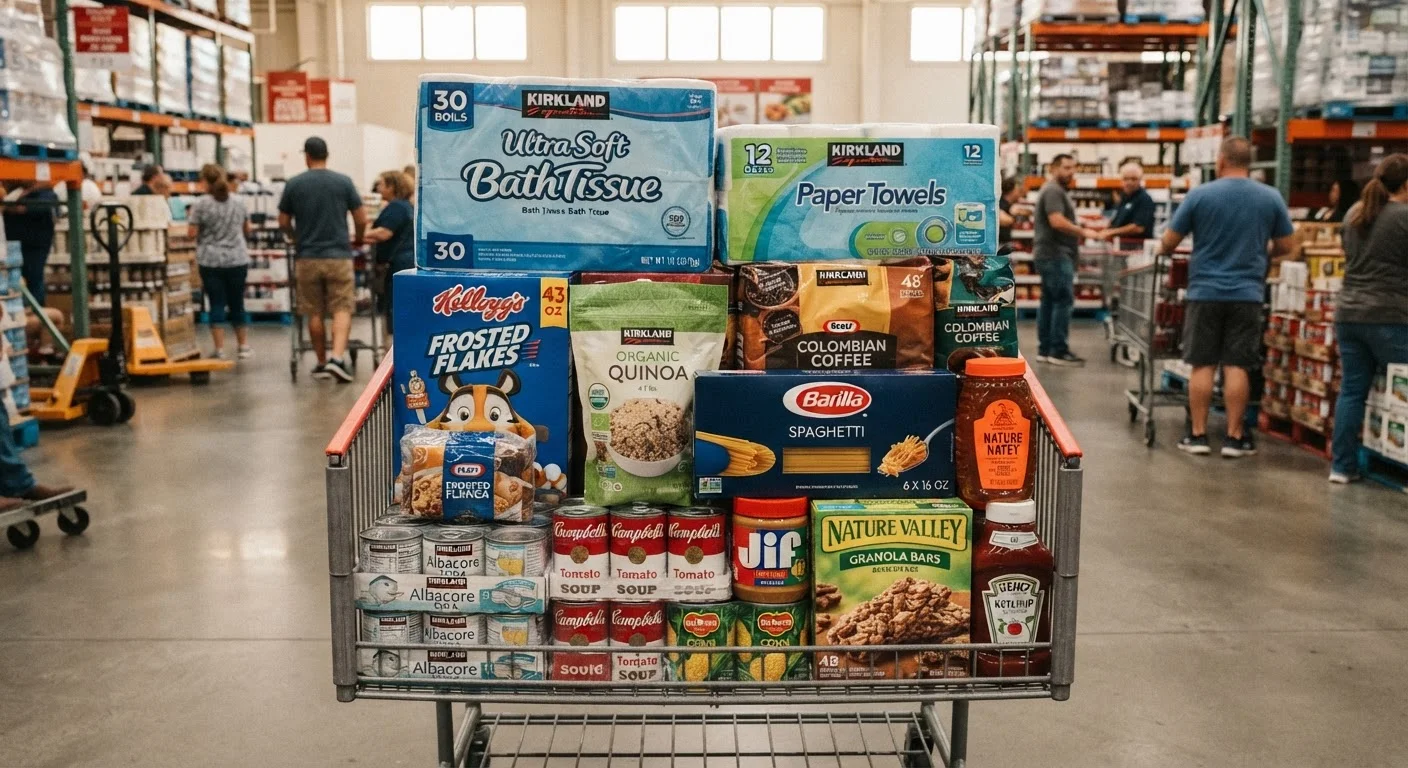
Photo credit: SearchLynk.net | Search Made Easier
In this article
Bulk purchases cut unit costs but can lead to waste, spoilage, or storage headaches. Here's a practical framework for deciding when bulk buying makes sense.
Key Takeaways
- Bulk buying reliably saves money on non-perishables and frequently used household staples.
- Perishables, trend-sensitive items, and products with expiration dates carry real spoilage and waste risk.
- Storage space and upfront cash requirements can offset per-unit savings if you're not prepared.
- Comparing unit prices - not package prices - is the only reliable way to confirm a bulk deal is real.
- Household size and consumption rate are the most important factors in deciding whether bulk makes sense.
Lower unit cost on verified bulk deals
When a bulk package genuinely offers a lower per-unit price, the savings compound across every use. Over months of regular consumption, even modest per-unit differences add up meaningfully.
Fewer shopping trips and less time spent
Stocking up on regularly used items reduces the frequency of store visits, which can save both time and the incidental spending that often accompanies unplanned trips.
Protection against short-term price increases
Buying ahead on shelf-stable items can buffer households from price fluctuations on staples, since the product is already purchased at the prior price point.
Reduces packaging waste per unit
Larger packages generally use less packaging material per unit of product than multiple smaller packages, which has a modest environmental benefit for environmentally-conscious households.
Spoilage and expiration erode savings
Perishables and even some shelf-stable products expire before a household can use them. Any discarded portion directly reduces - and can fully cancel - the per-unit savings gained.
High upfront cash requirement
Bulk purchases demand more money at the point of sale. For households operating on tight monthly budgets, this can create short-term cash flow strain even when the long-term math favors buying in bulk.
Storage space can be a real constraint
Large quantities of goods need somewhere to go. Inadequate storage leads to clutter, damage to products, or the hidden cost of purchasing additional shelving or storage solutions.
Risk of being locked into unwanted products
Buying large quantities of an untested product - or one subject to changing preferences - can result in a surplus that goes unused, making the original "deal" more expensive than the standard-size alternative.
Membership fees reduce net savings
Warehouse club memberships carry annual costs that must be recovered through actual savings before the arrangement is financially beneficial. Light shoppers may not reach that break-even threshold.
The Real Math Behind Bulk Savings
The core promise of bulk buying is simple: buy more units at once, pay less per unit. That math is often real - but it's not automatic. Warehouse retailers and big-box stores price bulk quantities to attract shoppers, yet not every multi-pack or jumbo container actually offers a lower unit cost than its standard-size counterpart.
The only way to verify a bulk discount is to compare unit prices - the cost per ounce, per count, or per square foot - not the total package price. Many stores are required to display unit pricing on shelf labels, making this comparison straightforward. When bulk genuinely offers a lower unit price on a product you use regularly, the savings are real and stackable over time.
It's also worth factoring in membership fees if you shop at a warehouse club. Those annual costs need to be offset by actual savings across purchases throughout the year before the membership pays for itself.
~89%
U.S. households that report buying in bulk
According to survey data from the Food Marketing Institute, the large majority of American households engage in some form of bulk or multi-unit purchasing.
30-40%
Typical unit-price reduction on warehouse staples
Consumer research has consistently found that verified bulk deals on non-perishable staples can reduce per-unit cost by roughly 30 to 40 percent compared to standard grocery store pricing.
When Bulk Buying Works in Your Favor
Certain categories are well-matched to bulk purchasing. Non-perishable pantry staples - dried pasta, canned goods, cooking oil, rice, beans - have long shelf lives and stable demand in most households. Buying these in larger quantities when the unit price is lower is straightforward math that works.
Household consumables follow the same logic. Toilet paper, paper towels, laundry detergent, dish soap, and cleaning supplies don't expire quickly and get used consistently. These are the categories where bulk buying tends to deliver reliable, low-risk savings. For households looking to stretch a grocery budget, combining bulk non-perishables with other strategies - like those covered in our guide on eating well on a budget - can meaningfully reduce monthly spending.
Personal care items like shampoo, toothpaste, and body wash also tend to work well in bulk, provided you've already confirmed you like the product before committing to a large quantity.
Lower unit cost on verified bulk deals
When a bulk package genuinely offers a lower per-unit price, the savings compound across every use. Over months of regular consumption, even modest per-unit differences add up meaningfully.
Fewer shopping trips and less time spent
Stocking up on regularly used items reduces the frequency of store visits, which can save both time and the incidental spending that often accompanies unplanned trips.
Protection against short-term price increases
Buying ahead on shelf-stable items can buffer households from price fluctuations on staples, since the product is already purchased at the prior price point.
Reduces packaging waste per unit
Larger packages generally use less packaging material per unit of product than multiple smaller packages, which has a modest environmental benefit for environmentally-conscious households.
When Bulk Buying Backfires
The category where bulk buying most reliably fails is fresh food. Produce, dairy, bread, and meat all carry expiration windows that are difficult to outpace unless a household is large or the items can be frozen. Buying a three-pound container of spinach to save $1.50 per pound only saves money if every leaf gets eaten - otherwise, the discarded portion erases the discount entirely.
Trend-sensitive or preference-sensitive products carry a different kind of risk. If you buy 60 servings of a protein powder or a gallon jug of a new cleaning product before you've tested it, you may be locked into something you don't want. The fundamentals of smarter shopping apply here: evaluate before you commit in volume.
Storage constraints are also a hidden cost. If a bulk purchase requires renting extra storage, buying shelving, or displacing other household items, those costs reduce or eliminate net savings. Households that haven't assessed their available space can find that bulk shopping creates home organization problems that weren't there before.
Spoilage and expiration erode savings
Perishables and even some shelf-stable products expire before a household can use them. Any discarded portion directly reduces - and can fully cancel - the per-unit savings gained.
High upfront cash requirement
Bulk purchases demand more money at the point of sale. For households operating on tight monthly budgets, this can create short-term cash flow strain even when the long-term math favors buying in bulk.
Storage space can be a real constraint
Large quantities of goods need somewhere to go. Inadequate storage leads to clutter, damage to products, or the hidden cost of purchasing additional shelving or storage solutions.
Risk of being locked into unwanted products
Buying large quantities of an untested product - or one subject to changing preferences - can result in a surplus that goes unused, making the original "deal" more expensive than the standard-size alternative.
Membership fees reduce net savings
Warehouse club memberships carry annual costs that must be recovered through actual savings before the arrangement is financially beneficial. Light shoppers may not reach that break-even threshold.
A Practical Framework for Deciding
Before committing to a bulk purchase, run through a short mental checklist:
- Will you use it all before it expires or degrades? This is the most important question. Be honest about your household's actual consumption pace.
- Is the unit price genuinely lower? Verify with the shelf label or by dividing total price by total quantity. Don't assume bigger means cheaper.
- Do you have storage space that won't create problems? Bulk goods need a place to live that doesn't disrupt daily function.
- Do you have the upfront cash without financial strain? Bulk purchases require more money out of pocket at once. Overspending on bulk goods at the expense of other budget priorities isn't a net win. For broader spending awareness, the principles in budgeting basics are worth reviewing.
- Have you used the product before? Never buy in bulk anything you haven't already tested in a standard quantity.
Pairing this checklist with the habit of reading generic versus name-brand comparisons by category can further sharpen the value you get per dollar spent on regular household purchases.
Don't Confuse 'Large Package' With 'Bulk Deal'
Retailers sometimes package items in larger quantities without actually reducing the per-unit price - and occasionally the jumbo size costs more per unit than the standard version. This is especially common during promotional periods when standard sizes are on sale. Always verify the unit price before assuming a larger package is the better value. Your phone's calculator and the shelf's unit-price label are your two most reliable tools.

Author
Shopping Editorial Team
Shopping Editorial Team is the collective byline for our editorial team and contributor network. Articles published under this byline or an editorial pen name are researched, written, and reviewed according to our editorial standards for clarity, consistency, and independence before publication.
View all articles →