
Unit Pricing Decoded: The Shelf-Label Skill Most Shoppers Skip
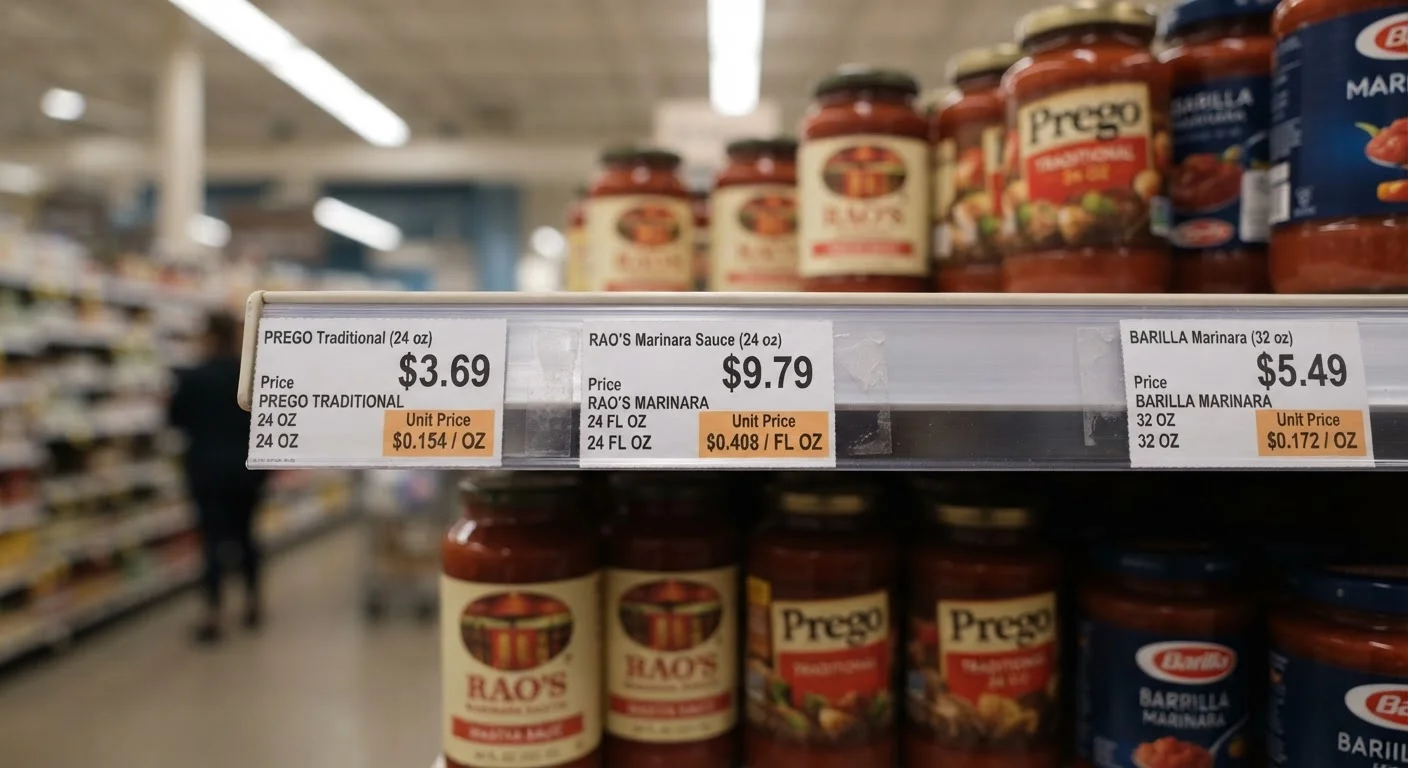
Photo credit: SearchLynk.net | Search Made Easier
In this article
Unit pricing tells you the true cost per ounce, count, or square foot—but the math isn't always obvious. Here's how to use it confidently in any store.
Key Takeaways
- Unit price shows the cost per standard measure - not just the package price - making true comparisons possible.
- Shelf labels often use different units across similar products, so verify they match before comparing.
- Bigger packages are not always cheaper per unit - size, store brand, and promotions all affect the math.
- A smartphone calculator is all you need to verify unit prices on the spot.
- Unit pricing is one part of a broader cost-awareness habit that helps you recognize genuine value.
What Unit Pricing Actually Means
Unit pricing is the cost of a product broken down to a single standard measure - typically per ounce, per pound, per count, per fluid ounce, or per square foot. Most grocery and big-box stores are required by state law to display this figure on the shelf label alongside the package price, though regulations vary by state and store format.
The purpose is straightforward: it gives you an apples-to-apples number when two products come in different package sizes. A 12-oz jar priced at $3.49 and an 18-oz jar at $4.99 look close in price, but their unit prices ($0.29/oz vs. $0.28/oz) tell a different story at a glance.
Understanding unit pricing fits into the same mindset as evaluating total cost of ownership - surface price is rarely the whole picture. It's also closely tied to decisions about buying in bulk, where lower unit cost only benefits you if you'll actually use what you buy.
Unit Pricing Works Online Too
Many online grocery and retail platforms display unit prices in small text near the package price. Look for it in the product listing details. If it's absent, use the listed weight or count and divide into the price yourself. Price history tools can tell you whether the current unit price is genuinely favorable or temporarily inflated.
Common Pitfalls on the Shelf Label
Unit pricing is useful only when you know what to watch for. Several traps routinely catch shoppers off guard:
- Mismatched units: One label might show cost per ounce while a nearby competing product shows cost per pound. Always confirm the unit is the same before treating the numbers as comparable.
- Sale price distortion: A promotional sticker placed over or near the shelf tag can obscure the unit price entirely. Sale pricing doesn't always signal genuine savings, and the unit math may not have changed at all.
- Missing or outdated labels: Labels get replaced when prices change, but not always promptly. If a label looks different from others nearby - different paper stock, different formatting - treat the unit price as unverified until you check it yourself.
- Bundle packaging: Multi-packs sometimes list a per-package unit price rather than a per-item price, making the figure look lower than it actually is per individual unit.
Larger Packages Aren't Always Cheaper
A common assumption is that buying the biggest size always delivers the best unit price. This isn't reliable. Stores frequently price mid-size packages more competitively, and sale pricing on smaller sizes can temporarily flip the equation. Always check the unit price directly rather than assuming by size.
How to Read and Apply Unit Pricing: Step by Step
Follow these steps each time you're comparing products on the shelf. The process takes under a minute once it becomes habit.
What you will need
Locate the unit price on the shelf label
Look at the small shelf label directly below the product. The unit price is usually printed in smaller text than the package price - often in the lower-left or lower-right corner. It will appear as a dollar amount followed by a per-unit designation, such as $0.31/oz or $1.24/100 ct.
Identify the unit of measure
Note exactly which unit is being used: ounce, fluid ounce, pound, count, square foot, or another measure. Write it down or keep it in mind before moving to the competing product. Do not compare numbers until you've confirmed both products use the same unit.
Compare the unit prices directly
Once you've confirmed matching units, the lower unit price is the better per-measure value. Scan all relevant products in the category - store brands, different sizes of the same brand, and any sale items - to find the lowest unit price among options you'd actually use.
Calculate manually when the label is missing or suspect
Divide the package price by the total quantity shown on the package. For example: $4.79 ÷ 15.5 oz = $0.309/oz. Use your phone's calculator app to do this in seconds. Round to three decimal places for accuracy when comparing close numbers.
Factor in non-price variables before deciding
The lowest unit price is not automatically the right choice. Consider shelf life and how much you'll realistically use, storage space, and whether product quality meets your needs. A lower unit price on a quantity you can't use before it expires offers no real savings.
For a broader framework on evaluating prices critically, see our practical introduction to smarter shopping.

Author
Shopping Editorial Team
Shopping Editorial Team is the collective byline for our editorial team and contributor network. Articles published under this byline or an editorial pen name are researched, written, and reviewed according to our editorial standards for clarity, consistency, and independence before publication.
View all articles →