
The Hidden Cost of 'Free': Understanding Total Cost of Ownership Before You Buy
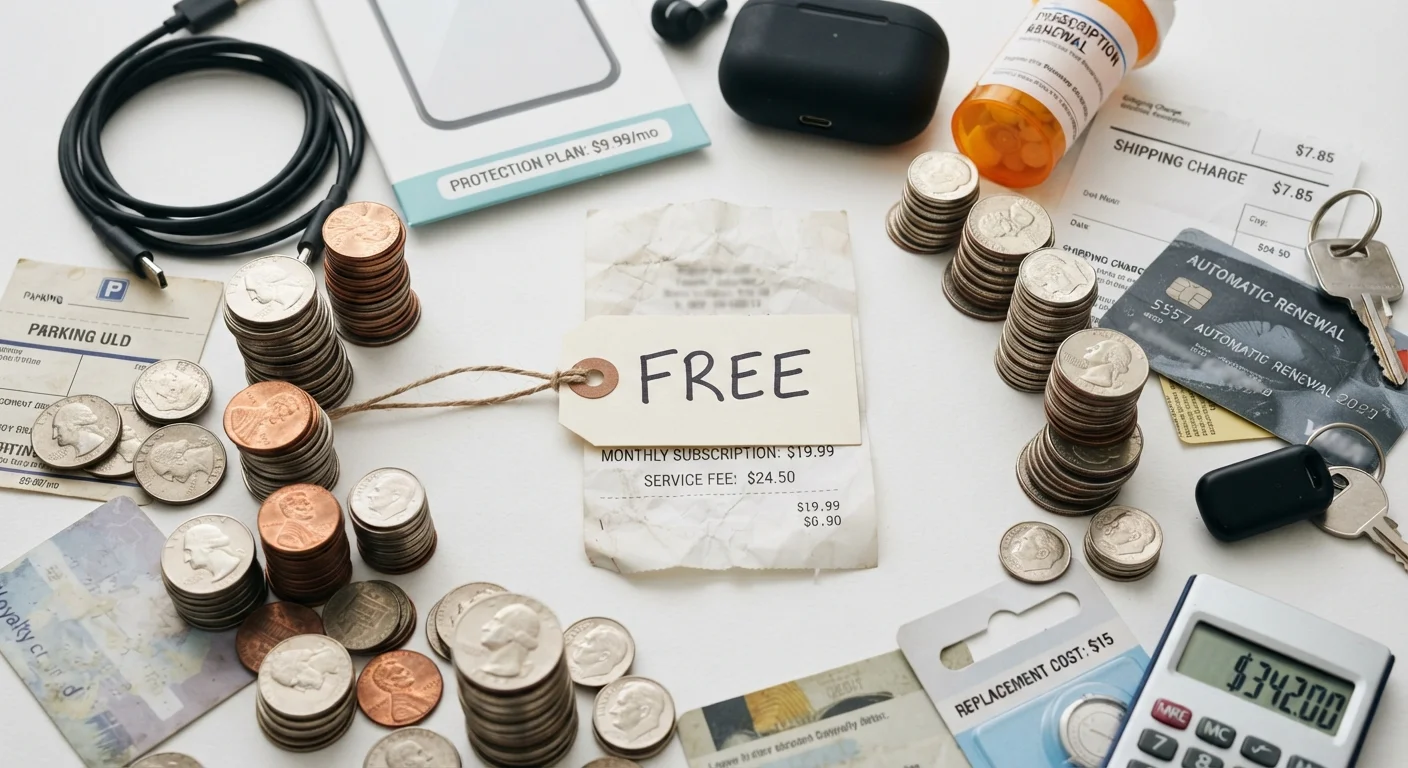
Photo credit: SearchLynk.net | Search Made Easier
In this article
Free trials, bundled accessories, and low sticker prices can mask real long-term costs. Learn how to calculate total cost of ownership before committing.
Key Takeaways
- The purchase price is rarely the true cost - recurring fees, supplies, and maintenance usually add more.
- Free trials and bundled accessories often mask ongoing expenses that begin once the honeymoon period ends.
- Calculating TCO before buying lets you compare options on equal financial footing.
- Small recurring charges - subscriptions, ink, filters - compound significantly over months and years.
- A higher upfront price sometimes produces a lower total cost over time.
Why the Sticker Price Is Only Part of the Story
Retailers and marketers have long understood that consumers anchor on the price they see first. A $0 trial, a $29 gadget, or a $199 appliance all feel like discrete transactions. In reality, most purchases initiate an ongoing financial relationship that extends well beyond checkout.
Total cost of ownership reframes the question. Instead of asking "how much does this cost?" it asks "how much will this cost me over time?" That shift in framing is simple, but it can produce dramatically different decisions.
Consider what commonly gets left out of a first-glance price comparison: mandatory accessories, recurring subscriptions, consumable supplies, energy usage, maintenance, and the cost of disposal or replacement when the product reaches end of life. Each of those categories can dwarf the original purchase price if the ownership period is long enough.
3-5×
Lifetime cost vs. purchase price for many printers
Consumer Reports and independent analyses have repeatedly found that ink and toner costs over a printer's life often far exceed the original hardware price.
$219/yr
Average American spending on unused subscriptions
A 2022 C+R Research survey found U.S. consumers spend an estimated $219 annually on subscriptions they've forgotten about or no longer actively use.
Up to 30%
Energy cost difference between efficient and standard appliances
The U.S. Department of Energy notes that ENERGY STAR-certified appliances can use significantly less energy than standard models, affecting long-term operating costs.
The 'Free' Problem: Trials, Bundles, and Loss Leaders
The word "free" is one of the most powerful terms in consumer marketing - and one of the most misleading when taken at face value. Free trials that quietly convert to paid plans are a well-documented consumer frustration. If you've ever forgotten to cancel a streaming service or cloud storage plan after the trial expired, you've experienced a form of TCO blindness firsthand. Our article on how subscription traps work covers the mechanics in detail.
Bundled accessories present a subtler version of the same problem. A printer sold with "included ink" may come with starter cartridges that run out within weeks, after which the proprietary replacements cost more per page than the printer itself. The bundle lowers the apparent entry cost while locking you into a high-margin supply chain.
Loss leaders - products priced below cost to attract buyers - work similarly. The item may genuinely be cheap; the ecosystem of required add-ons is where the financial relationship becomes costly. Recognizing these structures before purchase is the first step toward a more accurate cost estimate.
Set a 'True Cost' Reminder Before Any Trial
Whenever you sign up for a free trial that requires payment information, immediately set a calendar alert two to three days before the trial ends. This gives you time to evaluate the service and cancel if needed - before the charge hits. Treating every free trial as a timed financial commitment is a simple habit that prevents recurring charges from accumulating unnoticed.
How to Build a Simple TCO Estimate
You don't need a spreadsheet or financial training to build a useful TCO estimate. A basic calculation covering four categories is usually enough to surface the most significant costs:
- Upfront cost: Purchase price, shipping, installation, or setup fees.
- Recurring costs: Subscriptions, licensing fees, replacement consumables (ink, filters, batteries), and energy use. Multiply by your expected ownership period - even 24 or 36 months produces revealing numbers.
- Maintenance and repair: Manufacturer service requirements, likelihood of breakdowns based on reliability data, and whether the product is repairable or designed to be replaced.
- Exit costs: Cancellation fees, disposal fees, or the loss in resale value if you sell the item.
Once you've run those numbers for two or three competing options, the true cost comparison often looks quite different from the sticker-price comparison. A product that costs more upfront may win decisively on TCO if its recurring expenses are low.
This logic extends well beyond consumer electronics. Homeownership is a classic example: the purchase price is the beginning of a long list of ongoing expenses most buyers underestimate. Our piece on hidden costs of homeownership covers what new owners routinely miss in the first years.
Where TCO Thinking Applies Across Everyday Purchases
Phone plans are a category where TCO analysis pays off quickly. Auto-renewed contracts, unused data tiers, and quietly added features inflate wireless bills in ways that are easy to miss month to month. Our piece on why people overpay for phone plans lays out where the most common overcharges hide.
Travel is another domain where advertised prices and actual costs diverge sharply. Resort fees, baggage charges, and departure taxes rarely appear in the headline fare. For a fuller picture of what travel really costs, see our guide on hidden costs travelers rarely budget for.
Even apparent bargains at retail deserve scrutiny. Inflated "original" prices make discounts look bigger than they are - a dynamic explained in our article on sale price versus true savings. A "60% off" label on a product you'll need to maintain, supply, and eventually replace tells you very little about whether it's actually a good value.
Applying TCO thinking doesn't require suspicion of every purchase. It simply means asking one consistent question before committing: What will this cost me in total, not just today? That question, asked consistently, is one of the most practical tools available to any consumer.
“The most expensive purchase isn't always the one with the highest price tag - it's often the one whose long-term costs weren't understood at the time of purchase.”
— Consumer Financial Protection Bureau, U.S. federal agency focused on consumer financial protection and education
Frequently Asked Questions

Author
Shopping Editorial Team
Shopping Editorial Team is the collective byline for our editorial team and contributor network. Articles published under this byline or an editorial pen name are researched, written, and reviewed according to our editorial standards for clarity, consistency, and independence before publication.
View all articles →