
How Subscription Traps Work - and Why They're So Hard to Escape
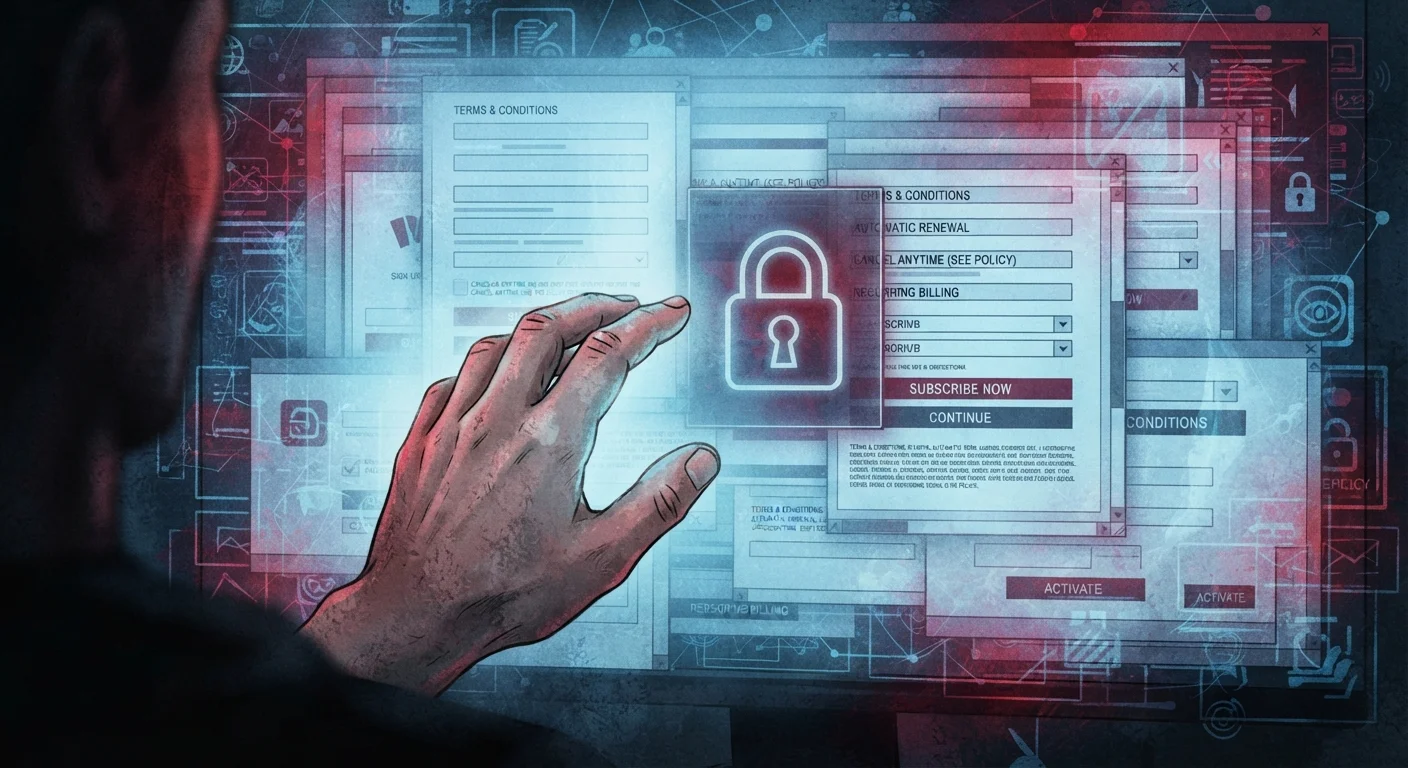
Photo credit: SearchLynk.net | Search Made Easier
In this article
Free trials that quietly become paid plans are a persistent consumer complaint. Here's the mechanics behind subscription traps and your options.
Key Takeaways
- Free trials that convert to paid plans are the most common entry point for subscription traps.
- Negative option billing treats your inaction as permission to keep charging you.
- Cancellation is often intentionally difficult, involving multiple steps or hard-to-find options.
- You can dispute unauthorized charges with your credit card issuer or bank.
- The FTC and state attorneys general actively enforce rules against deceptive subscription practices.
- Reviewing your bank and card statements regularly is one of the most effective defenses.
The Mechanics: How a Simple Sign-Up Becomes a Recurring Charge
Most subscription traps begin with a compelling offer - a free trial, a deeply discounted first month, or a "risk-free" sample. To claim it, you enter your payment details. What many consumers don't realize is that this step enrolls them in a recurring billing arrangement that activates automatically once the trial period ends.
The key mechanism is negative option billing: your failure to cancel before the deadline counts as your consent to be charged. Disclosure of this arrangement is legally required, but companies often bury it in fine print, use pre-checked boxes, or place the terms on a separate page that most users skip past during checkout.
Once the billing starts, it can be surprisingly difficult to detect. Charges may appear under a company name you don't immediately recognize, or they may be small enough - $9.99 or $14.99 per month - to go unnoticed during a quick scan of your bank statement. For a deeper look at how this plays out with wireless services specifically, see why people overpay for phone plans - many of the same patterns apply.
Millions
Annual FTC complaints involving subscription billing
The FTC consistently reports that negative option and subscription billing practices are among the top categories of consumer complaints it receives each year.
$200+
Estimated average annual loss per affected consumer
Consumer advocacy research has estimated that consumers enrolled in unwanted subscriptions lose hundreds of dollars annually before identifying and canceling the charges.
60 days
Typical credit card chargeback window
Most major credit card networks allow disputes to be filed within 60 days of the charge appearing on a statement - acting quickly is critical for recovery.
Why Cancellation Is Designed to Be Difficult
Escaping a subscription trap is rarely as simple as clicking "cancel." Companies profit from subscriber inertia, and some deliberately engineer what researchers call dark patterns - interface and process designs that make cancellation confusing, time-consuming, or emotionally discouraging.
Common tactics include: hiding the cancellation option inside multiple nested menus; requiring a phone call during limited business hours; presenting guilt-laden prompts ("Are you sure you want to lose all your benefits?"); offering repeated discount pop-ups to distract from the exit path; or making you answer a survey before the cancellation is processed. Some services quietly reset a cancellation if you don't confirm a final confirmation email within a narrow time window.
These are not accidents of bad design - they are documented practices that consumer advocates and regulators have repeatedly identified and challenged. Recognizing dark patterns before you're billed gives a detailed breakdown of the specific design tricks used at the sign-up stage, which can help you spot them before you're enrolled.
Your Practical Options When You're Already Trapped
If you discover you've been enrolled in a subscription you didn't intend to keep, you have several avenues:
- Contact the company directly. Start with a written request - email creates a paper trail. Be clear, concise, and keep copies of all correspondence.
- Dispute the charge with your card issuer. Credit card holders have strong chargeback protections. If a charge was unauthorized or the terms weren't clearly disclosed, your issuer can initiate a dispute. Act promptly - most issuers have a 60-day window from the statement date.
- Block future charges. Ask your bank to block further payments to the merchant. You may also be able to request a new card number, which will prevent the subscription from being charged to your old number.
- Report the company. File a complaint with the FTC at reportfraud.ftc.gov and with your state attorney general. These reports contribute to enforcement actions, even if they don't produce an immediate individual refund.
Ongoing vigilance matters as much as reactive steps. Auditing your recurring charges is a practical habit that can surface forgotten subscriptions before they become a serious drain. And if you want to build broader scam-awareness into your everyday shopping behavior, durable scam-awareness habits outlines approaches that hold up over time.
Use a Virtual Card Number for Free Trials
Many banks and credit card issuers offer virtual card numbers - temporary numbers linked to your real account that can be set with spending limits or disabled instantly. Using one for a free trial means that if you forget to cancel, no further charges can go through on that number. Check whether your card issuer offers this feature in their mobile app or online portal.
How to Protect Yourself Before You Sign Up
Prevention is significantly easier than recovery. Before entering payment information for any free trial or promotional offer, consider these practical checks:
- Search for the cancellation policy first. If it's hard to find before you sign up, it will be harder to use after.
- Read the billing terms on the checkout page. Look for language about automatic renewal, trial end dates, and the exact amount you'll be charged.
- Use a virtual card number if your bank offers one. Virtual card numbers can be set with spending limits or deactivated without affecting your primary account.
- Set a calendar reminder before the trial ends - several days in advance, not the night before.
- Check your statements monthly. A habit of reviewing every line item is one of the most reliable defenses against charges that accumulate unnoticed.
Understanding the full cost of any "free" offer is part of smart consumer decision-making. Understanding the hidden cost of free offers can help you evaluate promotional pricing with a clearer picture of what you're actually committing to.
This article is for general informational and educational purposes only and does not constitute legal or financial advice. For disputes involving significant charges, consider consulting a consumer protection attorney or contacting your state attorney general's office.
Frequently Asked Questions

Author
Shopping Editorial Team
Shopping Editorial Team is the collective byline for our editorial team and contributor network. Articles published under this byline or an editorial pen name are researched, written, and reviewed according to our editorial standards for clarity, consistency, and independence before publication.
View all articles →