
Subscription Traps: Recognizing Dark Patterns Before You're Billed
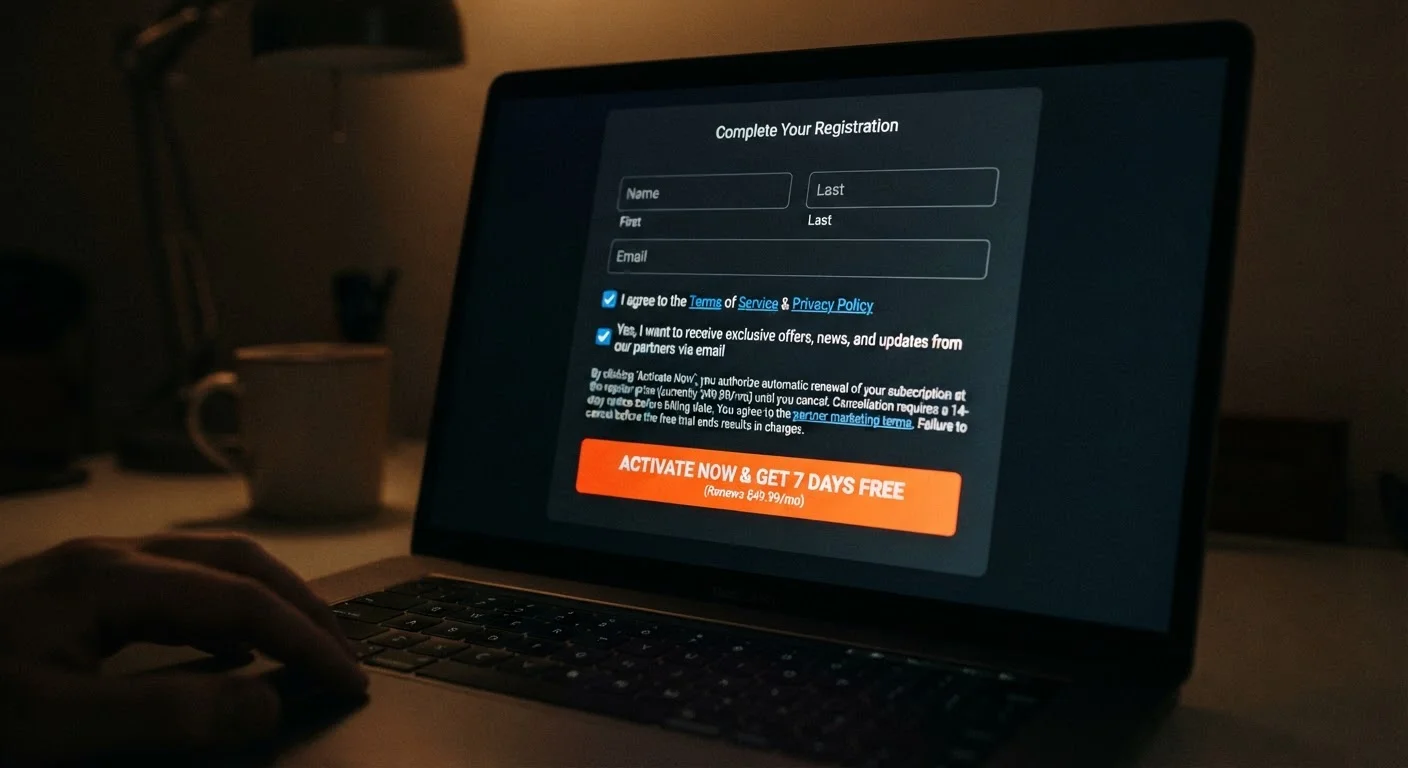
Photo credit: SearchLynk.net | Search Made Easier
In this article
Some sign-up flows are deliberately confusing. Learn the common design tricks used to lock consumers into recurring charges and how to protect yourself.
Key Takeaways
- Dark patterns are deliberate design choices that trick consumers into agreeing to charges they didn't intend.
- Pre-checked boxes, buried cancellation terms, and confusing button labels are among the most common tactics.
- Slowing down and reading the full checkout flow before submitting payment details is your strongest defense.
- The FTC and several state attorneys general actively pursue enforcement against deceptive subscription practices.
- Auditing your bank and card statements regularly is the fastest way to catch unwanted recurring charges.
What Dark Patterns Actually Are
Dark patterns are user interface design choices that steer people toward actions that benefit a company at the expense of the user's informed consent. The term was coined by UX researcher Harry Brignull and has since become part of regulatory language used by the Federal Trade Commission (FTC) and consumer protection agencies worldwide. Unlike outright fraud, dark patterns often operate within technically legal bounds - the disclosure exists, but it's deliberately small, mis-colored, or buried three pages deep.
In the subscription context, dark patterns are particularly effective because recurring billing is invisible after the first charge. You don't see a product leave a shelf or a service being delivered - the money simply disappears from your account each month, often unquestioned. That invisibility is the business model. Understanding how these designs work is the first step toward not being caught by them. For a broader look at how deceptive shopping experiences are structured, see how consumer shopping scams are built.
$133
Average monthly spend on subscriptions
A 2022 consumer survey by C+R Research found Americans spend an average of $133 per month on subscriptions, often underestimating their total by more than half.
42%
Consumers unaware of all active subscriptions
The same C+R Research survey found that roughly 42% of respondents had forgotten about at least one active subscription they were still being charged for.
70%+
Users who don't cancel before trial ends
Industry estimates cited in FTC workshop materials suggest that the majority of free-trial sign-ups convert to paid subscriptions because users do not cancel before the trial period expires.
The Most Common Mistakes - and How to Avoid Them
Most consumers who end up in subscription traps didn't make a careless decision - they made a fast one. Dark patterns are engineered to exploit the speed of online checkout, the trust built by recognizable brand aesthetics, and the cognitive shortcuts everyone uses when completing routine tasks. The mistakes below are among the most frequently reported to consumer protection agencies, and each one has a straightforward countermeasure.
Rushing through checkout without reading pre-selected options.
Why it happens: Checkout flows are designed to feel familiar and fast. Pre-checked boxes blend into a page full of routine form fields, making them easy to overlook when you're focused on completing the purchase.
Skipping the fine print on free trial offers.
Why it happens: Trial offers are framed as low-risk - 'free' is a powerful word that reduces scrutiny. Consumers often focus on the benefit without looking for the conversion terms buried in small text below the offer.
Dismissing confusing button labels as a design quirk.
Why it happens: Buttons like 'No thanks, I'll pay full price' or 'Skip my savings' use what researchers call confirmshaming - language designed to make declining feel like a loss. Many consumers click through without fully processing what they're agreeing to.
Assuming an account cancellation also cancels an active subscription.
Why it happens: On many platforms, deleting an account and cancelling a subscription are handled as separate processes. Users expect the two to be linked and don't realize a billing relationship can persist after account deletion.
Ignoring monthly bank and card statements for recurring charges.
Why it happens: Small recurring charges - $4.99, $9.99, $12.99 - rarely trigger concern individually. Over time they accumulate and become part of an accepted monthly total that consumers stop questioning.
Using a primary debit card to sign up for free trials or unfamiliar services.
Why it happens: Consumers often use whatever payment method is most convenient. Debit cards pull directly from a checking account, which means unauthorized recurring charges affect available funds immediately and recovery can be slower than with credit cards.
Free Trials Aren't Always Free
Entering a payment method to access a 'free' trial authorizes the company to charge you when the trial ends. Many services bank on consumers forgetting to cancel before the deadline. Always note the trial end date when you sign up, and set a personal reminder at least two days before it expires so you have time to cancel if needed.
Recognizing the Patterns Before You Click
Several specific design tactics appear repeatedly across subscription-based services. Knowing their names makes them easier to spot in the moment:
- Roach motel: Signing up is fast and easy; cancelling requires navigating menus, waiting on hold, or submitting a written request. The asymmetry is intentional.
- Hidden costs: A low introductory price is displayed prominently while the post-trial or standard rate appears only in footnotes or a separate terms page.
- Misdirection: Visual design draws attention to the option the company prefers - through size, color, or placement - while the option that declines is styled to fade into the background.
- Forced continuity: A subscription is automatically activated at the end of a one-time purchase or trial with no clear notification before the charge occurs.
These patterns frequently appear together. A sign-up page might combine a pre-checked box (consent by default), a confusing button label (misdirection), and terms disclosed only on a separate linked page (hidden costs). The combined effect is a checkout experience that feels normal but contains multiple embedded traps. Understanding how subscription traps are structured can help you recognize the full picture before you're billed.
Your Legal Right to Cancel
Under FTC regulations, companies that use negative option marketing - where silence or inaction is treated as consent to be charged - must clearly disclose terms, get informed consent, and provide a simple cancellation mechanism. If a company makes cancellation unreasonably difficult, that may be an enforceable violation. You can file a complaint at ReportFraud.ftc.gov and dispute unauthorized charges directly with your card issuer.
Building Habits That Hold
Recognizing dark patterns once isn't enough - the landscape changes and new sign-up flows appear regularly. The consumers who avoid recurring unwanted charges tend to share a few consistent habits: they slow down at checkout, they read confirmation emails carefully, and they review statements monthly rather than annually. These aren't complicated behaviors, but they require making a deliberate choice to treat subscription sign-ups as contracts rather than routine clicks.
If you discover an unauthorized charge, act promptly. Contact the company first using documented communication (email rather than phone, where possible) and request cancellation and a refund in writing. If the company is unresponsive or refuses, dispute the charge with your card issuer and file a complaint with the FTC at ReportFraud.ftc.gov or your state attorney general's consumer protection office. For broader strategies on keeping your online shopping habits scam-resistant, durable scam-awareness habits offer a useful framework. And if you suspect you're already paying for services you've stopped using, a full subscription audit is a practical next step.
This article is for informational purposes only and does not constitute legal or financial advice. Consumers with specific billing disputes should consult their card issuer, a consumer protection attorney, or their state attorney general's office for guidance tailored to their situation.

Author
Shopping Editorial Team
Shopping Editorial Team is the collective byline for our editorial team and contributor network. Articles published under this byline or an editorial pen name are researched, written, and reviewed according to our editorial standards for clarity, consistency, and independence before publication.
View all articles →