
Visible Storage vs. Hidden Storage: Choosing the Right Approach for Each Space
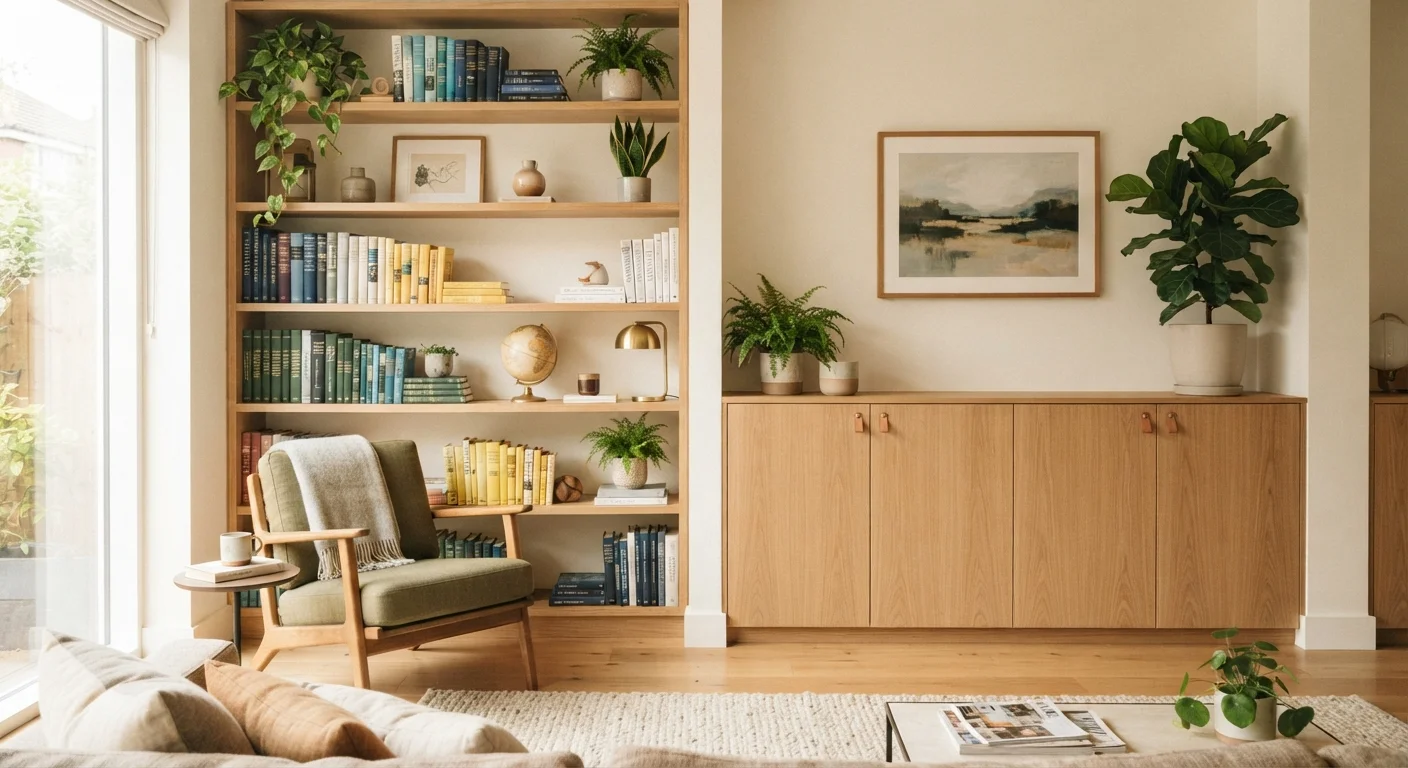
Photo credit: SearchLynk.net | Search Made Easier
In this article
Open shelving looks clean in magazines but isn't right for every room or every household. Here's how to decide which storage style actually serves your space.
Key Takeaways
- Visible storage works best when items are consistently tidy and aesthetically cohesive.
- Hidden storage reduces visual noise and is more forgiving of everyday mess.
- The best approach for each room depends on how the space is used and by whom.
- Many homes benefit most from a deliberate mix of both storage styles.
- Lifestyle factors like household size and clutter tolerance matter as much as aesthetics.
What We Mean by Visible and Hidden Storage
Visible storage - sometimes called open storage - includes open shelving, pegboards, hanging racks, baskets without lids, and any system where items are on display. Hidden storage encompasses cabinets with doors, ottomans with interior compartments, drawers, closed bins, and built-ins with concealed interiors.
Both approaches are legitimate organizational tools. The mistake most people make is choosing a storage style based on what looks appealing in a showroom or on social media rather than what suits their actual daily behavior. A stunning wall of open shelves becomes a source of visual stress if the items on it are constantly shifting or accumulating dust. Equally, a home full of opaque cabinetry can make it harder for household members to find and return things consistently.
Understanding the trade-offs of each style - room by room and household by household - leads to storage decisions you won't regret. For a broader look at how layout choices shape how you live, see the trade-offs of open-plan living.
Where Visible Storage Tends to Shine
Open storage works well in spaces where items are used frequently, returned reliably, and look reasonably orderly on their own. Kitchens are a prime example: everyday glassware, a set of matching ceramic bowls, or a collection of cast-iron cookware can all live on open shelving without creating visual clutter - provided the selection is intentional and the items stay put.
Living rooms and home offices also benefit from strategic open storage. Books, plants, and a few decorative objects on a shelf add warmth and personality. A pegboard in a craft room or workshop lets you see every tool at a glance, which reduces time spent searching.
Test Before You Commit
Before installing permanent open shelving, try living with items displayed on a temporary surface for two to four weeks. If you find yourself straightening the display repeatedly or feeling anxious when it gets disheveled, that's useful information. A closed cabinet may serve you better in that spot.
The key qualifier: visible storage demands consistent tidiness. If the items on display change frequently, accumulate companions, or get grabbed and not returned, open storage amplifies disorder rather than containing it.
Where Hidden Storage Has the Edge
Closed storage is more forgiving by design. It doesn't require items to look presentable - only to be roughly in the right place. This makes it the stronger choice for bedrooms, bathrooms, kids' rooms, and entryways, where the volume and variety of items is high and tidiness is harder to maintain consistently.
In a child's bedroom, for example, a toy bin with a lid or a dresser with drawers allows for quick cleanup without demanding that everything be perfectly arranged. Organization systems designed around how kids actually think tend to rely heavily on hidden storage for exactly this reason.
Bathrooms are another strong case. Personal care products, medications, and cleaning supplies are all items that benefit from being behind a door - both for aesthetics and for practical safety in households with young children.
Open Storage in High-Traffic Areas Can Backfire
Entryways and mudrooms see constant, varied activity - shoes, bags, mail, and seasonal gear all compete for space. Open hooks and cubbies work for some households, but without a firm return habit from every household member, these areas can become the most visually chaotic spots in the home. Consider mixing a few open hooks with closed bins or a cabinet for items that don't have a consistent shape or owner.
Choosing by Room and Household Reality
Rather than applying one storage philosophy throughout an entire home, consider each room individually using two questions: How often do items leave and return? And how consistently will they be put back neatly?
| Visible Storage | Hidden Storage | |
|---|---|---|
| Best suited for | Curated, consistent items | High-volume, varied items |
| Maintenance demand | High - mess is always visible | Low - clutter stays out of sight |
| Visual effect | Adds warmth and personality | Creates a cleaner, calmer look |
| Accessibility | Items easy to spot and grab | Requires opening doors or drawers |
| Household suitability | Works well with tidy habits | Forgiving for all household types |
| Typical spaces | Kitchens, offices, living rooms | Bedrooms, bathrooms, entryways |
Households with multiple people - especially those with different clutter tolerances - often find hidden storage reduces friction. When belongings can be quickly stowed rather than precisely arranged, everyone has an easier path to keeping shared spaces functional. Managing organization when household members have different standards is a real challenge that storage style can either help or worsen.
For smaller homes or apartments, the equation also involves scale. Maximizing storage in compact spaces often means combining visible storage vertically - to make a room feel larger - with hidden storage at lower levels where clutter is most likely to land.

Author
Home & Garden Editorial Team
Home & Garden Editorial Team is the collective byline for our editorial team and contributor network. Articles published under this byline or an editorial pen name are researched, written, and reviewed according to our editorial standards for clarity, consistency, and independence before publication.
View all articles →