
The One-In, One-Out Rule - and When It Actually Makes Sense to Break It
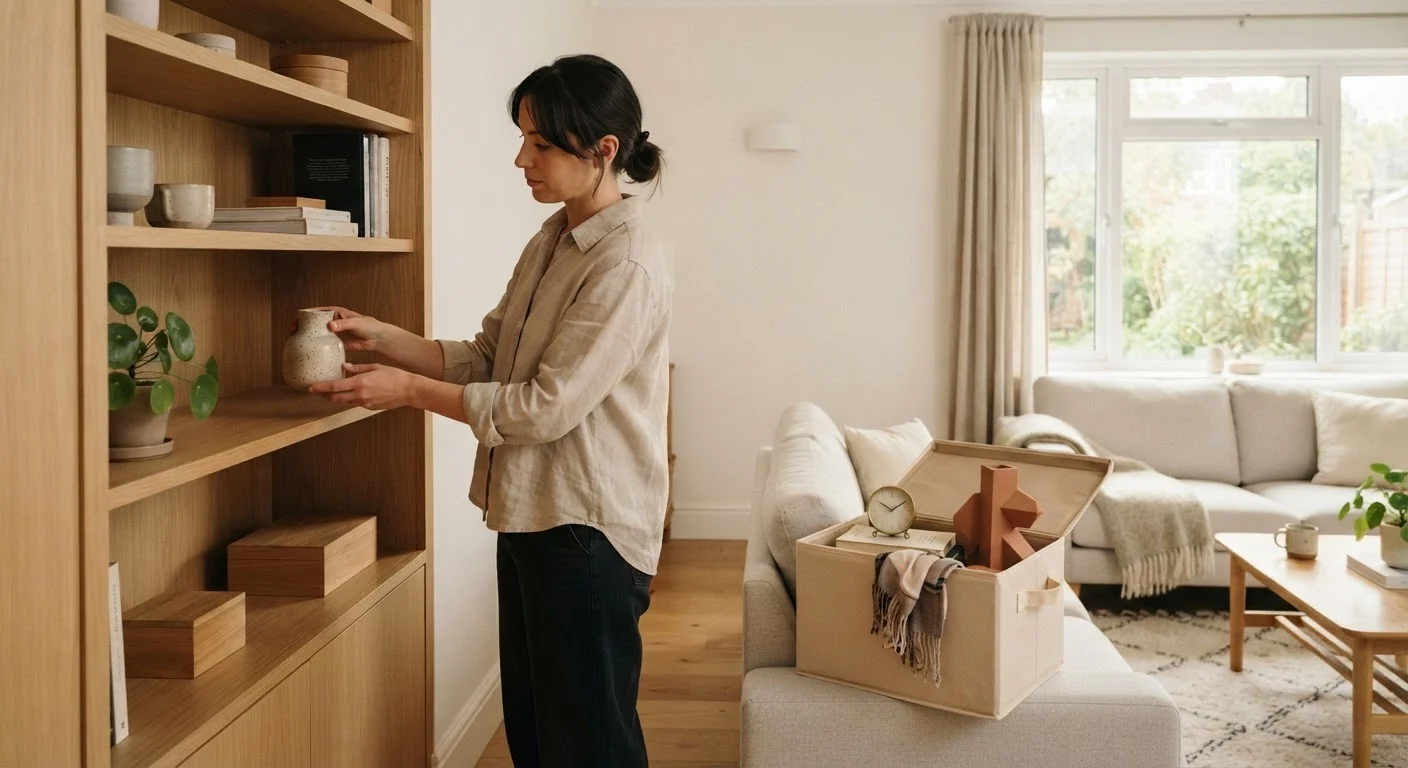
Photo credit: SearchLynk.net | Search Made Easier
In this article
The one-in, one-out principle is a popular decluttering tool, but it's not a perfect fit for every household. Here's how to apply it thoughtfully.
Key Takeaways
- The one-in, one-out rule is a maintenance tool, not a first-time decluttering solution.
- It works best after you've already reduced your belongings to a manageable baseline.
- The rule is flexible - category-matching matters more than strict numerical enforcement.
- Households with children, shared spaces, or specific life transitions may need to adapt or temporarily set it aside.
- Breaking the rule intentionally is fine - the key is making a conscious, deliberate choice rather than defaulting to accumulation.
What the One-In, One-Out Rule Actually Does
The one-in, one-out rule is deceptively simple, which is part of why it has endured as one of the most widely recommended home organization principles. At its core, it creates a ceiling on how much stuff your home holds at any given time. You're not adding net volume - you're swapping.
That simplicity also reveals its limits. The rule doesn't shrink your belongings; it stabilizes them. If you're starting from a space that already feels overwhelming, applying a one-in, one-out approach won't undo that backlog. It keeps things from getting worse, but it doesn't get you to a better baseline on its own.
For that reason, most organization experts treat it as a maintenance strategy - something you layer on after an initial clearing-out. If you're still figuring out where to begin, our guide on getting started with home organization walks through that first phase in detail.
~300,000
Average items in a US home
Research cited by professional organizers frequently references UCLA studies on American household possessions, noting the psychological weight of high-volume clutter on stress and wellbeing.
80%
Items rarely or never used
Professional organizers commonly estimate that the majority of items in a typical home are used infrequently, suggesting most households are managing more than they actively need.
Where the Rule Works Well - and Where It Falls Short
The one-in, one-out rule performs reliably in categories where volume is easy to track and where overcrowding is obvious: closets, bookshelves, kitchen drawers, toy bins. When a drawer no longer closes or a shelf sags, it's clear that something needs to go before something new arrives.
It's less useful - or simply unnecessary - for:
- Consumables: Food, cleaning products, and toiletries get used up. They don't need a swap-out; they just need a reasonable stocking limit.
- Sentimental or archival items: Applying strict swapping logic to family heirlooms, children's artwork, or keepsakes can create unnecessary stress. These categories deserve their own thoughtful approach.
- Seasonal items: Outdoor furniture, holiday decorations, and cold-weather gear often require their own storage logic. See our article on seasonal rotation and storage for a fuller look at this category.
When Breaking the Rule Actually Makes Sense
There's a version of this rule that becomes counterproductive: when it's applied so rigidly that it prevents you from meeting real needs. Life changes, and your home has to change with it. Here are situations where intentionally breaking the rule is the reasonable choice:
Major Life Transitions
Moving into a first home, combining households with a partner, or having a child all involve a genuine expansion of what your household needs. Forcing a strict one-for-one swap during these phases can mean getting rid of useful things you'll need later. It's better to pause the rule, set up the space thoughtfully, then reassess once things stabilize.
Building a New Skill or Hobby
Starting a woodworking practice, a vegetable garden, or a home gym means accumulating tools and equipment over time. That's a purposeful addition - not clutter. The rule can resume once the hobby is established and you have a clearer sense of what you actually use.
Replacing Items That Were Already Inadequate
Sometimes a household is operating with too little rather than too much. If your kitchen lacks basic tools or your workspace is undersupported, adding without removing isn't accumulation - it's filling genuine gaps.
Pause the Rule During Transitions
If you're moving, merging households, or going through a major life change, give yourself explicit permission to pause the one-in, one-out rule. Set a rough timeline - say, three to six months - after which you'll reassess what you actually use and restart the habit from a more informed baseline.
Making the Rule Work for Your Household
The most practical version of the one-in, one-out rule is one you'll actually follow. A few adjustments make it more sustainable:
Match by Category, Not Item for Item
You don't need to remove the exact equivalent of what you're adding. Bringing in a new jacket? Clear out any clothing item that no longer fits or gets worn. The goal is category-level equilibrium, not strict swapping.
Create a Staging Area
Keep a designated box or bin for items leaving the house. When something goes in, it's mentally released - even if it hasn't been donated or discarded yet. This makes the outgoing step feel concrete rather than indefinitely deferred.
Apply It to Shared Spaces Collaboratively
In households with multiple people, the rule works better as a shared agreement than a unilateral policy. Shared spaces with different standards require conversation about what 'enough' looks like for everyone involved.
Similarly, closets are one of the most common places the rule breaks down due to mismatched expectations. Our piece on closet organization myths addresses several of those friction points directly.
“Rules about stuff are useful only when they reduce friction in your life - not when they add a new kind of pressure. The goal is a home that works for you, and sometimes that means being willing to update the rules.”
— Professional Organizer Perspective, Commonly held view in the home organization community, reflecting the consensus that flexibility is essential to sustainable systems
Frequently Asked Questions

Author
Home & Garden Editorial Team
Home & Garden Editorial Team is the collective byline for our editorial team and contributor network. Articles published under this byline or an editorial pen name are researched, written, and reviewed according to our editorial standards for clarity, consistency, and independence before publication.
View all articles →