
Seasonal Rotation: The Case For and Against Storing Belongings You Don't Use Year-Round
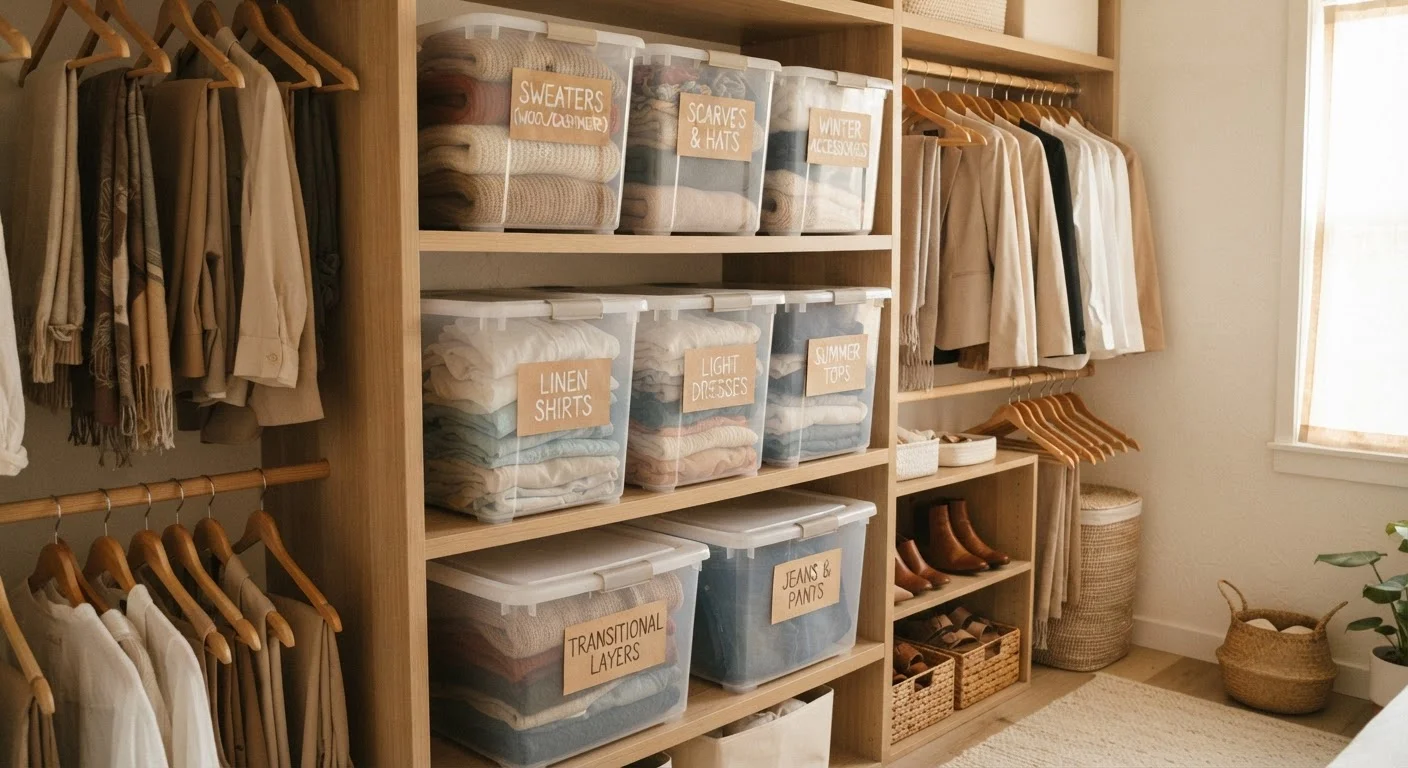
Photo credit: SearchLynk.net | Search Made Easier
In this article
Rotating seasonal items in and out of storage sounds organized in theory. Here's an honest look at the benefits, the hassle, and when it's actually worth it.
Key Takeaways
- Seasonal rotation frees up prime living space and keeps daily areas less cluttered.
- The system only works if you have adequate, accessible storage and the discipline to maintain it.
- Rotation adds real time and effort costs that casual organizers often underestimate.
- Homes with limited storage or mild climates may see fewer benefits from strict seasonal swapping.
- A hybrid approach - rotating some categories but not others - often suits most households best.
Frees up prime everyday storage space
Moving off-season items out of active closets and drawers gives you more accessible room for what you actually use, making daily routines easier and spaces feel less cramped.
Creates a built-in annual decluttering habit
Each seasonal swap is a natural checkpoint to assess whether items still fit, work, or get used - helping households gradually reduce excess without a dedicated purge.
Can extend the life of delicate or seasonal items
Properly cleaned and stored clothing and gear - in sealed, breathable containers away from light and humidity - can be better preserved than items crammed into an overcrowded closet year-round.
Reduces visual clutter in living spaces
Fewer items visible and accessible at once creates a calmer, more functional environment, which many people find reduces daily decision fatigue around what to wear or where things are.
Makes seasonal gear easier to access when needed
Knowing exactly where your winter coats or summer gear live - consistently packed in labeled bins - means you're not hunting through a mixed-up closet when the season changes.
Time-consuming to do thoroughly and consistently
A proper seasonal swap involves washing, sorting, packing, labeling, and hauling - a process that realistically takes several hours per cycle and is easy to skip or do incompletely.
Requires adequate, accessible, and safe storage
Damp basements, disorganized garages, or costly rented units can damage stored items or make the system impractical, negating much of the benefit.
Items stored away can become out of sight, out of mind
When things disappear into seasonal storage, people sometimes forget they own them, leading to duplicate purchases or items sitting unused long past their useful life.
Adds ongoing maintenance commitment to your home routine
A rotation system only works if it's consistently followed. Many households start with good intentions but abandon the practice within a year or two when life gets busy.
May be unnecessary in mild climates or spacious homes
If your wardrobe works across most of the year or your home has generous built-in storage, the effort of rotation may add labor without meaningfully improving how the space functions.
What Seasonal Rotation Actually Means
Seasonal rotation refers to the practice of cycling items in and out of active storage based on the time of year. Winter coats move to the back of the closet in April; patio furniture gets covered and stowed before the first frost; holiday decorations spend ten months boxed in the attic. The goal is to keep only the items you're currently using within easy reach, while off-season belongings live somewhere out of the way.
It's a common organizing strategy, but it isn't automatically the right one. Whether the system actually improves your life depends on your home's layout, your climate, the volume of stuff you own, and how consistently you'll actually follow through. Before committing to the twice-yearly shuffle, it helps to weigh both sides clearly.
The Case For Rotating Seasonal Items
Frees up prime everyday storage space
Moving off-season items out of active closets and drawers gives you more accessible room for what you actually use, making daily routines easier and spaces feel less cramped.
Creates a built-in annual decluttering habit
Each seasonal swap is a natural checkpoint to assess whether items still fit, work, or get used - helping households gradually reduce excess without a dedicated purge.
Can extend the life of delicate or seasonal items
Properly cleaned and stored clothing and gear - in sealed, breathable containers away from light and humidity - can be better preserved than items crammed into an overcrowded closet year-round.
Reduces visual clutter in living spaces
Fewer items visible and accessible at once creates a calmer, more functional environment, which many people find reduces daily decision fatigue around what to wear or where things are.
Makes seasonal gear easier to access when needed
Knowing exactly where your winter coats or summer gear live - consistently packed in labeled bins - means you're not hunting through a mixed-up closet when the season changes.
The most immediate payoff is reclaimed space. When a bulky ski jacket or a set of heavy wool blankets isn't competing for room in your everyday closet, that closet becomes more functional. Clothes you actually wear right now are easier to find, and the visual clutter that makes small spaces feel cramped is reduced.
Rotation also encourages a useful annual audit. Each time you unpack a season's worth of belongings, you have a natural opportunity to assess what still fits, what's worn out, and what you haven't actually used in a year - a habit that pairs well with broader decluttering strategies. See our room-by-room decluttering guide for ways to build that habit into a manageable routine.
There's also a preservation argument. Storing off-season clothing properly - clean, folded, in breathable containers - can extend the life of delicate fabrics and protect items from moths, dust, and light exposure that can degrade them over time.
The Case Against - or at Least, for Caution
Time-consuming to do thoroughly and consistently
A proper seasonal swap involves washing, sorting, packing, labeling, and hauling - a process that realistically takes several hours per cycle and is easy to skip or do incompletely.
Requires adequate, accessible, and safe storage
Damp basements, disorganized garages, or costly rented units can damage stored items or make the system impractical, negating much of the benefit.
Items stored away can become out of sight, out of mind
When things disappear into seasonal storage, people sometimes forget they own them, leading to duplicate purchases or items sitting unused long past their useful life.
Adds ongoing maintenance commitment to your home routine
A rotation system only works if it's consistently followed. Many households start with good intentions but abandon the practice within a year or two when life gets busy.
May be unnecessary in mild climates or spacious homes
If your wardrobe works across most of the year or your home has generous built-in storage, the effort of rotation may add labor without meaningfully improving how the space functions.
The most underestimated cost of seasonal rotation is time. A thorough swap - washing, sorting, packing, labeling, hauling bins to storage, then unpacking and re-sorting - can easily consume most of a weekend. For households that treat it as a once-a-year event, the backlog makes it worse. Many people start with good intentions and abandon the system after the first or second cycle.
Storage space itself is not neutral. If your "storage" is a cramped basement corner, a damp garage, or a rented unit you pay for monthly, the trade-offs shift. Moisture and pests can damage off-season items. And if storage isn't convenient, you're more likely to leave winter gear inaccessible just as an unexpected cold snap hits.
It's also worth noting that seasonal wardrobe swaps aren't always as efficient as they're made to seem. If your closet has enough capacity to hold all your clothing year-round with reasonable organization, rotating may simply be adding effort without adding function. Similarly, how you store items matters as much as whether you rotate them - good everyday organization can often solve the same problems rotation is meant to address.
Climate Matters More Than Most Guides Admit
Seasonal rotation advice is often written with a four-season North American climate in mind - cold winters, warm summers, clear transitions. If you live in a region with mild year-round temperatures or frequent weather variability (parts of the South, Pacific Coast, or Southwest), the practical difference between your "summer" and "winter" wardrobes may be minimal. In those cases, the standard rotation model may not map cleanly to your actual needs, and a lighter-touch approach to organization may serve you better.
When Rotation Makes Sense - and When It Doesn't
Rotation tends to deliver real value in specific situations: households in climates with genuine four-season temperature swings, homes where closet and living space is genuinely limited, and families with a high volume of use-specific gear - ski equipment, camping supplies, holiday décor, pool accessories - that would otherwise dominate everyday storage.
It tends to make less sense in mild climates where the same clothing works most of the year, in homes with ample built-in storage, or for people who lack a dedicated, accessible, and dry place to store off-season goods. In those cases, a strong organization system - combined with the habit of regularly editing what you own - often achieves the same result with less overhead. The one-in, one-out principle can be a useful companion rule here, keeping volume manageable so rotation becomes less necessary in the first place.
A practical middle ground: rotate only the highest-volume, most season-specific categories - outerwear, holiday items, bulky bedding - while keeping everything else accessible year-round. That approach captures most of the space benefit while minimizing the twice-yearly effort.
1 in 4
American households renting off-site storage
Industry estimates suggest roughly one in four U.S. households uses a self-storage unit, reflecting widespread demand for space beyond the home's footprint.
~4-6 hrs
Estimated time per full seasonal wardrobe swap
Home organization practitioners commonly estimate that a thorough clothing rotation for an average adult wardrobe takes between four and six hours when done carefully.

Author
Home & Garden Editorial Team
Home & Garden Editorial Team is the collective byline for our editorial team and contributor network. Articles published under this byline or an editorial pen name are researched, written, and reviewed according to our editorial standards for clarity, consistency, and independence before publication.
View all articles →