
Closet Organization Myths That Are Keeping Your Wardrobe in Chaos
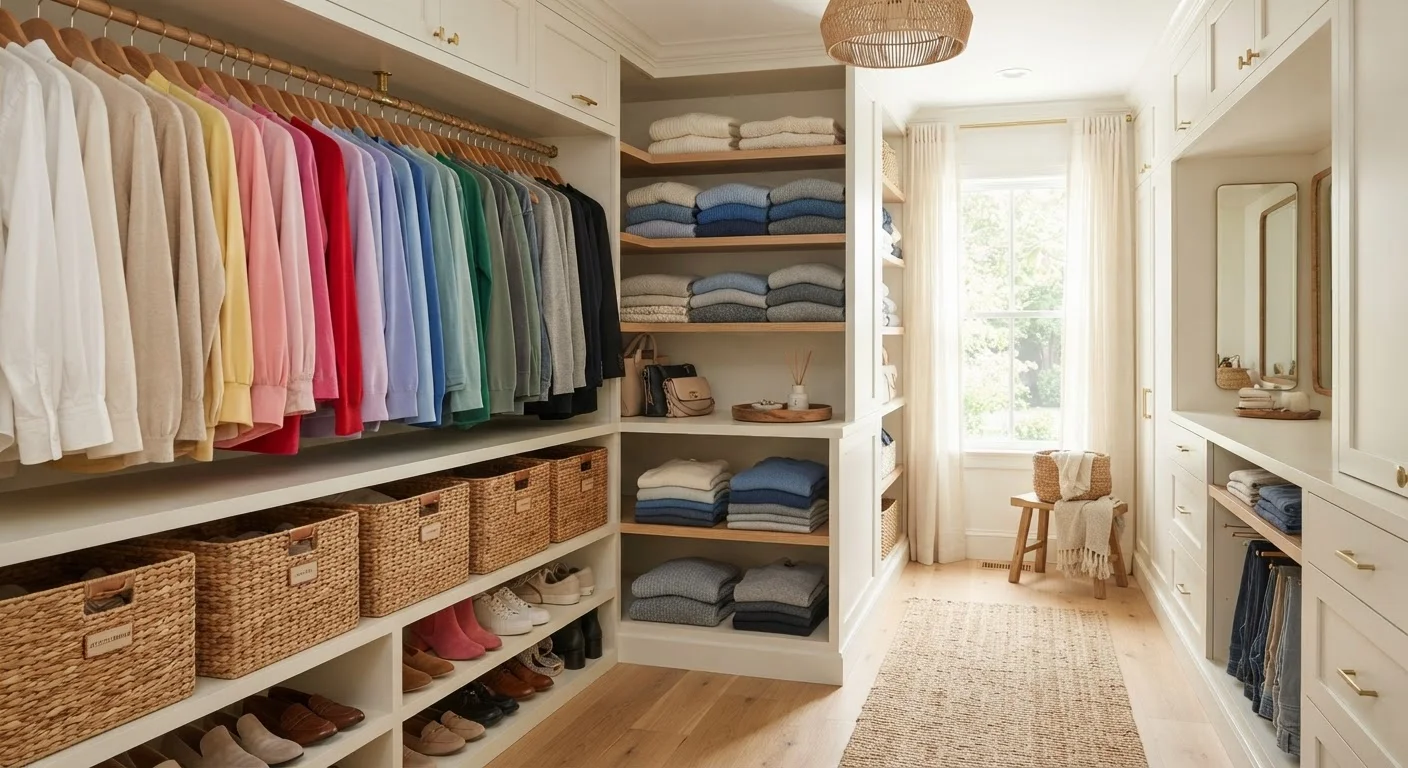
Photo credit: SearchLynk.net | Search Made Easier
From folding techniques to seasonal swaps, many popular closet tips don't hold up. We separate the useful habits from the ones wasting your time.
Key Takeaways
- More storage products rarely solve a clutter problem - editing what you own comes first.
- Folding method matters far less than having a consistent, repeatable system you'll actually use.
- Seasonal rotation isn't necessary for everyone and can create more work than it solves.
- Color-coded organization is visually satisfying but doesn't suit every person's habits.
- A 'perfect' closet setup that works for someone else may not work for your lifestyle.
Why Closet Myths Stick Around
Closet organization advice is everywhere - social media, home décor magazines, lifestyle blogs. Much of it looks compelling in photographs. The problem is that a lot of popular wisdom is built around aesthetics rather than function, and what photographs beautifully doesn't always translate to a system you can maintain on a Tuesday morning.
Understanding which common beliefs are actually undermining your efforts is the fastest way to stop spinning your wheels. This article works through the most persistent closet myths, corrects the record, and offers grounded alternatives that work for real households. For a broader look at building systems that last, see our complete home organization guide.
Myth
Buying more storage bins and organizers will fix a disorganized closet.
Fact
Adding storage to a cluttered closet usually just gives clutter more places to hide. Decluttering first is essential.
It's tempting to reach for baskets, drawer dividers, and hanging organizers when a closet feels out of control. But layering organizational products onto an overstuffed space typically relocates the problem rather than resolving it. When you add containers before editing what you own, you often end up storing items you don't need, use, or even want. The more effective sequence is: remove, assess, discard or donate, then determine what storage - if any - the remaining items actually require.
Myth
The right folding technique - such as vertical folding - is the key to a tidy drawer.
Fact
Folding method only matters if you'll consistently apply it. The best fold is the one you'll actually repeat.
Vertical folding, where clothes stand upright in a drawer so each item is visible, works well for many people and does make contents easier to scan. But the technique loses all value if it takes you significantly longer to fold, or if other household members won't adopt it. Consistency and simplicity matter more than technique. A drawer where everything is loosely but consistently placed in rough zones will function better long-term than one perfectly arranged in a method that gets abandoned after two weeks.
Myth
Organizing your closet by color is the most efficient system.
Fact
Color coding is visually appealing but only efficient if you actually think about your wardrobe by color when getting dressed.
Color-organized closets photograph beautifully and can provide a genuine visual calm. However, most people select outfits based on occasion, garment type, or outfit combinations - not by color. If you're rifling through a gradient of blues to find a specific shirt, color organization is working against you. Organizing by category (all trousers together, all workwear together, all casual tops together) tends to be more practical for everyday use. Color can be a secondary layer within a category if it genuinely helps you.
Myth
A perfectly organized closet, once set up, should stay that way.
Fact
Closets require regular, small maintenance resets - they don't stay organized passively.
Even a well-designed system drifts over time. Purchases come in, seasons shift, habits change, and items migrate. Expecting a one-time organizing session to deliver permanent results sets you up for disappointment. The more realistic model is a well-structured closet that needs a brief weekly tidy and a more thorough seasonal review. Normalizing this maintenance as part of the system - rather than treating it as evidence of failure - is one of the most important mindset shifts in home organization.
Myth
Everyone should do a full seasonal wardrobe swap - moving off-season clothes to separate storage.
Fact
Seasonal rotation works well for some people and spaces, but it creates unnecessary effort for others.
If you live in a climate with sharp seasonal distinctions and have very limited closet space, rotating items out makes practical sense. But for many households, the swap-out process is time-consuming, items get forgotten in storage, and climate variability means out-of-season pieces are needed unexpectedly. Before committing to a rotation system, honestly assess whether your space genuinely demands it or whether better editing of your total wardrobe would make rotation unnecessary.
The Habits That Actually Keep Closets Functional
Once you've set aside the myths, the principles that genuinely work are simpler and less glamorous than most content suggests. The foundation of a functional closet is not a particular product, fold, or color scheme - it is a system calibrated to how you actually behave.
80%
Clothes worn only 20% of the time
Organization researchers frequently cite the 80/20 principle as a rough pattern in wardrobe use - most people regularly wear a small fraction of what they own.
~12 min
Average time lost searching for items daily
Studies on household time use suggest Americans lose meaningful time each day locating misplaced belongings, with disorganized storage a contributing factor.
A few durable habits make the biggest difference. First, regular small resets (a few minutes each week) prevent pile-up far more effectively than periodic marathon sessions. Second, every item needs a designated home - vague zones lead to drift. Third, friction matters: if putting something away requires more than two or three steps, the system will collapse over time. Lower the barrier, and follow-through improves significantly.
It's also worth recognizing that closet chaos rarely exists in isolation. Shared households bring additional complexity - if the people you live with have different organization tolerances, no individual closet hack will substitute for a broader conversation. Our article on organizing shared living spaces covers that territory in depth.
Reorganizing Without Decluttering First Backfires
If you skip the decluttering step and move straight to reorganizing or purchasing new storage, you're likely to end up with a slightly neater version of the same problem. Before investing time or money in a new closet system, take stock of what you actually own and remove items you no longer use. This step is not optional - it determines how much space you truly need and what systems make sense for what remains.
If you're also evaluating whether seasonal rotation makes sense for your wardrobe, it's worth reading an honest assessment before committing to a system. Our seasonal rotation overview weighs the genuine benefits against the real effort involved. And if maintaining balance between what comes in and what goes out is a recurring challenge, the one-in, one-out principle is worth understanding on your own terms rather than as a rigid rule.

Author
Home & Garden Editorial Team
Home & Garden Editorial Team is the collective byline for our editorial team and contributor network. Articles published under this byline or an editorial pen name are researched, written, and reviewed according to our editorial standards for clarity, consistency, and independence before publication.
View all articles →