
Debt Consolidation: What It Is, How It Works, and When It Makes Sense
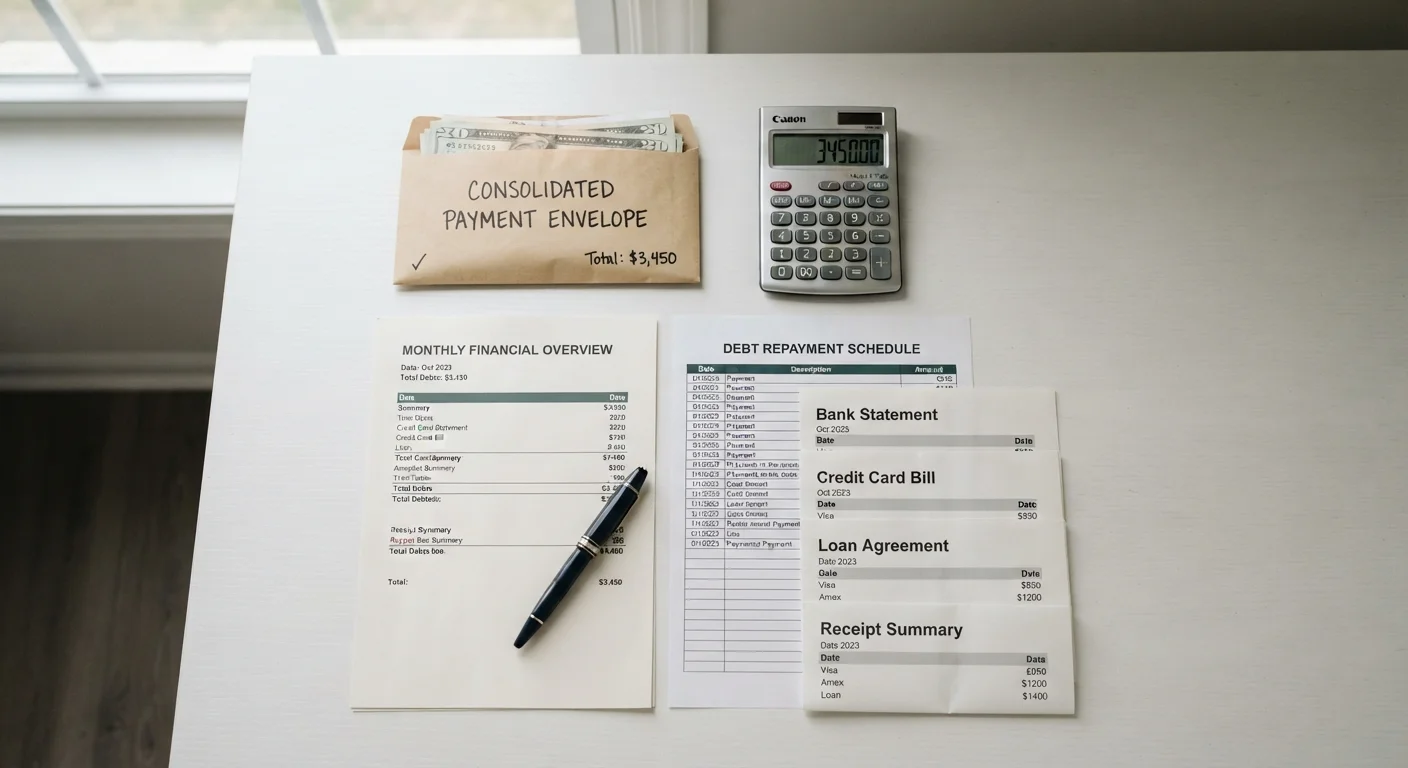
Photo credit: SearchLynk.net | Search Made Easier
In this article
Debt consolidation can simplify repayment—but it isn't always the right move. This guide breaks down the mechanics and trade-offs.
Key Takeaways
- Debt consolidation merges multiple debts into a single loan or payment, often at a lower interest rate.
- It simplifies repayment but does not eliminate what you owe - spending habits must change too.
- Your credit score, income stability, and debt types determine whether consolidation is a smart move.
- Balance transfer cards, personal loans, and home equity products are the most common consolidation tools.
- Fees, extended loan terms, and secured collateral are trade-offs worth evaluating carefully.
- Consolidation works best alongside a broader budget and repayment plan.
What Is Debt Consolidation?
Debt consolidation is a financial strategy that combines multiple debts - such as credit card balances, medical bills, or personal loans - into a single new loan or repayment arrangement. The goal is typically to reduce the number of monthly payments you manage and, where possible, lower the overall interest rate you're paying.
It's important to understand what consolidation is not: it's not debt forgiveness, and it doesn't reduce the principal you owe. It restructures how you repay that debt. Not all debt carries the same cost or consequence, and consolidation is best suited for high-interest consumer debt rather than low-rate obligations like federal student loans or mortgages.
How Debt Consolidation Works
When you consolidate, a lender pays off your existing debts - or you use a new credit product to do so - and you then make a single monthly payment toward the new balance. Ideally, the new loan carries a lower annual percentage rate (APR) than the weighted average of your previous debts, reducing total interest paid over time.
For example, if you hold three credit cards with APRs of 22%, 24%, and 19%, and you qualify for a personal loan at 13%, consolidating those balances could meaningfully reduce your interest costs - provided you don't accumulate new balances on the cleared cards.
$1.13T
U.S. credit card debt outstanding
According to the Federal Reserve Bank of New York's Q4 2023 Household Debt and Credit Report.
21%+
Average credit card interest rate
The Federal Reserve reported average credit card APRs exceeded 21% in late 2023, a historic high.
~$6,000
Average credit card balance per cardholder
TransUnion's 2023 consumer credit data estimated the average balance among cardholders carrying debt.
The mechanics hinge on two variables: the interest rate you qualify for and the repayment term. A lower rate with a similar or shorter term saves money. A lower rate stretched over a much longer term may reduce your monthly payment but increase total interest paid - a trade-off worth modeling before committing.
Common Consolidation Methods
Several financial products can be used for debt consolidation, each with distinct eligibility requirements and risk profiles:
- Personal loans: Unsecured loans from banks, credit unions, or online lenders. No collateral required, but interest rates depend heavily on your credit score.
- Balance transfer credit cards: Cards offering a promotional 0% APR period (often 12-21 months) on transferred balances. Useful if you can pay off the balance before the promotional rate expires; a transfer fee typically applies.
- Home equity loans or HELOCs: Secured against your home, these often offer lower rates - but your home becomes collateral. Defaulting puts homeownership at risk.
- Debt management plans (DMPs): Offered through nonprofit credit counseling agencies, these negotiate lower rates with creditors and consolidate payments into one monthly amount, though they typically require closing the accounts involved.
Before applying for any consolidation product, get pre-qualified through lenders that use soft credit pulls - this lets you compare rate offers without triggering hard inquiries.
Hard inquiries can temporarily lower your credit score, and multiple applications in a short window compound that effect. Soft-pull pre-qualification protects your score while shopping.
If you use a balance transfer card, divide the transferred balance by the number of months in the promotional period and set that as your minimum automatic payment from day one.
The deferred interest risk of a promotional APR card is significant - if any balance remains when the promotion ends, the full standard rate applies, often retroactively to the original transfer.
To compare structured payoff strategies alongside consolidation, it helps to calculate the total interest cost of each path before deciding.
When Consolidation Makes Sense - and When It Doesn't
Consolidation tends to be a sound strategy when:
- You carry multiple high-interest debts and qualify for a meaningfully lower rate.
- You have a stable income that supports consistent monthly payments.
- Your credit score is strong enough to access favorable terms (generally 670 or above, though this varies by lender).
- You've addressed the spending patterns that created the debt in the first place.
Consolidation is less likely to help when:
- The new rate isn't materially lower than your current average.
- You're consolidating into a secured loan (like a home equity product) debt that was previously unsecured - increasing your financial risk.
- You plan to continue using paid-off credit cards, potentially rebuilding balances.
- Your debt load is severe enough that even restructured payments aren't manageable without additional intervention, such as debt settlement or bankruptcy counseling.
Secured Debt Raises the Stakes
Using home equity to consolidate unsecured debts - like credit cards - converts debt that carried no collateral risk into debt secured by your home. If you default, you could lose your property. This trade-off should be weighed carefully and discussed with a financial professional before proceeding.
Consolidation also doesn't resolve the underlying question of whether to prioritize debt payoff or build savings - that decision still requires a broader financial plan.
Impact on Credit and Long-Term Finances
Applying for a new loan or balance transfer card triggers a hard inquiry on your credit report, which may temporarily lower your credit score by a few points. However, if consolidation reduces your credit utilization ratio - the percentage of available revolving credit you're using - it may improve your score over time.
Closing old accounts after consolidation can shorten your average account age, another factor in credit scoring models. It's generally advisable to leave accounts open unless a fee makes that impractical.
From a long-term financial perspective, consolidation works best as part of a broader plan. Pairing it with a structured budget - see how to build your first budget around debt repayment - increases the likelihood of staying on track after restructuring.
Steps to Take Before Consolidating
Before pursuing debt consolidation, a few preparatory steps make the process more effective:
- List all your debts: Note the balance, APR, minimum payment, and remaining term for each account.
- Calculate your weighted average interest rate: This is your benchmark - any consolidation option should beat it meaningfully.
- Check your credit report: Errors on your report can depress the rate you're offered. You're entitled to free reports through AnnualCreditReport.com.
- Compare total costs, not just monthly payments: Use an amortization calculator to see total interest paid under each scenario.
- Consider nonprofit credit counseling: If you're unsure which path fits your situation, a HUD-approved or NFCC-member counselor can provide guidance without a sales motive.
For those weighing longer-term debt decisions, understanding the principles behind sustainable debt repayment provides a useful framework beyond any single tool or tactic.
This article is for general informational purposes only and does not constitute personalized financial, tax, or legal advice. Readers should consult a qualified financial professional before making decisions about their own debt management.

Author
Finance Editorial Team
Finance Editorial Team is the collective byline for our editorial team and contributor network. Articles published under this byline or an editorial pen name are researched, written, and reviewed according to our editorial standards for clarity, consistency, and independence before publication.
View all articles →