
The Difference Between Good Debt and Bad Debt
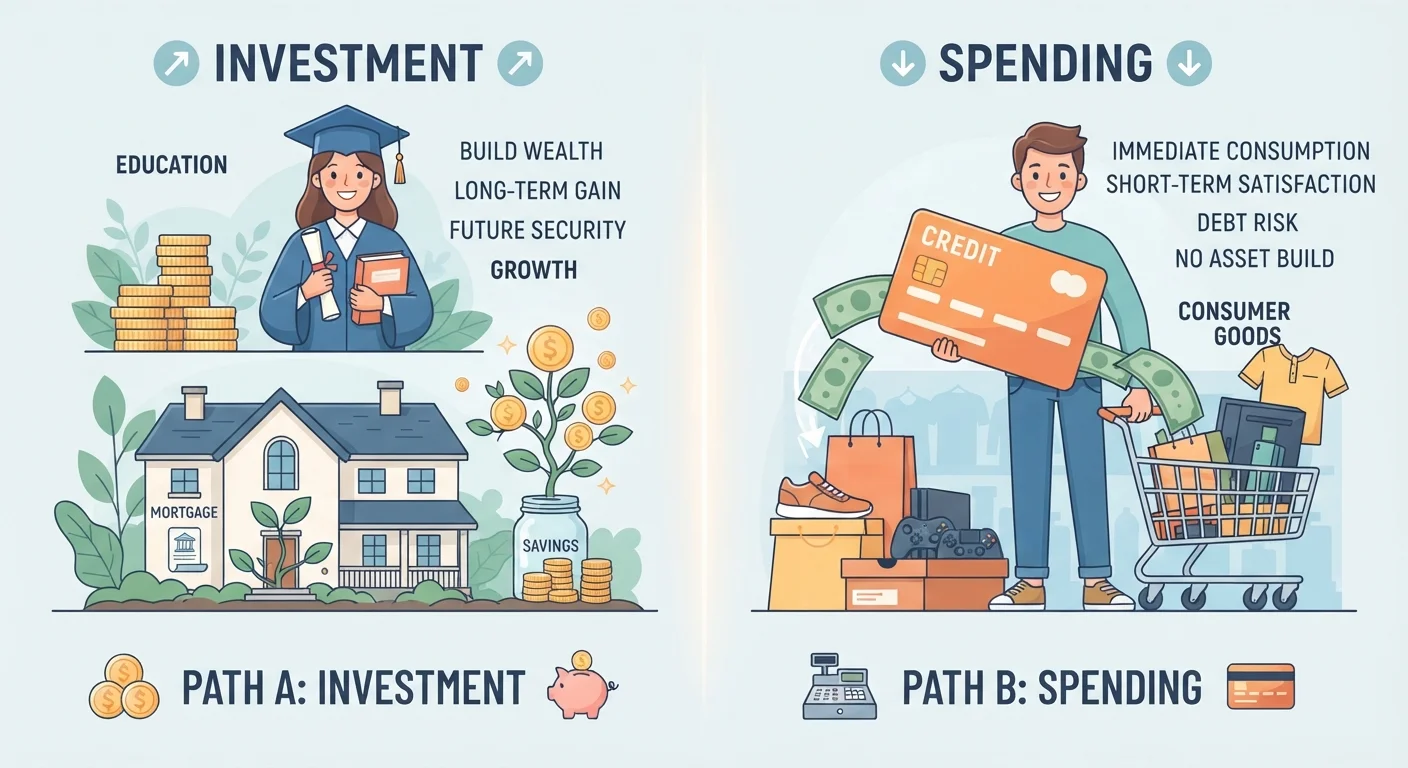
Photo credit: SearchLynk.net | Search Made Easier
In this article
Not all debt is created equal. Learn how to tell apart debt that builds wealth from debt that quietly drains it.
Key Takeaways
- Good debt typically funds assets or skills that grow in value or boost earning potential.
- Bad debt usually carries high interest rates and finances depreciating goods or lifestyle spending.
- Interest rate is a critical factor: lower-rate debt tied to appreciating assets is generally more manageable.
- Even good debt can become a burden if it exceeds what you can reasonably repay.
- Understanding debt type helps you prioritize repayment and make smarter borrowing decisions.
Why the Type of Debt You Carry Matters
Most people think of debt as something to avoid entirely. But the reality is more nuanced: borrowing money is a tool, and like any tool, its value depends entirely on how it's used. The same loan that helps one person build lasting wealth can trap another in a cycle of payments they can barely manage.
The core question isn't whether you have debt - it's whether that debt is working for you or against you. Understanding this distinction gives you a clearer framework for deciding when borrowing makes sense, which obligations to pay down aggressively, and when carrying a balance is a reasonable trade-off.
~$17T
Total U.S. household debt outstanding
According to the Federal Reserve Bank of New York, total U.S. household debt has exceeded $17 trillion, underscoring how central borrowing is to American financial life.
20%+
Average credit card APR in the U.S.
The Federal Reserve tracks average credit card interest rates, which have risen well above 20% in recent years - making revolving balances among the most expensive forms of consumer debt.
~6-7%
Typical 30-year fixed mortgage rate range
Mortgage rates fluctuate with market conditions, but historically have remained significantly lower than consumer debt rates, reflecting the secured, asset-backed nature of home loans.
What Makes Debt "Good"
Good debt typically shares a few recognizable traits. It carries a relatively low interest rate, it's used to acquire something that holds or grows in value, and it's structured in a way that's manageable within your income. The most commonly cited examples include:
- Mortgages: Borrowing to purchase a home means you're acquiring an asset that has historically appreciated over long time horizons - though that isn't guaranteed. Mortgage interest rates are generally lower than other forms of consumer debt.
- Student loans: Education can increase lifetime earning potential, making student debt a calculated investment - provided the cost of borrowing is proportionate to the financial return of the degree.
- Small business loans: Financing a business with a clear revenue model can generate returns that far exceed the cost of borrowing.
Good debt still carries risk. A mortgage can become unmanageable if your financial situation changes. Student loans can be a burden if the career path doesn't materialize as expected. The "good" label is conditional, not permanent. For more on building a complete financial picture, the Investing Essentials hub covers foundational wealth-building concepts worth understanding alongside debt management.
What Makes Debt "Bad"
Bad debt typically does the opposite: it finances things that lose value immediately or provide no financial return, often at high interest rates that make repayment disproportionately expensive over time.
Credit card debt is the most common example. The average APR on credit cards is substantially higher than rates on mortgages or auto loans, meaning every month you carry a balance, interest compounds against you. Financing a vacation, a wardrobe, or restaurant meals on a card you don't pay off in full is borrowing at a steep cost for something that delivers no financial return.
Auto loans can fall in between: a car is a depreciating asset, but transportation is often a necessity. The distinction shifts based on interest rate, loan term, and whether the vehicle is essential to your income or primarily a lifestyle choice.
Learn why high-interest debt is so difficult to escape - the math behind high-APR balances reveals why minimum payments barely reduce the principal.
A Quick Rule of Thumb on Interest Rates
If the interest rate on your debt is higher than the return you could reasonably expect from investing that money, paying down the debt first is generally the more financially sound move. High-rate consumer debt almost always clears this bar. Low-rate mortgage debt often does not, which is why many financial planners treat them differently.
Using This Framework to Make Better Decisions
The good debt/bad debt distinction is most useful as a decision-making filter - not a moral judgment. Before borrowing, ask: Does this purchase appreciate in value or increase my income? What is the interest rate? Can I service this debt comfortably on my current income?
If you're already carrying multiple forms of debt, this framework also helps you prioritize. High-interest consumer debt typically deserves more aggressive payoff attention than a low-rate mortgage. Once you understand where your debt falls on the spectrum, you can build a repayment approach that fits your circumstances. Our guide on sustainable debt repayment principles offers a practical starting point. And if you're weighing whether to pay down debt or build savings first, see our breakdown of the emergency fund vs. debt payoff trade-off.
This article is for general informational and educational purposes only and does not constitute personalized financial, investment, tax, or legal advice. Consult a qualified financial professional before making decisions about your specific financial situation.
Frequently Asked Questions

Author
Finance Editorial Team
Finance Editorial Team is the collective byline for our editorial team and contributor network. Articles published under this byline or an editorial pen name are researched, written, and reviewed according to our editorial standards for clarity, consistency, and independence before publication.
View all articles →