
Watering Smarter: Principles That Healthy Gardens Actually Follow
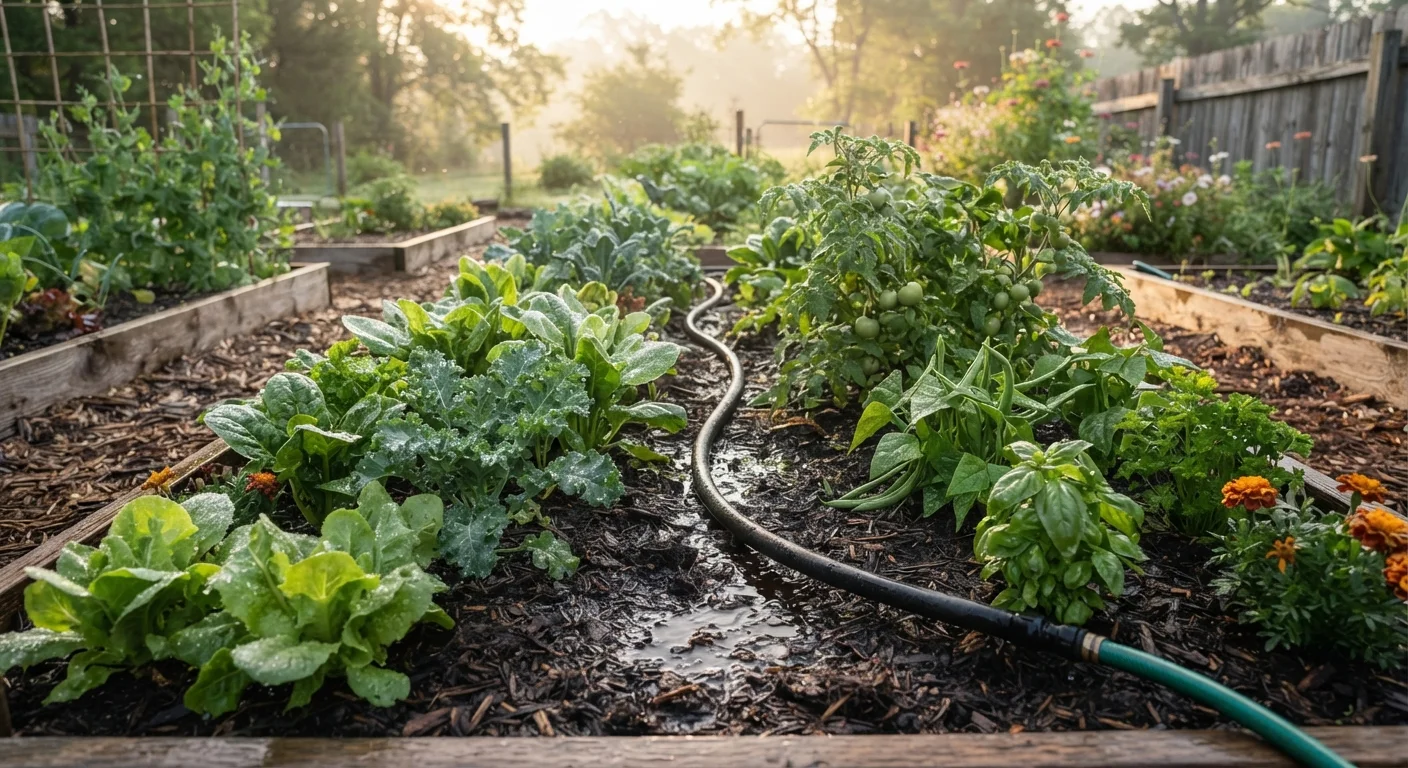
Photo credit: SearchLynk.net | Search Made Easier
In this article
Understand how much, how often, and when to water — and why consistent watering habits matter more than any single technique.
Key Takeaways
- Deep, infrequent watering encourages roots to grow downward, making plants more drought-resilient.
- Watering at the base of plants - not the leaves - reduces disease and water waste.
- Soil type and container vs. in-ground planting significantly affect how often plants need water.
- Morning is generally the best time to water, allowing foliage to dry before nightfall.
- Mulching around plants slows evaporation and dramatically reduces how often you need to water.
Why Watering Habits Matter More Than Watering Amount
Most struggling gardens aren't victims of drought or disease - they're victims of irregular, shallow watering. When you water a little every day, roots have no reason to grow deep into the soil where moisture is more stable. They stay close to the surface, where they're vulnerable to heat, compaction, and dry spells.
Healthy gardens follow a counterintuitive principle: water less often, but water thoroughly. A deep soak once or twice a week does more for most plants than a daily sprinkle. This approach trains roots to follow moisture downward, building plants that can tolerate short dry periods without wilting or stress.
If you're just getting started, our guide for first-time gardeners covers how to think about water needs alongside soil prep, plant selection, and spacing from the very beginning.
Water deeply and infrequently rather than shallowly every day.
Shallow daily watering keeps roots near the surface where soil dries out fastest. Deep watering - enough to moisten the soil 6 to 8 inches down - encourages roots to grow downward where moisture is more stable and accessible during dry stretches.
Water at the base of plants, not overhead on the foliage.
Wet leaves are more susceptible to fungal diseases such as powdery mildew and leaf spot. Directing water to the soil near the root zone also ensures moisture actually reaches where plants can absorb it, reducing waste from evaporation.
Water in the morning whenever possible.
Morning watering gives foliage time to dry during the day, reducing fungal disease risk. It also means less evaporation loss compared to midday watering, and plants are hydrated heading into the warmest part of the day.
Adjust your watering frequency based on weather, not just the calendar.
A fixed schedule ignores the biggest variables: rain, humidity, and temperature. Watering on a set schedule during a rainy week can waterlog roots, while skipping a watering during a heat wave can stress plants irreversibly.
Apply mulch around plants to retain soil moisture between waterings.
Organic mulch acts as an insulating layer that slows surface evaporation, keeping the root zone moist for longer after each watering. This can meaningfully reduce how often you need to water while also improving soil health over time.
Core Principles for Smarter Watering
These practices apply broadly across vegetable beds, flower borders, and shrub plantings - though always account for your specific plants, climate, and soil. Use these as a foundation, then adjust based on what you observe.
Reading Your Garden's Moisture Signals
Plants and soil communicate when they need water - if you know what to look for. The most reliable check isn't a schedule: it's the finger test. Push a finger about two inches into the soil near the plant's root zone. If it feels dry at that depth, it's time to water. If it still feels cool and moist, wait another day.
Wilting is an obvious warning sign, but it's worth knowing that wilting in the heat of the afternoon doesn't always mean a plant is thirsty - some plants wilt temporarily as a way to reduce surface area and conserve moisture, then recover in the evening. Persistent morning wilting is a clearer sign of water stress.
Your soil type changes everything here. Sandy soils drain fast and dry out quickly, often requiring more frequent watering. Clay soils hold moisture longer but can become waterlogged if overwatered. Our article on reading your soil before planting explains how to identify what you're working with and adjust accordingly.
Container plants dry out much faster than in-ground beds because their root zone is limited and pots heat up quickly - especially in summer. If you grow in pots, check daily during warm weather. For more on keeping potted plants healthy, see our overview of container gardening.
Container Plants Need More Frequent Attention
Potted plants can dry out within 24 hours during summer heat because their soil volume is small and containers absorb ambient warmth. In-ground plants in established beds typically need much less frequent monitoring. If you're mixing container and in-ground growing, treat each separately rather than following one blanket schedule.
Pairing Watering with Mulch for Better Results
No single practice extends the benefit of good watering more than mulching. A two-to-three-inch layer of organic mulch - such as shredded bark, straw, or wood chips - laid around your plants slows evaporation dramatically, keeping soil moisture more consistent between waterings. It also moderates soil temperature and suppresses weeds that compete for water.
Think of mulch and smart watering as a system rather than separate tasks. What mulch actually does for your garden breaks down these benefits in detail, including how different mulch types perform in varying climates. When you water deeply and then mulch over moist soil, you're extending the value of every gallon you use.
Building these habits into your seasonal routine - rather than reacting to wilting or dry spells - is the shift that separates a garden that merely survives from one that consistently thrives.

Author
Home & Garden Editorial Team
Home & Garden Editorial Team is the collective byline for our editorial team and contributor network. Articles published under this byline or an editorial pen name are researched, written, and reviewed according to our editorial standards for clarity, consistency, and independence before publication.
View all articles →