
Travel Documents: A Complete Reference for What to Carry and Where
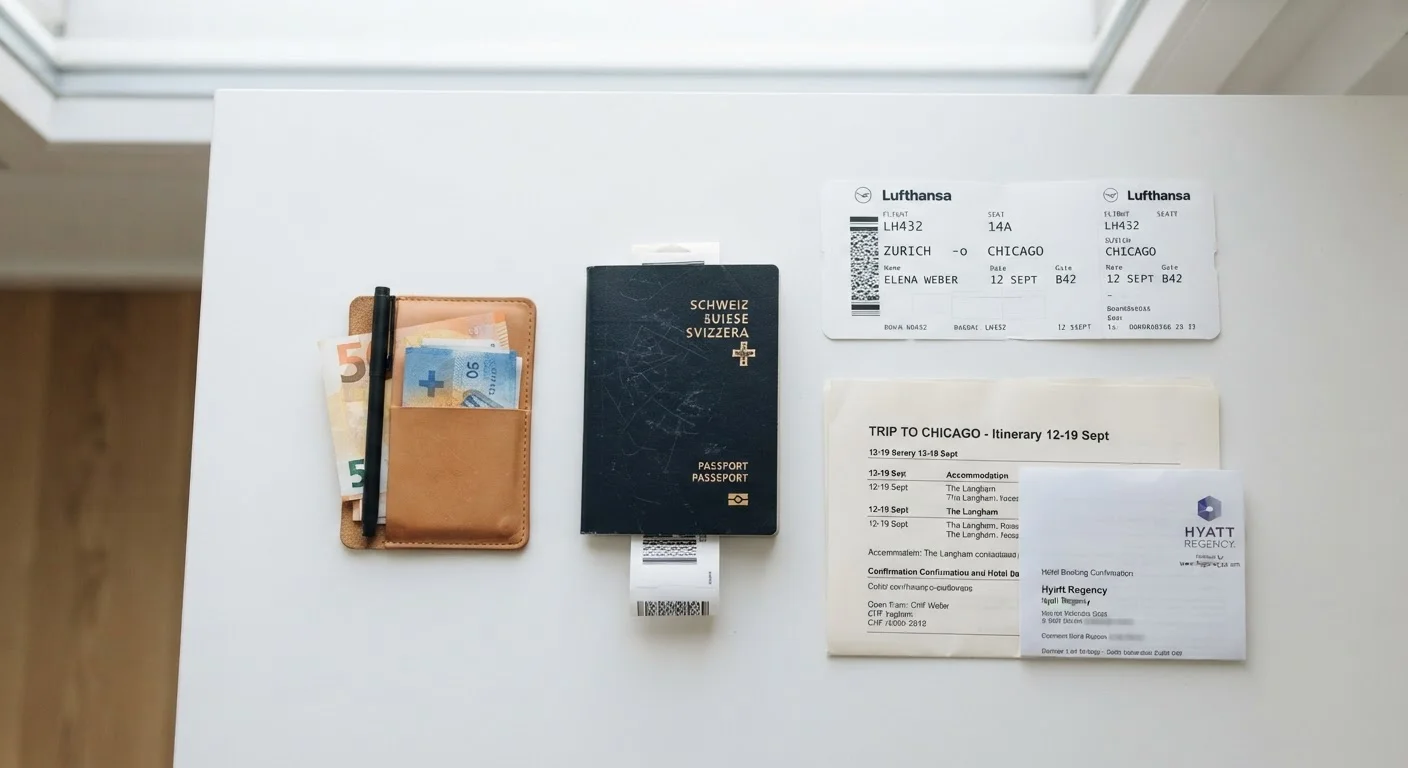
Photo credit: SearchLynk.net | Search Made Easier
In this article
A quick-reference breakdown of passports, visas, entry requirements, digital copies, and document storage strategies for international trips.
The Core Documents Every International Traveler Needs
Before boarding any international flight, you need to confirm you have the foundational documents that border officers, airlines, and immigration authorities expect. Missing even one can ground your trip entirely.
| U.S. Adult Passport Validity | 10 years from issue date (U.S. Department of State) |
| U.S. Minor Passport Validity | 5 years from issue date (U.S. Department of State) |
| Common Foreign Entry Requirement | Passport valid 6+ months beyond travel dates (Varies by country - verify per destination) |
| REAL ID Required For | Domestic U.S. air travel at TSA checkpoints (U.S. Department of Homeland Security) |
| IDP Must Be Paired With | Your original home-country driver's license (Standard international requirement) |
| STEP Enrollment | Free; available at step.state.gov (U.S. Department of State) |
Passport: Your passport is the single most important travel document. It must be valid - and many countries require it to remain valid for at least six months beyond your travel dates, not just your departure date. Check this early. U.S. passports are issued for 10 years to adults and 5 years to minors.
Visa: A visa is official permission to enter a country, usually stamped or adhered inside your passport. Some countries grant U.S. citizens visa-free access; others require advance applications, sometimes weeks or months in advance. Requirements change, so always verify current rules through the destination country's official embassy or consulate website and the U.S. Department of State's travel portal before your trip.
Return or onward ticket: Many countries require proof that you intend to leave - a return flight booking or a ticket to your next destination. Airlines may ask for this at check-in even before you board.
For a full pre-departure document run-through, see the pre-trip checklist for international travel.
Situation-Specific Documents to Know About
Beyond the basics, certain trips and traveler profiles require additional paperwork. Knowing what applies to your situation in advance prevents avoidable delays.
Passport
A government-issued document certifying your identity and citizenship, required for international travel. It must typically be valid well beyond your travel dates - many countries require at least six months of remaining validity.
Visa
An official authorization, granted by a destination country, permitting you to enter for a specific purpose and duration. Visas may be stamped in your passport, issued as a separate document, or granted electronically.
International Driving Permit (IDP)
A supplementary document that translates your home-country driver's license into multiple languages, recognized in many countries as authorization to drive abroad. It must be carried alongside your original license.
REAL ID
A federally compliant form of state-issued identification in the United States, marked with a star symbol. Required at TSA checkpoints for domestic air travel in place of a standard state license.
Onward Ticket
Proof of a confirmed departure from a country - typically a return flight or connecting ticket - that immigration authorities may require to demonstrate you do not intend to overstay your permitted visit.
STEP (Smart Traveler Enrollment Program)
A free service run by the U.S. Department of State that allows American travelers to register their trips with the nearest U.S. embassy or consulate, enabling emergency contact and access to destination safety alerts.
Traveling with minors: If a child is traveling with only one parent or with someone other than a legal guardian, some countries require a notarized consent letter from the absent parent(s). Requirements vary by country and can be strictly enforced. The planning guide for traveling with children covers documentation and other family-specific logistics in detail.
Dual citizens: If you hold citizenship in two countries, check whether either government requires you to use its passport when entering or exiting. This is a legal requirement in some nations, not merely a recommendation.
REAL ID for domestic U.S. travel: A standard state driver's license is no longer accepted as sole identification at TSA checkpoints for domestic air travel. A REAL ID-compliant license, U.S. passport, or other federally accepted ID is required. Check your license for the REAL ID star marking if you're unsure.
International Driving Permit (IDP): If you plan to rent or drive a vehicle abroad, an IDP translates your U.S. license into multiple languages and is required or strongly recommended in many countries. Obtain one before departure - they are not issued abroad.
Digital Copies and Backup Strategies
Digital Copies Are Helpful - Not a Legal Substitute
Scanned or photographed copies of your passport and visa speed up replacement if originals are lost, but they are generally not accepted in place of original documents at border crossings or by airlines. Always travel with your physical originals. Keep backups as a recovery tool, not a primary document strategy.
Physical documents can be lost, stolen, or damaged. A layered backup strategy won't replace originals at a border crossing, but it dramatically speeds up recovery if something goes wrong.
What to copy: Make digital scans of your passport (photo page), visa, travel insurance policy, vaccination records if required, driver's license, and any hotel or transportation confirmations.
Where to store them: Save copies in at least two places: a secure cloud service you can access from any device, and an encrypted folder on your phone. Avoid emailing scans to yourself through unsecured accounts - use password-protected storage.
Physical backup: Carry one set of photocopies separate from your originals - in a different bag or a hotel safe. Leave a second copy with a trusted contact at home who can read them to you or send them electronically if needed.
Embassy registration: U.S. travelers can register their trip with the State Department's Smart Traveler Enrollment Program (STEP). This allows the nearest embassy to contact you in emergencies and receive safety updates for your destination.
Document organization fits into a broader planning framework - the article The Anatomy of a Well-Planned Trip explains how documents connect to other pre-departure priorities.
How to Carry Documents Safely While Traveling
Where and how you carry your documents while on the road matters as much as having them. Pickpocketing, bag theft, and simple misplacement are common travel risks.
Daily carry: On travel days - flights, border crossings, check-ins - carry your passport and primary ID on your person, not in checked luggage. A money belt or hidden travel pouch worn under clothing is a reliable option in higher-risk environments.
At your destination: Once you've checked into lodging, consider whether you actually need your passport with you each day. Many experienced travelers leave their passport in the hotel safe and carry only a photocopy and a secondary ID for daily sightseeing. However, some countries legally require foreigners to carry their passport at all times - verify this for your destination.
At airports and transport hubs: Keep documents immediately accessible at checkpoints, but re-secure them right after. Fumbling with open bags in crowded transit areas increases vulnerability. A dedicated document pocket in your carry-on - separate from everything else - keeps the process smooth.
For carry-on packing strategies that factor in document access and security, see packing a week into a carry-on.
Entry requirements, visa rules, and identification regulations vary by country and are subject to change. Always verify current requirements through official government sources - including your destination country's embassy and the U.S. Department of State - before traveling.

Author
Travel & Trips Editorial Team
Travel & Trips Editorial Team is the collective byline for our editorial team and contributor network. Articles published under this byline or an editorial pen name are researched, written, and reviewed according to our editorial standards for clarity, consistency, and independence before publication.
View all articles →