
Carry-On Only: Packing a Week's Worth of Clothes Without Checking a Bag
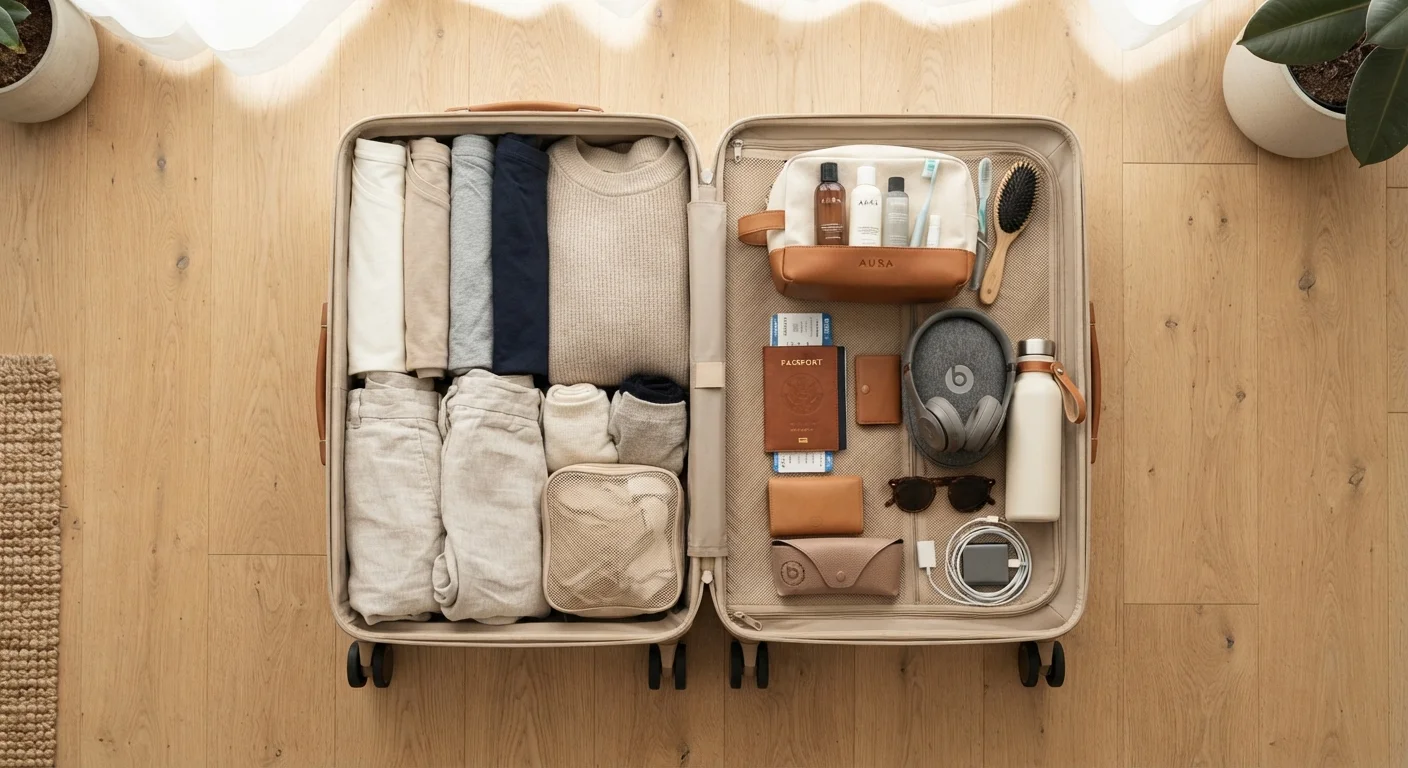
Photo credit: SearchLynk.net | Search Made Easier
In this article
A practical walkthrough for fitting seven days of travel into a single carry-on, including clothing strategies and essential items to skip.
Key Takeaways
- Choosing versatile, neutral-colored clothing dramatically reduces how many pieces you actually need.
- Rolling clothes and using packing cubes maximizes space and keeps your bag organized throughout the trip.
- Toiletries and electronics are the most common space-wasters - a strict edit of both is essential.
- Wearing your bulkiest items on travel days frees up significant room inside your bag.
- Planning to do one mid-trip laundry session can cut your clothing load nearly in half.
Why Carry-On Only Is Worth the Discipline
Checking a bag adds time, cost, and uncertainty to any trip. Even on shorter journeys, waiting at baggage claim after a long flight - or worse, filing a claim for a delayed bag - erases much of the ease that travel should offer. Carry-on travel puts you in control: you board, you deplane, you leave. For a deeper look at when checking luggage does make more sense, see our comparison guide on carry-on versus checked baggage.
The challenge most travelers face isn't willpower - it's not having a clear system. Packing a week into a carry-on is entirely achievable with the right framework, the right fabric choices, and a willingness to leave the "maybe" items behind. This guide walks you through that system step by step.
What you will need
What You'll Need Before You Start
Having the right tools on hand makes the packing process faster and more effective. The items below aren't luxuries - they're the difference between a bag that closes easily and one you're sitting on to zip.
Packing cubes
Compress and organize clothing into tidy sections, making it easier to find items without unpacking everything.
Luggage scale
Verify your packed bag stays within airline weight limits before you leave home.
Quart-sized clear toiletry bag
Required for carrying liquids through TSA security checkpoints on US domestic and international flights.
Compression bags
Reduce volume of bulkier items like sweaters or light jackets by removing excess air.
Wrinkle-release spray
Quickly smooth out creased clothing without access to an iron at your destination.
Step-by-Step Packing Process
Follow these steps in order. Each builds on the last, and skipping ahead - especially starting to pack clothes before auditing your toiletries and electronics - is how bags end up overfull.
Verify your bag's dimensions before anything else
Most major US airlines allow a carry-on of approximately 22 x 14 x 9 inches, but limits vary - budget carriers in particular can be more restrictive. Pull up your airline's baggage policy page and confirm both the size and weight limits before you start packing. If you're connecting on a smaller regional flight, check that carrier's rules too, since they can differ from the main airline's policy.
Build a clothing formula, not a list
Instead of packing an outfit for each day, use a formula: 5 tops, 3 bottoms, 2 layers, 7 pairs of underwear and socks. This covers seven days through mixing and matching rather than one-to-one outfit planning. Stick to a two- or three-color palette (such as navy, white, and khaki) so everything coordinates. Choose fabrics that resist wrinkles and dry quickly - merino wool and synthetic blends both pack well and can be hand-washed and rehung overnight.
Wear your bulkiest items on travel day
Your heaviest shoes, thickest jacket, and bulkiest sweater should be on your body when you walk to the airport, not inside your bag. This single habit is one of the most effective ways to free up space. Sneakers or ankle boots often take up a third of a bag's volume on their own. Pack one additional pair of shoes maximum - sandals or flats that can collapse flat are ideal.
Roll clothes and use packing cubes systematically
Fold clothes flat, then roll them tightly into cylinders before placing them into packing cubes. Rolled clothing reduces wrinkles compared to stacking and uses corner space that flat-folded items miss. Assign each cube a category: one for tops, one for bottoms, one for underwear and socks. This also makes unpacking at your destination effortless - slide each cube into a drawer without rearranging anything.
Edit your toiletries ruthlessly
Toiletries are the single biggest space drain in most carry-on bags. Decant products into small reusable containers rather than bringing full-sized bottles. Many hotel and vacation rental properties supply shampoo, conditioner, and body wash - confirm before you pack. Solid versions of shampoo, conditioner, and sunscreen eliminate liquid concerns entirely and take up almost no space. Keep only what you'll genuinely use daily; leave the "just in case" products at home.
Manage electronics and cables with intention
Electronics, chargers, and cables accumulate quickly and add meaningful weight. Audit what you truly need: one universal charging cable that covers your devices, one adapter if traveling internationally, and earbuds. Avoid bringing a laptop if a tablet or phone will serve your needs. Store cables coiled inside a small pouch so they don't tangle and take up more room than necessary.
Plan one mid-trip laundry stop
If your trip is seven days or longer, planning a single laundry session at the midpoint effectively cuts your clothing load in half. Most urban destinations have self-service laundromats, and many hotels offer laundry bags or coin-operated machines. Even hand-washing underwear and lightweight tops in a sink and hanging them overnight reduces how much you need to carry. Build this into your trip itinerary from the start so it doesn't feel like a disruption.
The Power of a Capsule Wardrobe
A capsule wardrobe - a small set of items that all work together - is the single most effective packing strategy for any trip longer than three days. When every piece can be worn with every other piece, you multiply outfit options without adding clothes. Aim for a palette of two base colors plus one accent, and you'll rarely feel like you're wearing the same thing twice.
Common Mistakes That Sink Carry-On Plans
Even well-intentioned packers fall into a few consistent traps. Understanding them in advance makes them easier to avoid.
- Packing for worst-case scenarios. A formal outfit "just in case" or a heavy rain jacket for a trip with a 10% chance of rain are classic space thieves. Pack for likely conditions, not every possibility.
- Ignoring weight limits. Size is only half the equation. Some airlines on international routes enforce carry-on weight limits strictly - a bag that fits overhead but weighs 22 lbs may still be checked at the gate. Use a luggage scale before you leave home.
- Overpacking shoes. Shoes are dense and oddly shaped. Two pairs maximum - the ones on your feet plus one flat, packable pair - is a firm ceiling for carry-on travel.
- Skipping the edit pass. After your bag is packed, take everything out and do one final review. Remove anything you haven't actively thought "I know I'll use this" about. Most travelers pull out two to four items on a second pass.
Once your bag is set, cross-reference your overall departure prep with our pre-departure checklist to make sure nothing else is missing before you head out.
Airline Rules Change - Always Verify
Carry-on size and weight policies vary by airline, route, and fare class, and they do change. Budget airlines may charge fees for bags that exceed strict limits, even if they fit in an overhead bin. Always check your specific carrier's current policy before packing, particularly if you're booking through a third-party platform where baggage rules may not be prominently displayed.

Author
Travel & Trips Editorial Team
Travel & Trips Editorial Team is the collective byline for our editorial team and contributor network. Articles published under this byline or an editorial pen name are researched, written, and reviewed according to our editorial standards for clarity, consistency, and independence before publication.
View all articles →