
Tokyo for the Unprepared: Cultural Norms, Logistics, and What Surprises Most Americans
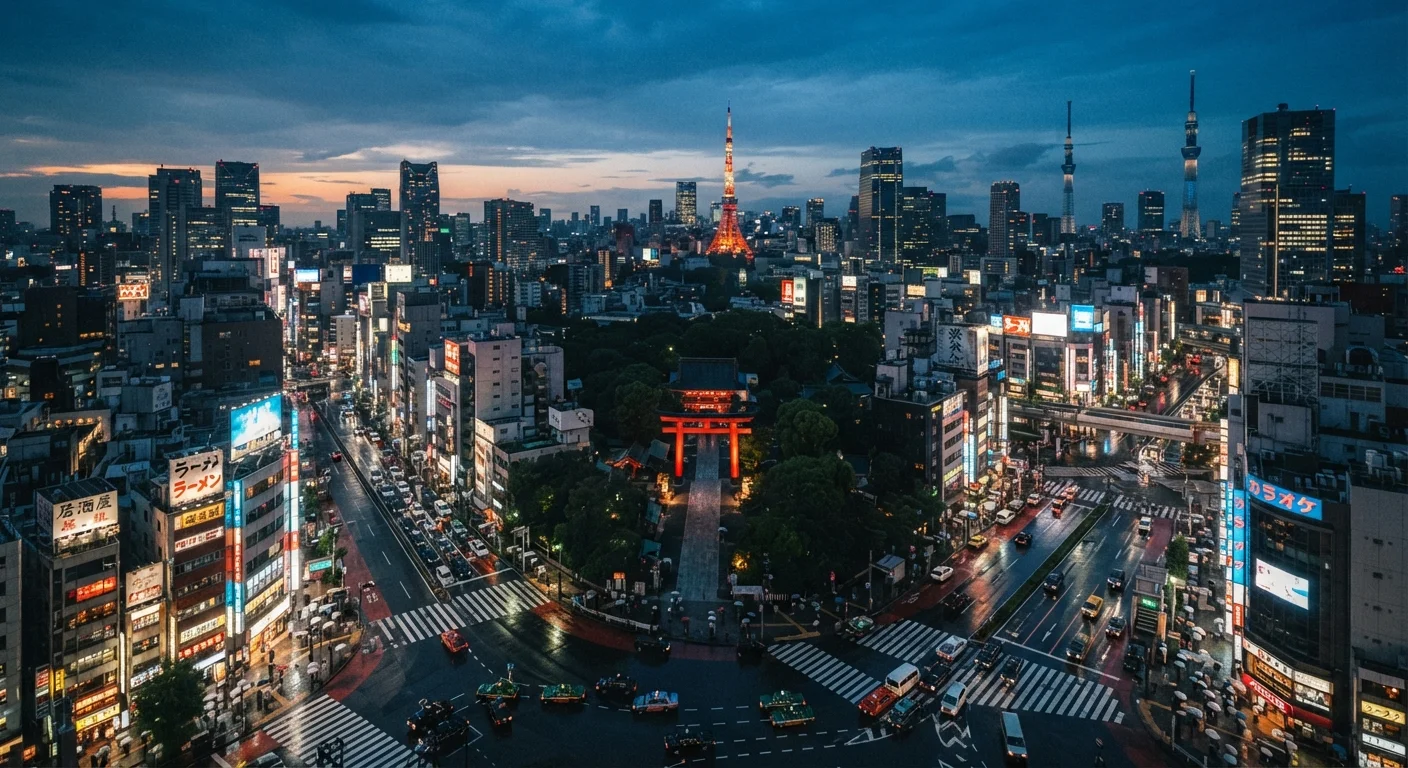
Photo credit: SearchLynk.net | Search Made Easier
In this article
Tokyo is efficient, safe, and unlike anywhere most Americans have visited. Know the etiquette, transit system, and neighborhood dynamics before you land.
Key Takeaways
- Tokyo's public transit is extensive, punctual, and fully navigable without speaking Japanese.
- Quiet, orderly public behavior is genuinely expected - not just a stereotype.
- Cash is still widely used; carry yen even if you rely on cards at home.
- Each Tokyo neighborhood has a distinct character - planning by area saves significant time.
- Entry requirements, including visa rules, change; always verify with official sources before travel.
Cultural Norms That Catch Americans Off Guard
Tokyo operates on a set of social expectations that are deeply ingrained and quietly enforced through collective behavior rather than signage. Understanding these norms before you arrive will spare you from inadvertent disrespect - and help you feel oriented rather than anxious.
Public quiet is the default. On trains, in waiting rooms, and even in many restaurants, the ambient volume is noticeably lower than in most American cities. Phone calls on the subway are discouraged; many riders switch to silent mode as a matter of habit. Matching that energy is both respectful and immediately puts locals at ease around you.
Tipping is not practiced. Unlike the U.S., leaving a tip at a restaurant or for a service is not expected and can occasionally feel confusing or even awkward to the recipient. Exceptional service is the standard expectation, not something rewarded with additional payment.
Eating while walking is generally frowned upon, though festival stalls and certain tourist areas are more relaxed about this. The principle is that food belongs at a table or at least stationary - not consumed on the move through crowds.
Shoes come off. At traditional ryokan guesthouses, many private homes, and some restaurants with tatami seating, removing your shoes at the entryway (genkan) is mandatory. Wear socks you're comfortable with others seeing.
IC Card
A rechargeable contactless smart card used to pay for train, subway, and bus fares by tapping in and out at station gates. Suica and Pasmo are the two main versions in Tokyo.
Genkan
The entryway area of a Japanese home or traditional establishment where shoes are removed before stepping inside. It is a distinct lowered threshold that signals the transition between outdoor and indoor space.
Izakaya
An informal Japanese gastropub where small plates of food are shared alongside drinks. Izakayas are a central part of social dining culture and range from humble to upscale.
Takuhaibin
A door-to-door luggage forwarding service widely used in Japan to ship bags between hotels or to the airport, allowing travelers to move around without carrying heavy luggage.
Yamanote Line
A JR commuter rail loop that circles central Tokyo, connecting major hubs including Shinjuku, Shibuya, Harajuku, and Akihabara. It is one of the most useful lines for first-time visitors.
Ryokan
A traditional Japanese inn typically featuring tatami-mat rooms, futon bedding, communal or private baths, and multi-course meals. Etiquette expectations - including removing shoes - are stricter than at Western-style hotels.
Navigating Tokyo's Transit System
Tokyo's rail network is one of the most extensive and precisely timed in the world. It can look overwhelming on a map - dozens of overlapping lines operated by multiple companies - but for practical purposes, visitors need to understand only a few things to move confidently.
Get an IC card on arrival. A Suica or Pasmo card (rechargeable contactless cards) works on virtually every subway, commuter rail, and bus line in the metro area. You can tap in and out without buying individual tickets. Both cards can be purchased and topped up at airport and station kiosks, often with English-language menus.
Use a transit app. Google Maps and Japan's own HyperDia or Navitime apps provide accurate, real-time English routing including platform numbers, transfer instructions, and fare estimates. Download one before you land.
Train lines are color-coded and consistently marked on station maps. The Tokyo Metro and Toei Subway cover central areas; the JR Yamanote Line loops around central Tokyo hitting major hubs like Shinjuku, Shibuya, Harajuku, and Akihabara. You'll use this loop repeatedly.
Download Offline Maps Before You Land
Tokyo's train stations - especially Shinjuku - are among the most complex in the world, with dozens of exits and connected underground passages. Download an offline map of the city and offline Japanese language packs for your translation app before boarding your flight. Connectivity at the airport is not guaranteed the moment you land, and having these tools available immediately reduces first-arrival stress significantly.
Trains run on time to a degree that surprises most visitors - delays of even a few minutes generate formal apologies from station staff. Plan transfers conservatively until you're familiar with the system.
Neighborhoods: What Each Area Actually Feels Like
Tokyo is not a single experience. Its wards and neighborhoods each have distinct personalities, and matching where you spend time to what you're hoping to do is essential planning work.
- Shinjuku is a transit mega-hub with some of the world's busiest train stations. It holds skyscraper districts, neon-lit entertainment blocks, and quieter residential pockets all within walking distance of each other.
- Shibuya is youth culture, fashion, and the famous scramble crossing - one of the busiest pedestrian intersections on earth. Energy is high and the area caters to shopping and nightlife.
- Asakusa is where Tokyo's Edo-era history is most visible. Senso-ji Temple, traditional craft shops, and rickshaws are common here. Pace is slower; the area draws both tourists and older locals.
- Akihabara is the center of electronics retail and anime/gaming culture. Whether or not those are your interests, the density and spectacle of the district is striking.
- Yanaka offers a look at pre-war Tokyo that survived WWII bombing - narrow lanes, small shrines, and an old-fashioned shopping street with an unhurried atmosphere.
For contrast with a very different European city experience, see our piece on navigating Paris beyond the tourist highlights.
Money, Communication, and Practical Logistics
Japan remains more cash-dependent than most Americans expect. While major department stores, hotels, and chains increasingly accept credit cards, many ramen shops, izakayas, temples, and independent restaurants operate cash-only. ATMs at 7-Eleven and Japan Post locations reliably accept foreign cards; airport ATMs are also reliable on arrival.
Currency exchange at the airport is convenient but typically offers less favorable rates than bank ATMs. Draw yen in modest amounts as needed rather than converting large sums upfront.
Mobile connectivity: Pocket Wi-Fi rentals (available for airport pickup) and data-only SIM cards are the two most practical options for staying connected. Verify what your U.S. carrier offers internationally, but dedicated options often provide more reliable coverage for a full trip.
Translation tools: Google Translate's camera feature can read Japanese menus and signage in real time - download the Japanese language pack offline before departure. This alone removes significant friction.
If this is your first international trip, the guide to what every first-time international traveler should know covers passport validity, entry requirements, and currency fundamentals that apply here as well.
Verify Entry Requirements Before You Travel
Visa rules, vaccination requirements, and entry conditions for Japan can change. The information in this article reflects general patterns but is not a substitute for checking current official guidance. Consult the U.S. State Department's Japan travel page and Japan's official immigration authority for up-to-date entry requirements before booking or departing.
What Most First-Timers Wish They Had Known
Several realities about Tokyo tend to hit visitors only after arrival. Knowing them in advance compresses the adjustment curve considerably.
The scale is genuinely hard to anticipate. Tokyo is enormous - the greater metropolitan area is home to tens of millions of people. Distances between neighborhoods that look short on a map can involve 30-minute train rides. Build transit time into every itinerary day.
Restaurant discovery works differently. Many of Tokyo's most respected small restaurants - ramen counters, sushi bars, izakayas - are on upper floors of unremarkable buildings or tucked into basement-level spaces. Looking up and down, not just at street-level storefronts, reveals options that maps alone won't surface.
Luggage forwarding (takuhaibin) is a real option. A service widely used by Japanese travelers, luggage forwarding lets you ship bags from your hotel to the airport or between hotels for a modest fee - typically handled at hotel front desks. This is particularly useful if you're traveling between cities before flying home.
Queuing is taken seriously. Lines form orderly and naturally - at train doors, convenience store registers, and popular food stalls. Join the queue, wait your turn, and avoid cutting in.
Before departing, the pre-trip checklist for international travel is worth a full review. It covers documents, health prep, and logistics that are easy to overlook when destination excitement takes over. For additional travel tips on safety, packing, and navigating logistics, our hub has practical guidance organized by category.
Frequently Asked Questions

Author
Travel & Trips Editorial Team
Travel & Trips Editorial Team is the collective byline for our editorial team and contributor network. Articles published under this byline or an editorial pen name are researched, written, and reviewed according to our editorial standards for clarity, consistency, and independence before publication.
View all articles →