
Paris Beyond the Postcard: What the City Is Actually Like to Navigate and Experience
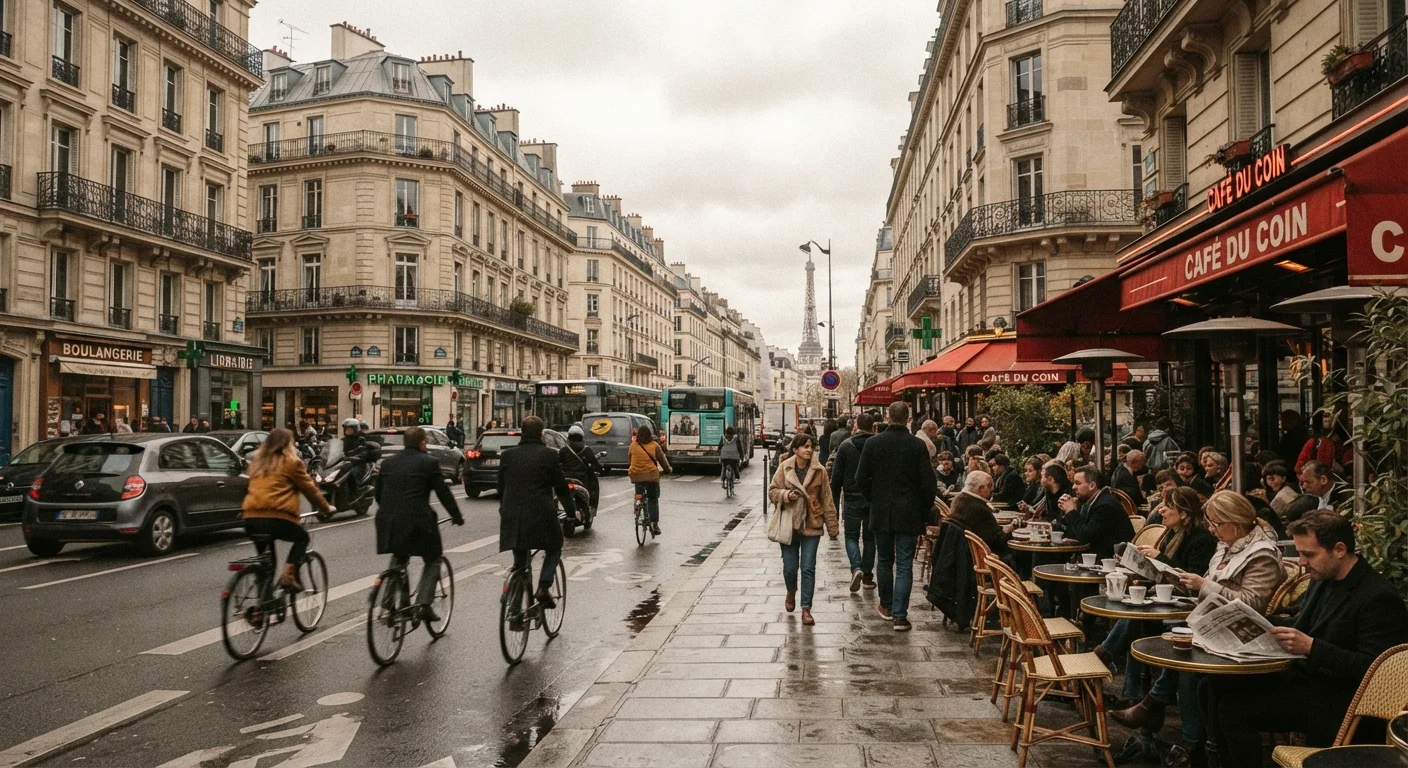
Photo credit: SearchLynk.net | Search Made Easier
In this article
Crowds at the Eiffel Tower, arrondissement logic, and metro quirks — an honest look at what visiting Paris involves beyond the highlights.
Key Takeaways
- Paris's arrondissement system spirals outward from the center - understanding it helps you plan neighborhoods logically.
- The Eiffel Tower draws millions annually; timed entry reservations are essential and should be booked weeks ahead.
- Parisians generally appreciate visitors who attempt basic French greetings - a simple 'bonjour' opens doors.
- The metro is extensive but some stations lack elevators, making accessibility planning important for many travelers.
- Pickpocketing is a real concern at major tourist sites; awareness and simple precautions significantly reduce risk.
The Myth-vs.-Reality of Paris Before You Arrive
Paris is one of the most visited cities on Earth, which means it arrives pre-loaded with expectations - many of them inaccurate. Films, travel influencers, and decades of tourism marketing have built an image of effortless romance, flawless cuisine at every turn, and locals who practically serenade you in the street. The actual city is richer and more complicated than that, and travelers who understand what they're walking into tend to have a far better time than those who show up expecting a movie set.
Below, we address the most common misconceptions Americans carry to Paris - and replace them with a clearer, more honest picture of what navigation and daily experience actually look like.
Myth
Parisians are rude to tourists, especially Americans who don't speak French.
Fact
Most Parisians respond positively to basic courtesy. A simple 'bonjour' at the start of any interaction changes the dynamic significantly.
The reputation for coldness largely stems from a cultural difference in how public interactions are initiated. In France, greeting someone before making a request is considered standard courtesy - skipping it can read as abrupt. Visitors who open with 'bonjour' and attempt even minimal French typically report warm, helpful responses. Fluency is not expected; effort is noticed and appreciated.
Myth
You can just show up at the Eiffel Tower and buy a ticket at the gate.
Fact
Walk-up queues exist but can mean waits of two hours or more during peak season. Timed-entry tickets booked in advance are strongly advisable.
The Eiffel Tower hosts millions of visitors annually. During summer months and holidays, same-day access without a reservation can take the better part of a morning. Tickets for specific time slots are available through the official Eiffel Tower website; booking several weeks ahead during high season is realistic and sensible, not excessive.
Myth
French food is universally excellent - every café and bistro serves a quality meal.
Fact
As in any major tourist city, food quality varies widely. Restaurants near landmark sites often trade on location rather than kitchen quality.
Paris has extraordinary dining, but the concentration of tourist-facing establishments around the Louvre, Champs-Élysées, and Eiffel Tower means that many nearby options cater to volume rather than quality. Moving even two or three blocks away from major sites, or eating in residential arrondissements like the 11th or 18th, tends to yield more authentic and better-value meals. Lunchtime prix-fixe menus (called formules) at neighborhood bistros are often the best value proposition in the city.
Myth
Paris is a compact city - you can easily walk everywhere in a day or two.
Fact
Paris covers roughly 40 square miles. Key sites are spread across multiple arrondissements and cannot be covered on foot in a single day without significant fatigue.
The city's walkable historic core is real, but it represents only a portion of what most visitors want to see. Montmartre is a steep 30-minute walk from central sights; Père Lachaise cemetery sits in the 20th arrondissement. Attempting to combine multiple neighborhoods in a single on-foot day frequently leads to exhaustion and rushed experiences. Mixing short metro hops with focused neighborhood walks produces a more sustainable itinerary.
Myth
Paris is completely safe for tourists and petty crime is rarely a concern.
Fact
Pickpocketing and distraction-based theft are documented problems at high-traffic tourist sites, particularly around the Eiffel Tower, Sacré-Cœur, and on the RER B line.
This is not a reason to avoid Paris, but it is a reason to take standard precautions: use a crossbody bag or money belt, keep phones out of back pockets, and be alert to anyone who approaches with unsolicited petitions or games near landmark sites. These are well-documented tactics, and awareness alone is one of the most effective deterrents.
Getting Around: Metro Realities and Street Logic
Paris's Métro network covers the city with 16 lines and over 300 stations, which sounds comprehensive until you discover that several central stations sit surprisingly far apart on foot. The system runs frequently and is generally reliable, but a few practical points catch first-timers off guard.
- Accessibility gaps: The majority of Métro stations were built before modern accessibility standards. Travelers using wheelchairs, strollers, or mobility aids should research specific station access in advance, as elevator coverage remains uneven. The RER commuter rail and newer tramway lines tend to be better equipped.
- Ticket logistics: As of recent years, Paris has been transitioning toward contactless payment and the Navigo Easy card. Paper magnetic tickets were phased out on the Métro. Verify the current ticketing system before you travel, as the transition continues.
- Walking distances deceive: The arrondissements spiral outward from Île de la Cité in a snail pattern. The 1st through 8th arrondissements cluster tightly; many travelers find walking between nearby sights faster than taking the Métro once you factor in stairs and platform waits.
For a comparable breakdown of how neighborhood logic works in another iconic city, see our NYC neighborhood guide, which applies similar orientation strategies to Manhattan and beyond.
Verify Entry Requirements Before You Travel
Visa requirements, passport validity rules, and health-related entry conditions can change. American travelers should check current requirements through the U.S. Department of State and the French government's official travel portal well before departure. Do not rely on third-party sites or social media for entry documentation guidance.
What Major Attractions Are Actually Like
Paris's headline sites - the Louvre, Musée d'Orsay, Notre-Dame, Versailles, and the Eiffel Tower - draw visitor volumes that can make the experience feel very different from what photographs suggest.
The Louvre alone receives several million visitors per year, concentrated in relatively few rooms around the Mona Lisa and Venus de Milo. Arriving at opening time or booking a timed-entry slot substantially reduces the sense of congestion. The museum is genuinely vast - most visitors see a fraction of it - so selecting a focused itinerary in advance is more satisfying than attempting to cover everything.
Notre-Dame de Paris is undergoing restoration following the 2019 fire; verify current visitor access before planning your trip, as conditions change. Versailles requires a separate day trip (roughly 40 minutes by RER C from central Paris) and benefits enormously from advance ticket booking, particularly for the gardens and Grand Trianon.
If comparing the logistics of landmark-heavy destinations, our Tokyo destination guide walks through a similar process of managing major sites in a dense, high-traffic city.
~9M
Annual Eiffel Tower visitors
The Eiffel Tower is among the most visited paid monuments in the world, according to figures from the Société d'Exploitation de la Tour Eiffel.
16 lines
Paris Métro network size
The Paris Métro operates 16 lines serving over 300 stations across the city and inner suburbs, making it one of Europe's densest urban rail networks.

Author
Travel & Trips Editorial Team
Travel & Trips Editorial Team is the collective byline for our editorial team and contributor network. Articles published under this byline or an editorial pen name are researched, written, and reviewed according to our editorial standards for clarity, consistency, and independence before publication.
View all articles →