
Things Worth Checking on Your Current Wireless Bill
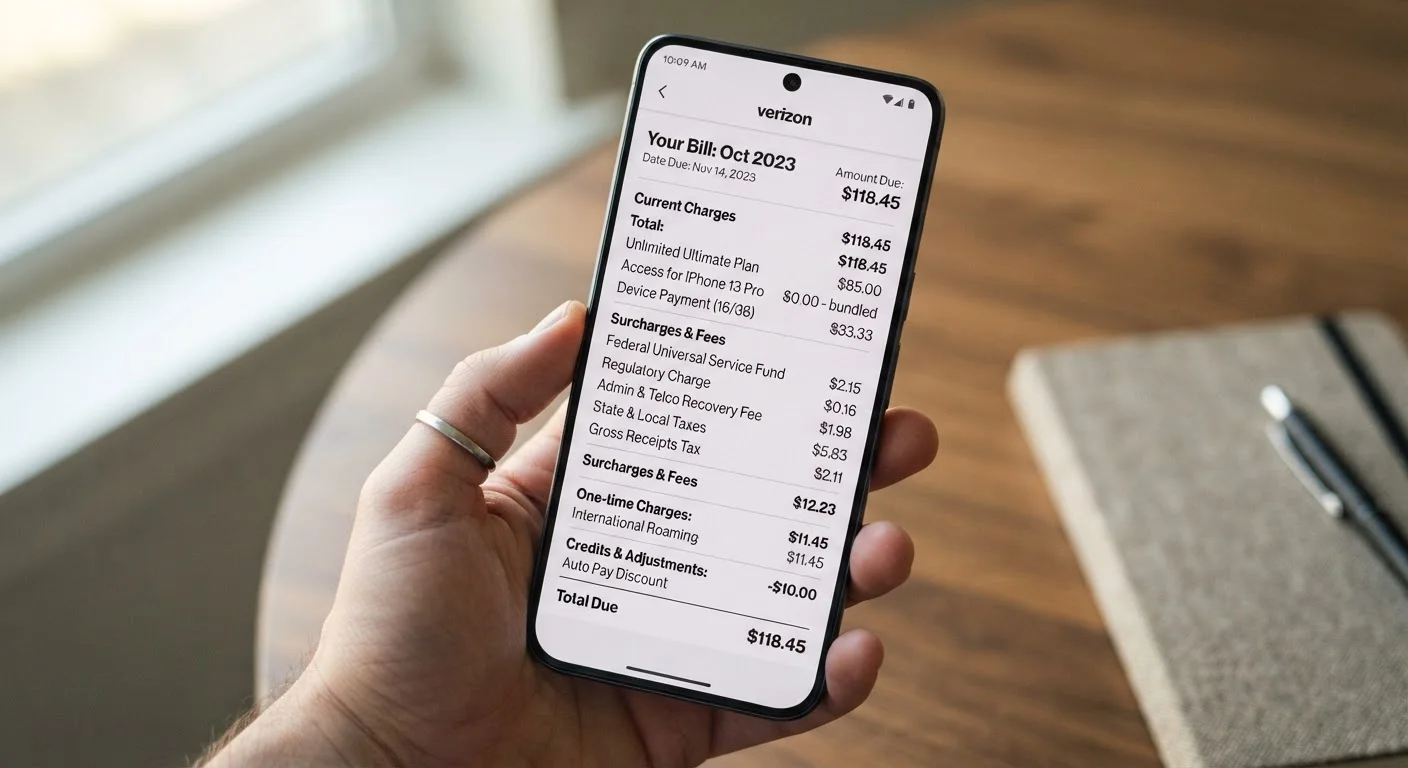
Photo credit: SearchLynk.net | Search Made Easier
In this article
Add-on charges, protection plan fees, and regulatory surcharges often appear without much explanation. Here's what each line item typically means.
The Bill Behind the Plan Price
The advertised price of a wireless plan rarely matches what appears on your monthly bill. Carriers layer additional charges on top of the base rate, and many customers pay them for months - or years - without fully understanding what each one covers. Pulling up your bill and reading it line by line takes only a few minutes and can clarify exactly what you're paying for.
Wireless bills typically break down into three broad categories: plan charges, device-related fees, and taxes and surcharges. Each category can contain items worth scrutinizing. For a deeper look at how plan language works, see how to read a phone plan before signing up for anything new.
Add-On Charges: What They Are and Why They Accumulate
Add-ons are optional services attached to a base plan, but they don't always feel optional by the time they appear on your bill. Common examples include:
- Device protection plans - These cover repair or replacement if your phone is lost, stolen, or damaged. Monthly fees vary widely depending on the device and the coverage tier. Review what your plan actually covers (deductibles, claim limits, turnaround times) to decide whether the cost makes sense for you.
- Premium data or hotspot upgrades - Some plans include a base amount of mobile hotspot data, then charge extra for additional allotments or higher speeds. If you rarely use your phone as a hotspot, this may be an unused line item.
- International features - Day passes, international talk-and-text bundles, or roaming add-ons sometimes get activated for a trip and left running. Check whether any travel features are still active if you haven't traveled recently.
- Content subscriptions bundled through the carrier - Streaming services, cloud storage, or security apps sometimes appear as carrier-billed charges. Verify whether these are genuinely included in your plan or whether you're being charged separately.
Add-ons compound quietly. Common patterns behind wireless overpayment show how these small fees accumulate into significant monthly totals. A related concern applies across all subscriptions - auditing recurring charges you've stopped noticing offers a useful framework for this kind of review.
Taxes, Fees, and Regulatory Surcharges Explained
The bottom section of most wireless bills lists charges that look official but can be confusing to interpret. Understanding the distinction between government-mandated taxes and carrier-imposed surcharges matters.
Administrative charge
A fee set by the carrier - not directly mandated by any government body - typically described as recovering costs related to operating the network or complying with regulations. The amount and label vary by carrier.
Regulatory recovery fee
A carrier-designated surcharge intended to offset costs associated with government programs or compliance. Despite the official-sounding name, this fee is determined by the carrier and is not a direct government tax.
Universal Service Fund (USF)
A federal program administered by the FCC that supports telecommunications access in rural areas, schools, libraries, and for low-income households. Carriers typically pass a portion of their USF contribution to customers as a line-item charge.
Device protection plan
An optional add-on service that provides coverage for a phone if it is lost, stolen, or damaged. Plans generally involve a monthly fee plus a deductible at the time of a claim, with limits on the number of claims per year.
Mobile hotspot allotment
The amount of data a plan allows you to use when sharing your phone's cellular connection with another device. Once this allotment is exhausted, hotspot speeds are often reduced or additional data must be purchased.
Federal excise tax
A federally mandated tax applied to certain telecommunications services. The rate is set by Congress and is not within a carrier's control.
Government taxes are set by federal, state, and local authorities and are passed through to customers as required by law. These include federal excise taxes and state and local sales or telecommunications taxes, which vary by location.
Carrier surcharges - sometimes labeled "regulatory recovery fees," "administrative charges," or similar - are fees set by the carrier, not directly mandated by government. While carriers often frame them as cost-recovery mechanisms, they represent revenue decisions the carrier controls. These fees can change with limited notice.
Universal Service Fund (USF) contributions are federally established charges that fund telecommunications access programs for schools, rural areas, and low-income households. Carriers typically pass these costs to customers as a line item.
If any line item is unclear, most carriers provide a bill explainer tool through their account portal or customer service line. Requesting an itemized explanation is a reasonable ask.
What to Do After You Review Your Bill
Once you've identified each charge on your bill, the next step is deciding whether it reflects the service you're actually using. A few useful actions:
- Remove unused add-ons. Most carriers allow you to cancel add-on features through the account app or website. Cancellations typically take effect at the next billing cycle.
- Confirm your plan tier matches your usage. If you're consistently using far less data than your plan includes - or frequently hitting your cap - your plan tier may not be the right fit. Wireless plan terminology, decoded, can help you interpret data allotment language more precisely.
- Check autopay and paperless billing discounts. Many carriers offer a per-line discount for enrolling in autopay or going paperless. If you're enrolled but not seeing the discount, contact customer service.
- Consider whether your account structure still makes sense. If you're on an individual plan but share expenses with family members, comparing family plans to individual lines may be worthwhile. Conversely, if you're on a family plan but the account structure has changed, reassess whether the arrangement still serves you.
If a billing review prompts you to consider switching providers, work through this checklist before switching carriers to avoid coverage gaps or unexpected fees during the transition.

Author
Tech & Telecom Editorial Team
Tech & Telecom Editorial Team is the collective byline for our editorial team and contributor network. Articles published under this byline or an editorial pen name are researched, written, and reviewed according to our editorial standards for clarity, consistency, and independence before publication.
View all articles →