
Why Your Garage Keeps Getting Cluttered Again (And What Changes That)
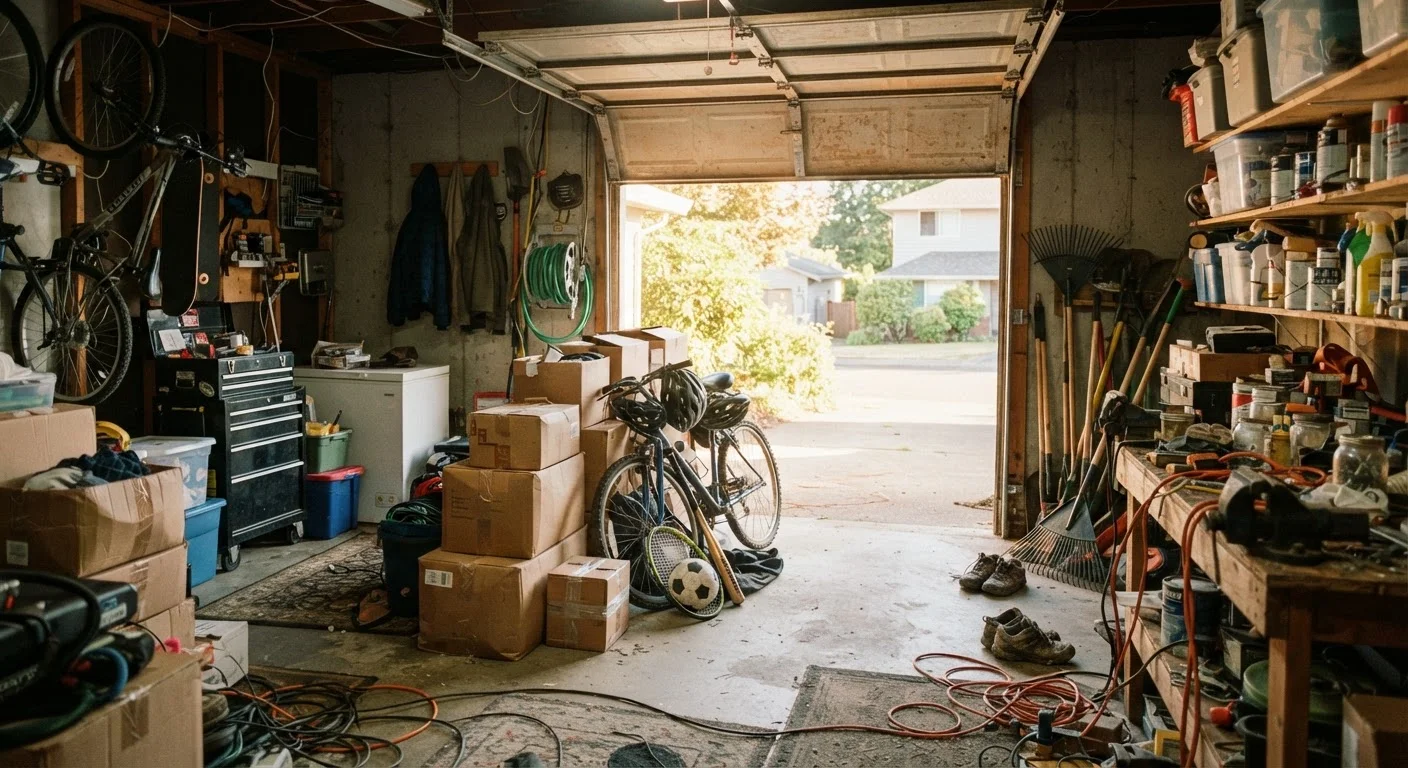
Photo credit: SearchLynk.net | Search Made Easier
In this article
A freshly organized garage rarely stays that way. Understanding the habits and layout flaws behind the relapse is the first step to breaking the cycle.
Key Takeaways
- Clutter returns to garages mainly because of layout flaws and missing daily habits, not lack of effort.
- Organizing without first decluttering almost always leads to a relapse within weeks or months.
- Zones, labeled storage, and a clear drop-off rule are the three structural fixes that make order stick.
- Household buy-in matters - shared spaces require shared systems, not just one person's good intentions.
- Small maintenance habits done consistently outperform big annual cleanouts.
Why the Organized Garage Never Stays That Way
You spend a weekend sorting, sweeping, and stacking everything neatly - and three months later the garage looks exactly as it did before. This cycle is more common than most homeowners realize, and the cause is rarely laziness. Most garage relapses trace back to a handful of identifiable mistakes in both how the space was set up and how the household interacts with it daily.
Understanding those mistakes - and why they happen - is far more useful than another round of sorting. The principles that make organization stick apply just as much to garages as to any room inside the house. What follows are the most common errors, along with concrete changes that actually interrupt the clutter cycle.
Common Mistakes That Keep Pulling the Garage Back into Chaos
Most garage clutter problems share the same root causes. Work through these honestly - even one or two can be enough to undo an otherwise solid organization effort.
Organizing before decluttering - sorting and storing items that should have been removed.
Why it happens: Deciding what to keep feels harder and more time-consuming than finding a container for it, so people default to organizing everything in place.
Having no defined zones - everything can go anywhere, so everything goes everywhere.
Why it happens: When a garage is organized in one sweep, items often get placed wherever they happen to fit rather than in logical, consistent areas.
Using storage that makes putting things away harder than leaving them on the floor.
Why it happens: Overhead racks, deep bins without labels, and hard-to-reach shelving all raise the effort required to return an item, which means items get set down 'temporarily' instead.
Treating the garage as the household's overflow room - the default destination for 'I don't know where else to put this.'
Why it happens: Garages are out of sight and feel less 'finished' than interior rooms, making them psychologically easy to use as a catch-all.
Skipping a maintenance routine and waiting until the mess becomes overwhelming before acting.
Why it happens: After a big organization effort, it can feel like the work is 'done.' Without a regular reset habit, small displacements accumulate invisibly until they hit a tipping point.
25%
Homeowners who can't park in their own garage
According to a survey by the U.S. Department of Energy, approximately one in four American homeowners with a garage cannot use it for vehicle storage due to clutter.
~40%
Garage clutter attributed to items from other rooms
Organization researchers have noted that a significant share of garage clutter consists of items displaced from interior rooms rather than garage-specific belongings.
Building Habits That Hold
Fixing layout flaws gets you partway there, but habits seal the deal. The most effective approach is a brief weekly walk-through - five to ten minutes of returning items to their designated zones before the disorder compounds. Think of it as a low-stakes reset rather than a chore.
If multiple people use the garage, the system has to work for all of them. One person's careful labeling means nothing if other household members don't know or follow the conventions. The strategies covered in organizing a home when everyone has different habits translate directly to garages: agree on zones together, keep the rules simple enough to remember without a diagram, and lower the barrier to putting things away by making storage accessible rather than awkward.
Don't Store Hazardous Materials Without Proper Precautions
Garages often become the default storage spot for paints, solvents, pesticides, and fuels. Improper storage of these materials creates fire and health hazards. Always follow manufacturer guidance for storage conditions, keep containers tightly sealed, and check with your local waste disposal authority about how to safely dispose of materials you no longer need. Never store gasoline-powered equipment with fuel in the tank near ignition sources.
Finally, revisit the garage's layout every six months or when your household's needs shift significantly - a new hobby, a child aging out of certain gear, a seasonal tool swap. A system that fits your life right now is far more likely to survive daily use than one that fit your life two years ago.

Author
Home & Garden Editorial Team
Home & Garden Editorial Team is the collective byline for our editorial team and contributor network. Articles published under this byline or an editorial pen name are researched, written, and reviewed according to our editorial standards for clarity, consistency, and independence before publication.
View all articles →