
Organic vs. Synthetic Fertilizers: Understanding the Trade-Offs
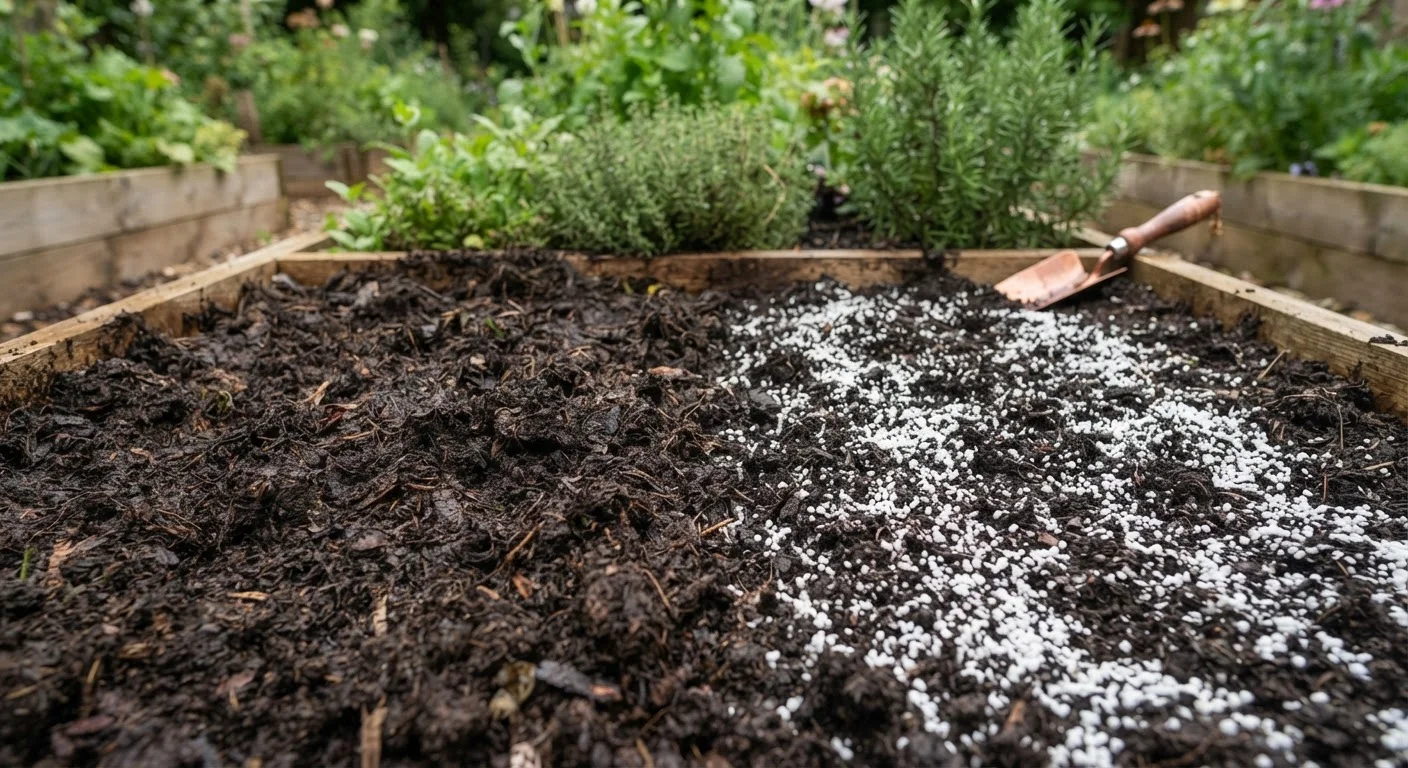
Photo credit: SearchLynk.net | Search Made Easier
In this article
A balanced look at how organic and synthetic fertilizers work differently, and what that means for soil health and plant growth.
Key Takeaways
- Organic fertilizers feed soil biology slowly; synthetic fertilizers deliver nutrients to plants almost immediately.
- Neither option is universally better - your soil type, plants, and goals all influence the right choice.
- Long-term soil health tends to improve with organic inputs, while synthetics offer precision and speed.
- Over-applying synthetic fertilizers can burn plants and degrade soil structure over time.
- Testing your soil before fertilizing prevents waste and helps you target real deficiencies.
How Each Type of Fertilizer Actually Works
All fertilizers supply plants with nutrients - primarily nitrogen (N), phosphorus (P), and potassium (K), commonly shown as an N-P-K ratio on product labels. The core difference between organic and synthetic options is how those nutrients reach the plant.
Organic fertilizers come from natural sources: compost, aged manure, bone meal, blood meal, kelp, and similar materials. They don't deliver nutrients directly. Instead, soil microbes - bacteria, fungi, and other organisms - break down organic matter over time, gradually releasing nutrients in forms plants can absorb. This biological process also improves soil structure, water retention, and long-term fertility.
Synthetic fertilizers are manufactured to contain specific nutrient concentrations in immediately plant-available forms. When you apply a water-soluble synthetic fertilizer, plants can begin taking up those nutrients within days. This precision is useful when a plant is visibly struggling or when you're working in containers with limited soil biology.
Before choosing either option, it's worth reading your soil first - knowing your soil's existing nutrient levels, pH, and texture prevents over-application and helps you target real gaps rather than guessing.
The Downsides Worth Knowing
Neither fertilizer type is without trade-offs, and being aware of the limitations helps you avoid common mistakes.
Whichever fertilizer you use, more is rarely better. Over-fertilizing is one of the most frequent gardening errors - it can burn roots, create nutrient imbalances, and contribute to runoff that affects local waterways. Always follow label guidance and start with the lower end of recommended amounts.
Putting It Together: Practical Guidance for Home Gardeners
For most backyard and container gardeners, the choice doesn't have to be all-or-nothing. Many experienced growers use a blended approach: building long-term soil health with organic inputs while occasionally using a targeted synthetic application to address a specific, time-sensitive deficiency.
If you're gardening in native soil beds, organic amendments like compost work with your existing soil biology rather than bypassing it. This pairs naturally with other soil-friendly practices - see what mulch does for your garden for a related strategy that protects soil moisture and reduces nutrient runoff.
In containers, where there's little to no native soil biology, a balanced slow-release synthetic or liquid organic fertilizer applied on a consistent schedule tends to perform more reliably.
Timing also matters. Fertilizing just before watering helps move nutrients into the root zone without burning plant tissue. Consistent, thoughtful watering is what actually moves those nutrients to where roots can use them.

Author
Home & Garden Editorial Team
Home & Garden Editorial Team is the collective byline for our editorial team and contributor network. Articles published under this byline or an editorial pen name are researched, written, and reviewed according to our editorial standards for clarity, consistency, and independence before publication.
View all articles →