
Common Garden Pests and the Signs They Leave Behind
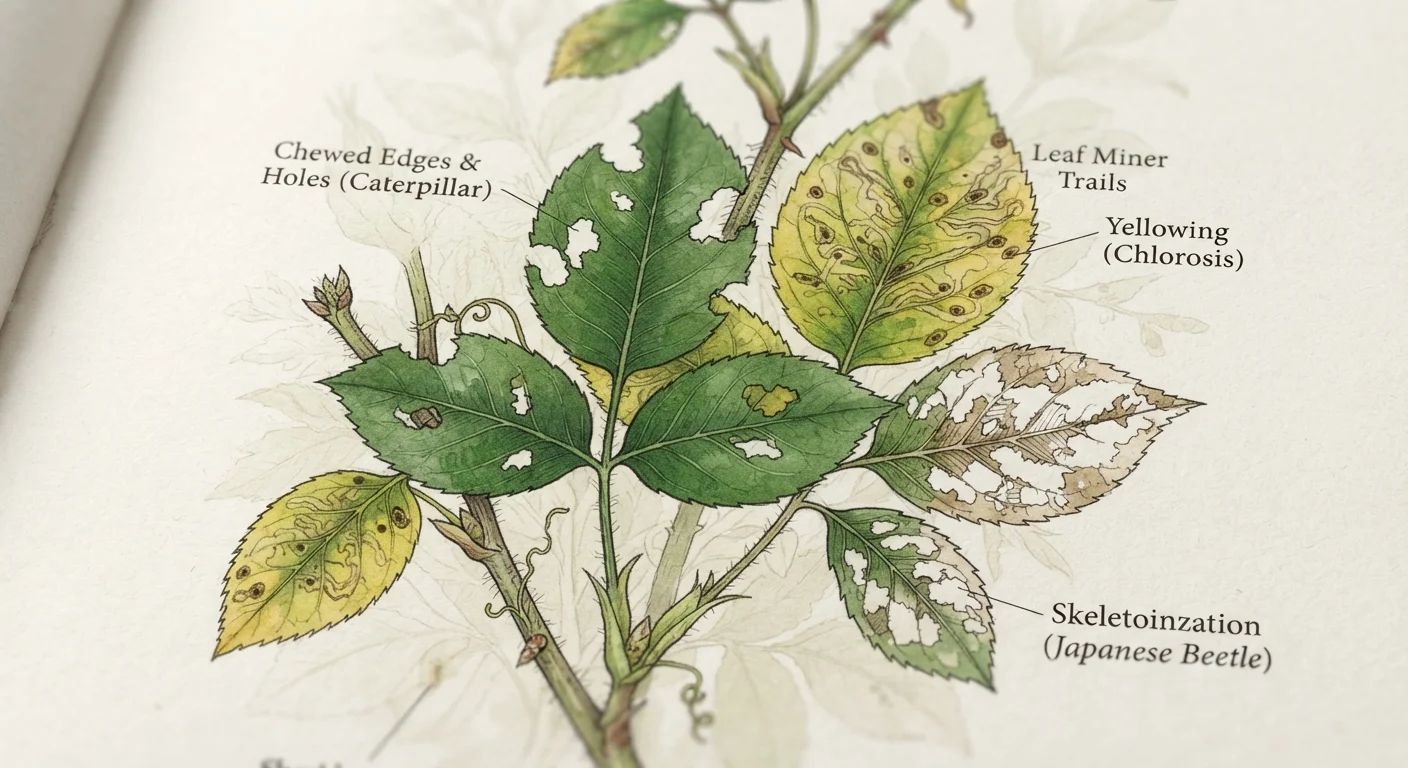
Photo credit: SearchLynk.net | Search Made Easier
In this article
A practical reference for identifying insects, larvae, and other pests by the damage patterns they leave on leaves, stems, and soil.
Why Damage Patterns Matter More Than Pest Sightings
Most garden pests are small, camouflaged, or active only at night. You're far more likely to notice what they leave behind than to catch them in the act. Learning to read those clues - ragged holes, slime trails, stippled leaves, collapsed seedlings - is the practical foundation of pest identification.
This reference guide walks you through the most common damage types and connects each to its likely cause. Use it as a starting point for diagnosis; confirming an identification may require closer inspection, especially at dawn or dusk when many pests are most active.
If you're new to gardening, pairing this knowledge with a solid foundation helps. See our complete beginner's guide to starting a garden for broader context on setting up a resilient plot from the start.
| Most common leaf chewers | Caterpillars, slugs, Japanese beetle adults (University Cooperative Extension general guidance) |
| Pest active mainly at night | Slugs, cutworms, earwigs |
| Telltale sign of aphids | Sticky honeydew residue on leaves and stems |
| Soil-level stem damage indicator | Likely cutworm activity (Common in seedling beds, spring through early summer) |
| Silvery leaf streaks suggest | Thrips or slug feeding trails |
| Wilting despite moist soil | May indicate root-feeding grubs or vine borers |
Leaf Damage: Holes, Edges, and Discoloration
Leaf damage is the most visible symptom and comes in several distinct patterns:
- Ragged holes through the leaf blade: Large, irregular holes with rough edges typically point to caterpillars (especially imported cabbageworm on brassicas) or slugs. Check the undersides of leaves and nearby soil for the culprits or their egg clusters.
- Clean scalloped edges: When leaf margins are eaten in smooth, curved bites - often beginning from the outside edge - Japanese beetle adults or vine weevils are common suspects.
- Stippling (tiny pale dots): A dusty, silvery, or bronze appearance made up of hundreds of tiny punctures usually means spider mites or thrips are feeding on cell contents.
Hold a white sheet of paper under a leaf and tap it firmly; mites will fall and move.
Frass
The excrement left behind by insect larvae, often resembling dark granules or sawdust. Finding frass near chewed plant tissue is a reliable clue that a caterpillar or boring insect is present.
Stippling
A pattern of tiny, pale dots on a leaf surface caused by insects piercing and draining individual plant cells. Spider mites and thrips are common culprits.
Instar
A developmental stage between molts in the life cycle of an insect larva. Younger instars often cause less visible damage, making early detection important.
Systemic feeding
When a pest feeds on a plant's internal vascular tissue rather than the leaf surface, disrupting the flow of water and nutrients. Aphids and whiteflies are common systemic feeders.
Cutworm
The larval stage of certain moth species that lives in soil and severs young plant stems at or near the soil surface, toppling seedlings overnight.
Gall
An abnormal plant growth triggered by insect feeding, egg-laying, or secretions. Galls are often round or irregular swellings on leaves, stems, or roots.
- Yellow or pale patches: Blotchy yellowing that doesn't follow leaf veins can indicate whitefly or aphid feeding. Check the leaf undersides for clusters of soft-bodied insects or white waxy residue.
- Sticky coating on upper leaf surfaces: This is honeydew - the excreted sugar-rich waste of sap-feeding insects like aphids, scale, and mealybugs. It often encourages sooty mold growth.
For a deeper look at how your garden's conditions - including soil health - can make plants more or less vulnerable, our guide on reading your soil before planting is worth reviewing.
Stem and Soil-Level Damage
Damage at or below the soil line is harder to spot until a plant collapses. Knowing what to look for helps you act before that happens.
- Severed seedlings at the base: If young plants are toppling with a clean cut at soil level, cutworms are almost always responsible. Dig a few inches into the surrounding soil; you may find a curled, gray-brown caterpillar.
- Wilting despite adequate water: Plants that wilt on well-watered days may have damaged or consumed roots. White grubs (larvae of various beetles) and squash vine borers are common culprits. Check the base of the stem for entry holes and frass.
- Tunnels in stems or thick stalks: Frass pushed out from a small hole signals a boring insect - corn earworm, European corn borer, or squash vine borer depending on your crop. Catching these early is critical because borers become harder to manage once inside the tissue.
Companion planting is one practical strategy that some gardeners use to reduce pest pressure at the soil level. Our guide on companion planting for pest deterrence explains which plant pairings are commonly cited for this purpose.
~700
Insect species that feed on garden plants in the US
Estimated by entomologists at land-grant university extension programs as commonly encountered pest species across North American home gardens.
3x
Faster damage spreads when pests go undetected for two weeks
Early scouting - checking plants at least weekly - is consistently recommended by extension specialists to limit crop loss.
A Quick Identification Reference by Symptom
Use this symptom-first lookup to narrow your diagnosis:
| What you see | Likely pest | Where to look |
|---|---|---|
| Slime trails on leaves or soil | Slugs or snails | Under debris, pots; active at night |
| Curled or cupped leaves | Aphids, leafhoppers | Leaf undersides, new growth tips |
| Distorted new growth | Thrips, broad mites | Youngest leaves and flower buds |
| Small round holes in rows | Flea beetles | Daytime on leaf surfaces |
| Galls or swellings | Gall wasps, gall midges | Leaves, stems, or roots |
| Chewed flower petals | Earwigs, caterpillars | Inside blooms, especially at dusk |
Keep in mind that more than one pest can be present at once, and some symptoms - like yellowing - can also be caused by disease or nutrient deficiency rather than insects. If you're uncertain, your local cooperative extension service can help confirm an identification at no cost.
You may also want to review common gardening myths before applying any treatment - some widely repeated pest remedies are not supported by evidence and may do more harm than good.

Author
Home & Garden Editorial Team
Home & Garden Editorial Team is the collective byline for our editorial team and contributor network. Articles published under this byline or an editorial pen name are researched, written, and reviewed according to our editorial standards for clarity, consistency, and independence before publication.
View all articles →