
Macronutrients, Micronutrients, and Why the Difference Matters
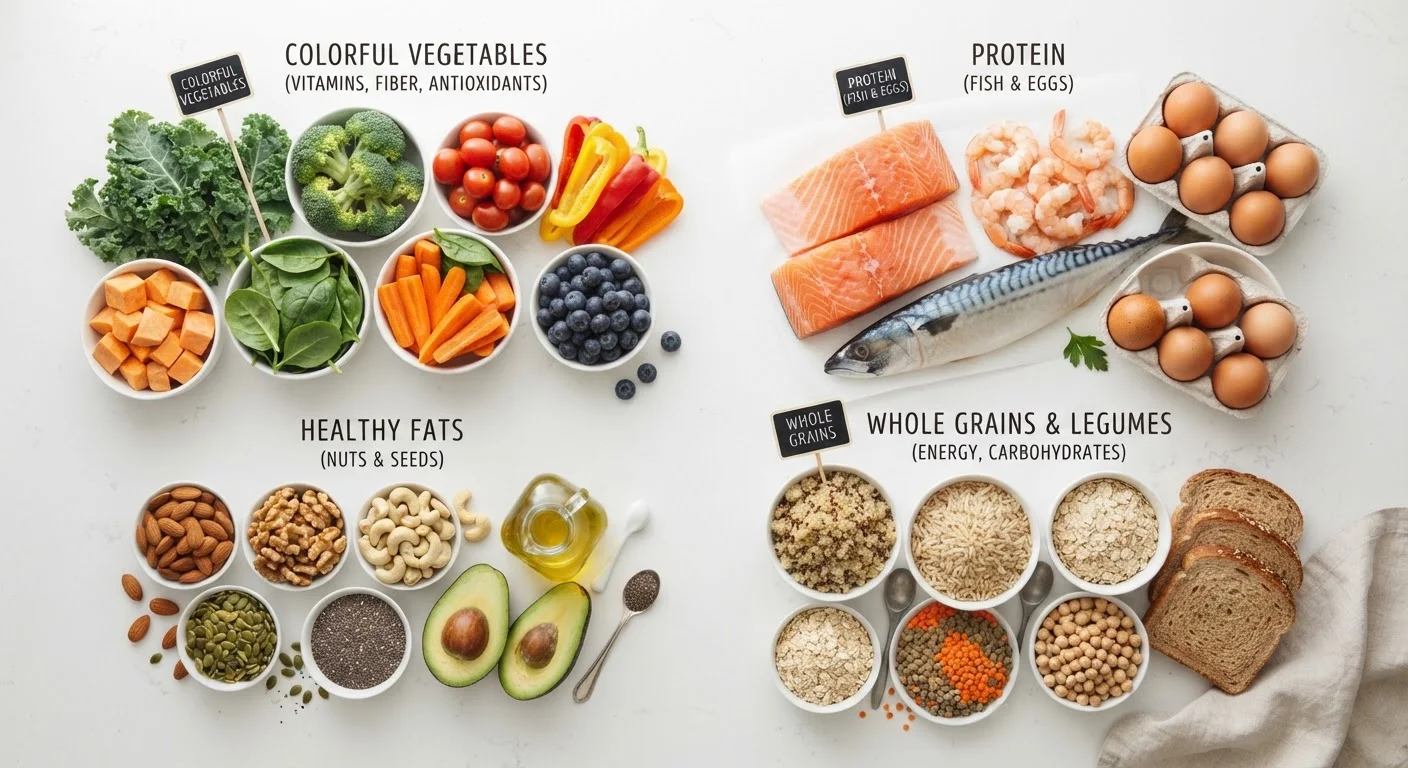
Photo credit: SearchLynk.net | Search Made Easier
In this article
Carbs, protein, fat, vitamins, minerals — here's a plain-language breakdown of what each nutrient does and why your body needs all of them.
The Two Big Categories: Macro vs. Micro
All nutrients your body needs fall into one of two broad groups: macronutrients and micronutrients. The prefix tells the story - "macro" means large, referring to nutrients needed in substantial amounts; "micro" means small, referring to nutrients required in much smaller quantities but no less essential for that.
Macronutrients provide the energy (calories) that powers every process in your body, from breathing to exercise. Micronutrients don't supply calories, but they enable the chemical reactions that keep those processes running correctly. Deficiencies in either category have real health consequences, which is why a genuinely balanced diet addresses both.
| Number of macronutrients | 3 (carbohydrates, protein, fat) |
| Calories per gram of carbohydrate | 4 kcal/g (U.S. Dietary Guidelines) |
| Calories per gram of protein | 4 kcal/g (U.S. Dietary Guidelines) |
| Calories per gram of fat | 9 kcal/g (U.S. Dietary Guidelines) |
| Essential amino acids | 9 (National Institutes of Health) |
| Fat-soluble vitamins | A, D, E, K |
| Water-soluble vitamins | C and 8 B vitamins |
| Key macrominerals | Calcium, magnesium, potassium, sodium |
Understanding the difference helps you read a nutrition label more meaningfully and cut through the noise of popular diet claims. For a deeper look at common misconceptions, see our breakdown of widespread nutrition myths.
Macronutrients: Carbohydrates, Protein, and Fat
There are three macronutrients, each with distinct roles:
Carbohydrates
Carbohydrates are the body's preferred fuel source, especially for the brain and during moderate-to-high-intensity activity. They break down into glucose, which cells use directly for energy or store as glycogen in the liver and muscles. Not all carbs are equivalent - complex carbohydrates (whole grains, legumes, vegetables) digest more slowly and carry fiber and other nutrients, while refined carbohydrates digest quickly and offer fewer accompanying benefits. Dietary fiber, technically a carbohydrate, deserves special attention because most Americans fall significantly short of recommended intakes.
Protein
Protein is made up of amino acids - the building blocks used to construct and repair muscle tissue, produce enzymes, and support immune function, among many other roles. The body can manufacture some amino acids on its own; the nine it cannot are called essential amino acids and must come from food. Animal proteins (meat, fish, eggs, dairy) typically contain all nine. Many plant proteins do not individually, though a varied plant-based diet can still provide all essential amino acids.
Fat
Dietary fat supports cell membrane structure, enables absorption of fat-soluble vitamins (A, D, E, and K), and provides a concentrated energy source. Not all fats behave the same way in the body. The differences between saturated, unsaturated, and trans fats are meaningful and worth understanding before making sweeping dietary changes.
Micronutrients: Vitamins and Minerals
Micronutrients divide into two groups: vitamins and minerals.
Macronutrient
A nutrient required by the body in large amounts that provides energy (calories). The three macronutrients are carbohydrates, protein, and fat.
Micronutrient
A nutrient needed in small amounts - including vitamins and minerals - that does not provide calories but is essential for normal physiological function.
Essential amino acids
The nine amino acids the body cannot synthesize on its own and must obtain from food. They are found in varying amounts across animal and plant protein sources.
Fat-soluble vitamins
Vitamins A, D, E, and K, which dissolve in fat and can be stored in body tissue. Because they accumulate, both deficiency and excess intake over time carry health risks.
Trace minerals
Minerals required by the body in very small amounts, such as iron, zinc, iodine, and selenium. Small as the requirement is, deficiencies can have significant health effects.
Glycogen
The stored form of glucose, held primarily in the liver and muscle tissue. The body draws on glycogen reserves for energy between meals and during physical activity.
Vitamins
Vitamins are organic compounds that the body cannot produce in adequate quantities on its own. They're further split by solubility: fat-soluble vitamins (A, D, E, K) are stored in fatty tissue and the liver, meaning both deficiency and excess can accumulate over time. Water-soluble vitamins (vitamin C and the eight B vitamins) are not stored in meaningful amounts and must be replenished regularly through food; excess is generally excreted in urine.
Minerals
Minerals are inorganic elements absorbed from food and water. Macrominerals - including calcium, magnesium, potassium, and sodium - are needed in relatively larger amounts and play central roles in bone structure, fluid balance, and nerve signaling. Trace minerals - such as iron, zinc, iodine, and selenium - are needed in much smaller quantities but remain critical. Iron deficiency, for example, is among the most common nutritional deficiencies globally.
Nutritional needs also shift meaningfully across a lifetime. How dietary needs evolve with age is a topic worth understanding, particularly for micronutrients like calcium and vitamin D.
Why Getting Both Right Matters
~90%
Americans deficient in vitamin D or potassium
The U.S. Dietary Guidelines Advisory Committee identifies vitamin D, calcium, potassium, and dietary fiber as nutrients of public health concern due to widespread underconsumption.
1 in 5
Global deaths linked to poor diet
A landmark analysis published in The Lancet (2019) attributed approximately one in five deaths worldwide to diet-related factors, underscoring how nutrition affects long-term health outcomes.
2 billion
People affected by micronutrient deficiency globally
The World Health Organization estimates around 2 billion people experience micronutrient deficiencies - often called 'hidden hunger' because they can occur without obvious caloric shortfall.
A diet high in calories but low in micronutrient variety is sometimes called "empty calorie" eating - you meet your energy needs but leave nutrient gaps that affect long-term health. Conversely, very restrictive diets that eliminate entire macronutrient groups can disrupt energy balance and crowd out foods that deliver important vitamins and minerals.
The practical takeaway isn't to count milligrams of every nutrient daily. It's to build meals around variety and minimally processed whole foods - which naturally tend to deliver macronutrients and micronutrients together, the way food is designed to be eaten. When specific gaps are a concern (due to age, medical condition, or dietary pattern), a registered dietitian can help identify and address them appropriately.
This article is for general informational and educational purposes only and does not constitute medical or dietary advice. Consult a qualified healthcare professional or registered dietitian before making significant changes to your diet, especially if you have an existing health condition.

Author
Health & Wellness Editorial Team
Health & Wellness Editorial Team is the collective byline for our editorial team and contributor network. Articles published under this byline or an editorial pen name are researched, written, and reviewed according to our editorial standards for clarity, consistency, and independence before publication.
View all articles →