
Fats Are Not All the Same: Saturated, Unsaturated, and Trans Fats Unpacked
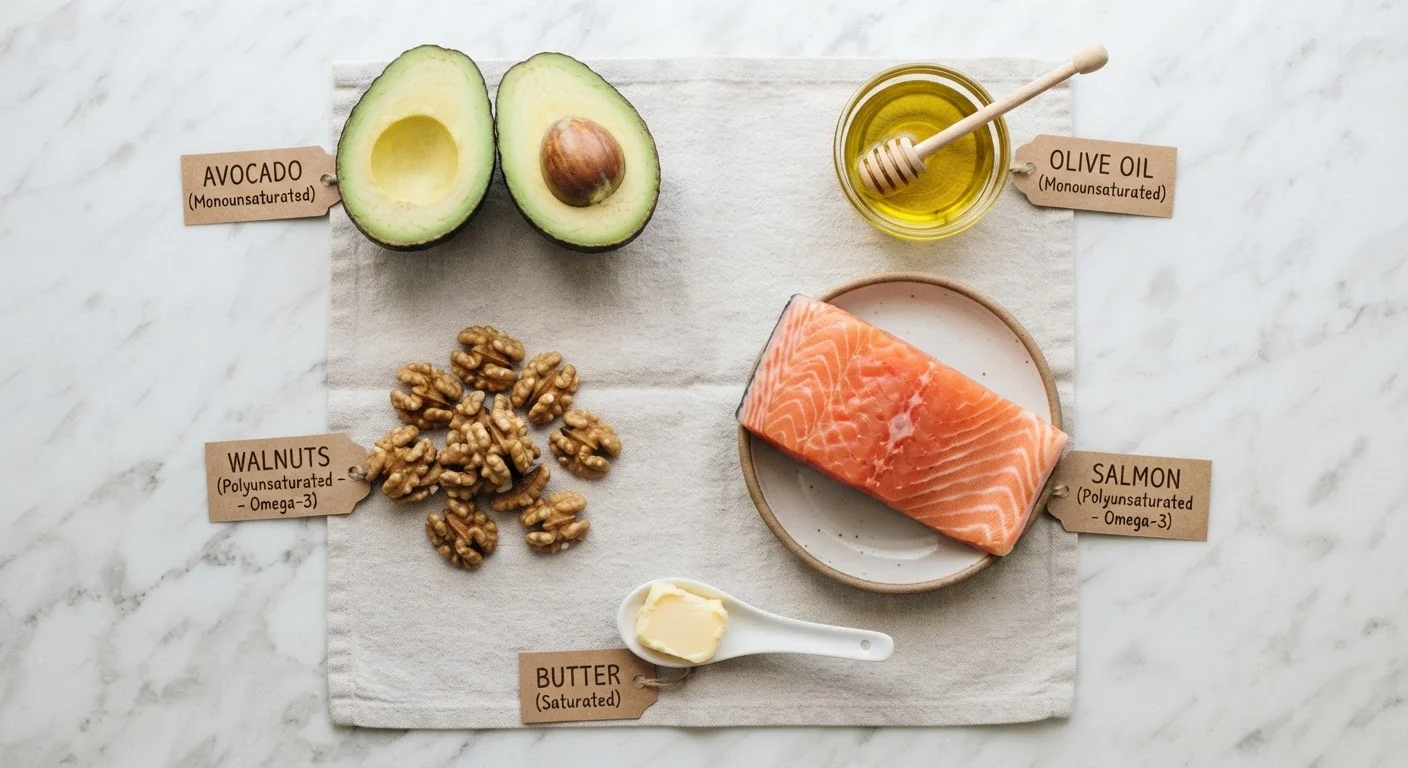
Photo credit: SearchLynk.net | Search Made Easier
In this article
What separates 'healthy' fats from harmful ones, which foods contain each type, and what current dietary guidance generally recommends.
Key Takeaways
- Unsaturated fats - found in olive oil, nuts, and fish - are generally considered beneficial for heart health.
- Saturated fats, common in red meat and dairy, should be consumed in moderation according to major health guidelines.
- Artificial trans fats have been largely removed from the U.S. food supply following FDA action.
- Fat as a category is not inherently harmful; the type and overall dietary pattern matter most.
- Reading a Nutrition Facts label can help you identify and limit less beneficial fat types.
Why Fat Type Matters More Than Fat Amount
For decades, public health messaging painted all dietary fat as something to avoid. That blanket guidance has since been revised. The scientific consensus now recognizes that the type of fat is far more important than the total grams consumed. Replacing saturated fat with unsaturated fat, for example, is associated with improved blood lipid profiles - while replacing it with refined carbohydrates shows little cardiovascular benefit.
Fat performs essential functions in the body: it delivers fat-soluble vitamins A, D, E, and K, forms the structural backbone of cell membranes, and supports hormone production. Eliminating fat entirely would be both impractical and harmful. The goal, according to mainstream dietary guidance, is to shift toward fats with more favorable health profiles.
If you want to see these distinctions in action on a food package, our guide to reading the Nutrition Facts label explains exactly where to look.
Saturated Fats: The Case for Moderation
Saturated fats are solid at room temperature - think butter or the white fat visible on a steak. They're found primarily in animal products: beef, pork, lamb, full-fat dairy, and skin-on poultry. Tropical oils like coconut oil and palm oil are plant-based but also high in saturated fat.
The long-standing concern with saturated fat centers on its association with raised LDL cholesterol - commonly called "bad" cholesterol - which is a recognized risk factor for cardiovascular disease. The American Heart Association and the Dietary Guidelines for Americans recommend limiting saturated fat to less than 10% of total daily calories for most adults.
It's worth noting that nutrition science here is nuanced. Some researchers argue that not all saturated fatty acids behave identically, and that the food source matters. The current weight of evidence, however, still supports moderation as a prudent approach.
<10%
Recommended daily limit for saturated fat
The 2020-2025 Dietary Guidelines for Americans advise keeping saturated fat intake below 10% of total daily calories for most adults.
20-35%
Recommended total daily fat intake
The Institute of Medicine's Acceptable Macronutrient Distribution Range sets total fat at 20-35% of calories for adults, emphasizing quality over restriction.
2018
Year FDA finalized artificial trans fat phase-out
The FDA's determination that partially hydrogenated oils were no longer generally recognized as safe took full effect in 2018, removing most artificial trans fats from the U.S. food supply.
Unsaturated Fats: The Ones to Prioritize
Unsaturated fats fall into two main groups: monounsaturated and polyunsaturated. Both are liquid at room temperature and are associated with health benefits when they replace saturated or trans fats in the diet.
Monounsaturated fats are found in olive oil, avocados, almonds, and peanuts. Research links regular consumption of these fats - particularly in the context of Mediterranean-style eating - to reduced cardiovascular risk.
Polyunsaturated fats include the essential omega-3 and omega-6 fatty acids. Omega-3s, abundant in fatty fish (salmon, mackerel, sardines), walnuts, and flaxseed, have been extensively studied for their role in reducing inflammation and supporting heart health. Omega-6s are found widely in vegetable oils like sunflower and corn oil.
Because these distinctions can sometimes get buried under nutrition myths, our article on widespread nutrition myths addresses some common misconceptions about fat and diet.
“The message that all dietary fat is harmful has been one of the most damaging nutritional ideas of the past half-century. The evidence consistently points to fat quality - not fat quantity - as the key variable in cardiovascular outcomes.”
— Walter Willett, Professor of Epidemiology and Nutrition, Harvard T.H. Chan School of Public Health
Trans Fats: An Avoidable Risk
Trans fats come in two forms. Artificial trans fats were created industrially by partially hydrogenating liquid vegetable oils to make them solid and shelf-stable - used heavily in processed snacks, margarine, and fast food. The U.S. Food and Drug Administration determined in 2018 that partially hydrogenated oils were no longer "generally recognized as safe," effectively phasing them out of the food supply.
Naturally occurring trans fats exist in small amounts in the meat and milk of ruminant animals like cattle and sheep. These appear to behave differently from their artificial counterparts, and current evidence does not link them to the same cardiovascular harms.
Even with the phase-out of artificial trans fats, it's still worth checking ingredient lists for "partially hydrogenated oil" on imported or older packaged products, as trace amounts may persist in some items.
This article is for general informational and educational purposes only and is not a substitute for professional medical or dietary advice. Always consult a qualified healthcare provider or registered dietitian before making significant changes to your diet.
Frequently Asked Questions

Author
Health & Wellness Editorial Team
Health & Wellness Editorial Team is the collective byline for our editorial team and contributor network. Articles published under this byline or an editorial pen name are researched, written, and reviewed according to our editorial standards for clarity, consistency, and independence before publication.
View all articles →