
Prepaid vs. Postpaid Phone Plans: What Actually Changes
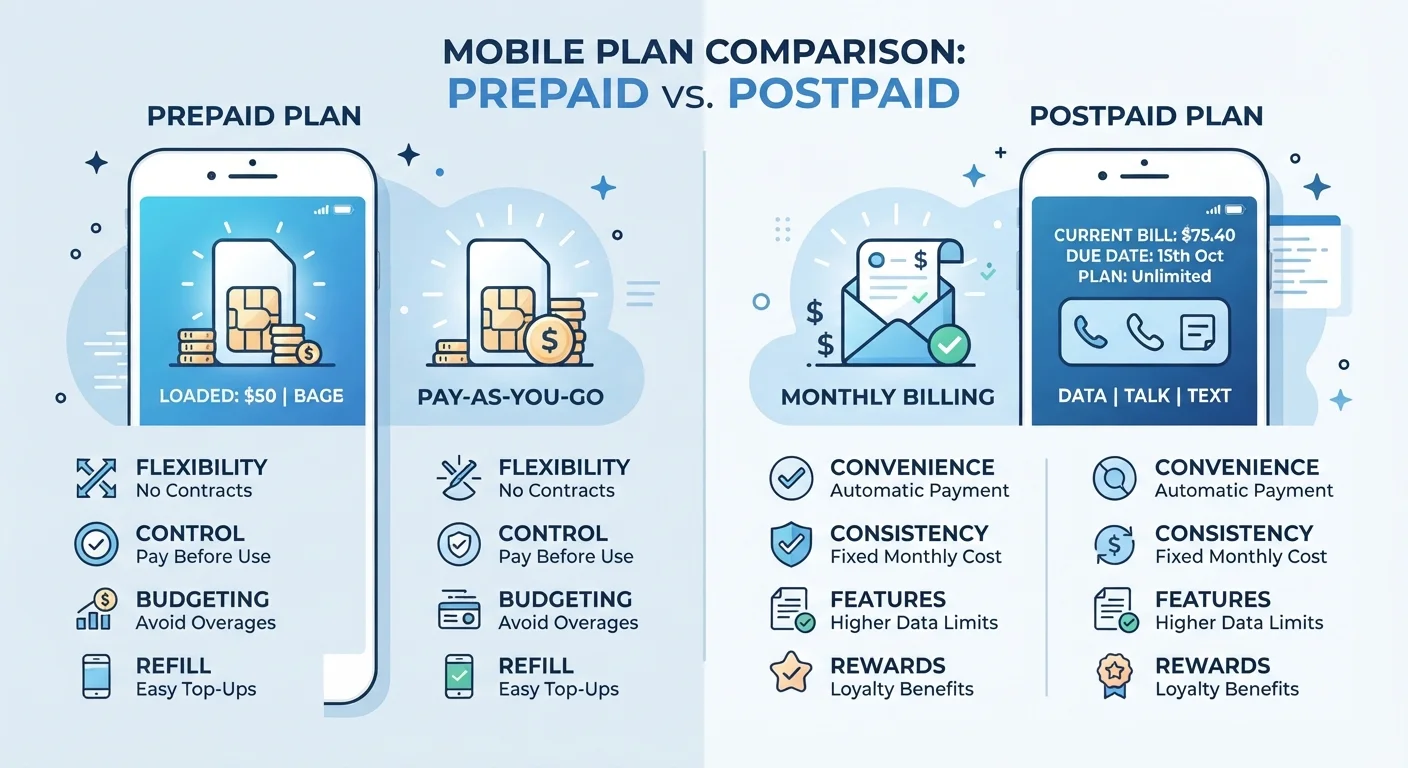
Photo credit: SearchLynk.net | Search Made Easier
In this article
Prepaid and postpaid plans work very differently. Understand the billing, credit, and flexibility trade-offs before you commit to either.
Key Takeaways
- Prepaid plans require payment upfront; postpaid plans bill you after each month of service.
- Postpaid plans typically involve a credit check; prepaid plans generally do not.
- Prepaid offers more flexibility to switch or cancel without early termination fees.
- Postpaid accounts often receive higher network priority during congestion than prepaid subscribers.
- Device financing and newer phone trade-in programs are almost exclusively available on postpaid accounts.
- Neither plan type is universally better - your usage habits and financial priorities should guide the choice.
The Core Difference: When You Pay
The single most important distinction between prepaid and postpaid is the payment sequence. With a prepaid plan, you load money onto your account - or purchase a plan - before service begins. Once your balance or allotment runs out, service pauses until you add more. With a postpaid plan, the carrier extends you a month of service and bills you afterward, much like a utility.
That difference in billing timing has downstream effects on nearly everything else: credit requirements, device options, network priority, and how easy it is to leave. For a broader orientation to how the wireless market is structured, see Phone Plans Explained.
| Criterion | Prepaid | Postpaid |
|---|---|---|
| Payment timing | Pay before service begins | Billed after each month of service |
| Credit check required | No | Typically yes |
| Contract or commitment | None - cancel anytime | Possible device installment obligation |
| Network priority | Lower during congestion | Higher during congestion |
| Device financing | Generally not available | Widely available |
| International roaming | Limited options | Broader options available |
| Family plan discounts | Rare | Common with multiple lines |
Credit, Commitment, and Account Requirements
Postpaid carriers extend credit by billing in arrears, so they typically run a credit check when you apply. A thin credit history or past-due accounts can result in a deposit requirement or outright denial. Prepaid service skips this entirely - you're paying in advance, so no credit evaluation is needed.
Postpaid accounts also frequently come with service agreements or device installment contracts. While standalone month-to-month postpaid plans exist, financing a phone through the carrier usually ties you to the account until the device is paid off. Early account cancellation can leave a remaining device balance due immediately. Prepaid plans, by contrast, carry no such obligation - you can stop service at the end of any cycle. For a deeper look at how contract-free plans work in practice, see the trade-offs of no-contract plans.
~40%
U.S. wireless subscribers on prepaid service
Industry analyst estimates have consistently placed prepaid's share of U.S. wireless connections between 35-45%, reflecting significant demand for no-commitment plans.
0
Credit checks required for prepaid activation
Unlike postpaid accounts, prepaid activations across all major U.S. carriers require no credit inquiry, making service accessible to a wider range of consumers.
Network Priority and Coverage Experience
Both prepaid and postpaid plans typically run on the same underlying networks, but the experience during peak congestion can differ. Major carriers have publicly disclosed that postpaid subscribers receive higher data priority than prepaid or wholesale customers during network congestion. In practical terms, this means a prepaid subscriber may notice slower speeds in dense urban areas or during high-traffic events, while postpaid subscribers on the same tower are less affected.
This doesn't mean prepaid coverage is poor - in low-traffic conditions, the difference is often imperceptible. However, if you regularly use data in crowded locations, it's a factor worth understanding before choosing a plan. Matching plan features to your usage habits can help you decide how much this trade-off matters for your lifestyle.
Prepaid vs. MVNOs: A Related Distinction
Many prepaid plans are offered by Mobile Virtual Network Operators (MVNOs) - companies that lease network capacity from major carriers rather than operating their own towers. MVNOs often provide competitive prepaid pricing but inherit the priority policies of the host network. If you're evaluating a prepaid plan from a smaller brand, it's worth confirming which underlying network it uses and what priority tier prepaid subscribers receive on that network.
Device Access and Financing
If you want the latest flagship smartphone and prefer to spread the cost over 24 or 36 months, postpaid is generally the only path through a carrier. Installment financing, trade-in credits, and promotional upgrade programs are structured around postpaid accounts because they require a creditworthy customer who will remain on the account long enough to complete payments.
Prepaid users typically need to bring their own unlocked device or purchase a handset outright at the time of activation. While entry-level and mid-range phones are widely available unlocked at accessible price points, the newest premium devices at subsidized installment rates remain predominantly a postpaid feature.
Understanding the full cost picture - including how carrier pricing structures can inflate what you actually pay - is worth reviewing separately. Learn where common overcharges hide before committing to any plan structure.
Making the Right Call for Your Situation
There's no objectively superior option between prepaid and postpaid - the better fit depends on your financial priorities, how you use your phone, and how much flexibility you want. Prepaid suits people who value spending predictability, dislike credit checks, or switch plans frequently. Postpaid suits people who want premium device access, family plan discounts, or the highest network priority tier their carrier offers.
Before signing up for either, take time to read a phone plan carefully - line items, data allotments, and automatic renewal terms can all affect the total cost of service in ways that aren't obvious upfront.

Author
Tech & Telecom Editorial Team
Tech & Telecom Editorial Team is the collective byline for our editorial team and contributor network. Articles published under this byline or an editorial pen name are researched, written, and reviewed according to our editorial standards for clarity, consistency, and independence before publication.
View all articles →