
When a Store Says 'No Refunds,' Are They Allowed to Do That?
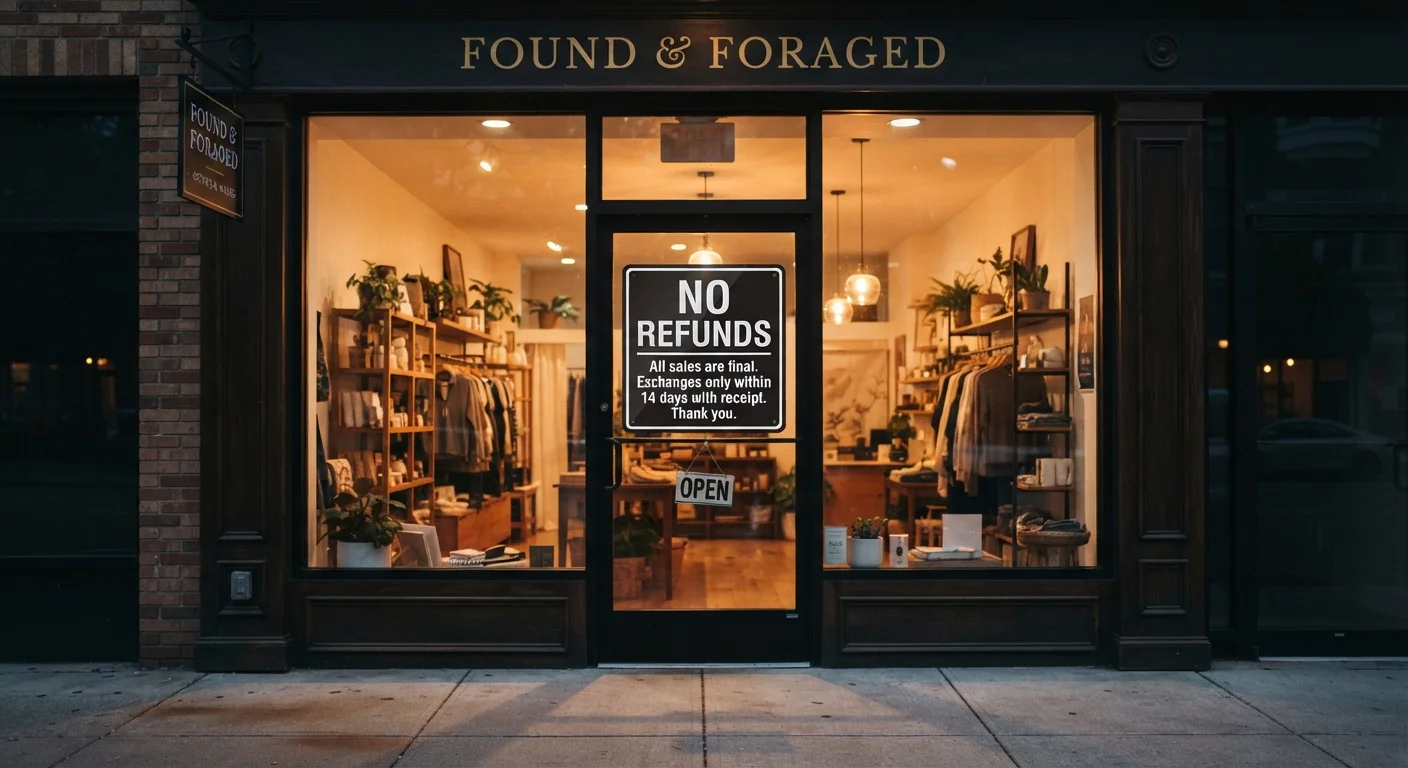
Photo credit: SearchLynk.net | Search Made Easier
In this article
Retailers can set return policies, but they aren't always the final word. Learn when no-refund signs are enforceable and when you still have recourse.
Key Takeaways
- Retailers can legally set no-refund policies, but they must clearly disclose them before the sale.
- A no-refund sign does not override your right to a remedy when goods are defective, mislabeled, or never delivered.
- Credit card chargebacks offer a separate layer of protection independent of the store's policy.
- State laws vary widely - some states require refund notices to be posted in specific locations and formats.
- Always review a store's return policy before purchasing, especially for final-sale or clearance items.
The Legal Baseline: Retailers Have Discretion, but Not Unlimited Power
There is no federal law in the United States that requires a retailer to accept returns or issue refunds simply because a customer changed their mind. That may surprise many shoppers, but it is accurate. Retailers generally have wide latitude to define their own refund terms - and a clearly posted no-refund policy is, in most states, legally enforceable for routine, change-of-mind returns.
The critical word is clearly. Consumer protection standards across most states hold that a no-refund policy must be communicated to the buyer before the purchase is made. A small sign posted behind the register that a customer can't see at checkout, or a policy buried in fine print after payment, carries far less legal weight. If you weren't reasonably informed of the policy before handing over money, the retailer's ability to enforce it weakens considerably.
Return policies are not all created equal, and it pays to read them before you pay - not after.
49
U.S. states with consumer protection statutes
Nearly every U.S. state has its own consumer protection law governing deceptive trade practices, which can affect how no-refund policies are interpreted and enforced.
60 days
FTC timeframe for disputing non-delivery
Under the FTC's Mail, Internet, or Telephone Order Rule, consumers are entitled to cancel and receive refunds when merchants fail to ship within the promised or default timeframe.
120 days
Typical credit card chargeback window
Most major credit card networks allow cardholders to initiate a dispute within approximately 60-120 days of the transaction, offering a recourse independent of store policy.
When a No-Refund Policy Cannot Protect the Retailer
Even a conspicuously posted no-refund sign hits hard legal limits in several situations:
- Defective or broken goods: Implied warranties - a baseline protection under the Uniform Commercial Code adopted by most states - generally guarantee that products will function as ordinarily expected. A no-refund policy cannot eliminate this implied warranty in most retail contexts.
- Mislabeled or misrepresented products: If you receive something materially different from what was advertised or described, that can constitute fraud or misrepresentation, neither of which a store policy can shield against.
- Non-delivery: Paying for something you never receive is not a return situation - it is a failure to perform. The FTC's Mail, Internet, or Telephone Order Rule obligates online and mail-order sellers to fulfill orders or offer cancellations and full refunds within specified timeframes.
- Health and safety violations: Products recalled for safety hazards or that violate federal safety standards create liability that supersedes store policy.
Understanding these exceptions matters because retailers - and their front-line staff - don't always volunteer this information at the point of conflict. Knowing where the policy ends and your rights begin puts you in a stronger position.
State Law Adds Another Layer
Because the U.S. has no uniform federal return law, your state's consumer protection statutes can significantly shape the picture. Several states go further than the baseline:
- California requires retailers with a no-refund policy to conspicuously post that policy. Retailers that fail to do so must accept returns within a reasonable timeframe.
- New York mandates that stores post their return policy clearly. If no policy is posted, a customer has the right to a full cash refund within 30 days of purchase.
- Florida similarly requires disclosure and imposes specific posting standards.
These rules vary in their details, and new legislation can change the landscape. Your state attorney general's office or consumer protection division is the authoritative source for your specific jurisdiction. The common myths about consumer refund rights are worth reviewing - many shoppers misunderstand what protections actually exist.
Your Practical Recourse When a Store Won't Budge
If a retailer refuses to honor what you believe is a legitimate refund claim, you have several avenues:
- Escalate within the store: Ask to speak with a manager or the store's corporate customer service line. Front-line employees may not have full authority or knowledge of consumer protection obligations.
- Credit card chargeback: If you paid by credit card, your card issuer provides an independent dispute process. Chargebacks are particularly effective for non-delivery, fraud, or significantly misrepresented goods. This protection exists regardless of the store's policy.
- File a complaint: The FTC at ReportFraud.ftc.gov and your state attorney general's consumer protection office both accept complaints. While they typically don't intervene in individual disputes, patterns of complaints can trigger regulatory action.
- Small claims court: For low-dollar disputes, small claims court is accessible without an attorney and can be a viable last resort.
Before any online purchase, confirm the seller's return policy and legitimacy - it is far easier to protect yourself before money changes hands than to recover it afterward. And if you're concerned a storefront may not be legitimate at all, our guide on spotting fraudulent online shops can help you assess the risk before you click buy.
Frequently Asked Questions

Author
Shopping Editorial Team
Shopping Editorial Team is the collective byline for our editorial team and contributor network. Articles published under this byline or an editorial pen name are researched, written, and reviewed according to our editorial standards for clarity, consistency, and independence before publication.
View all articles →