
Common Myths About Consumer Refund Rights
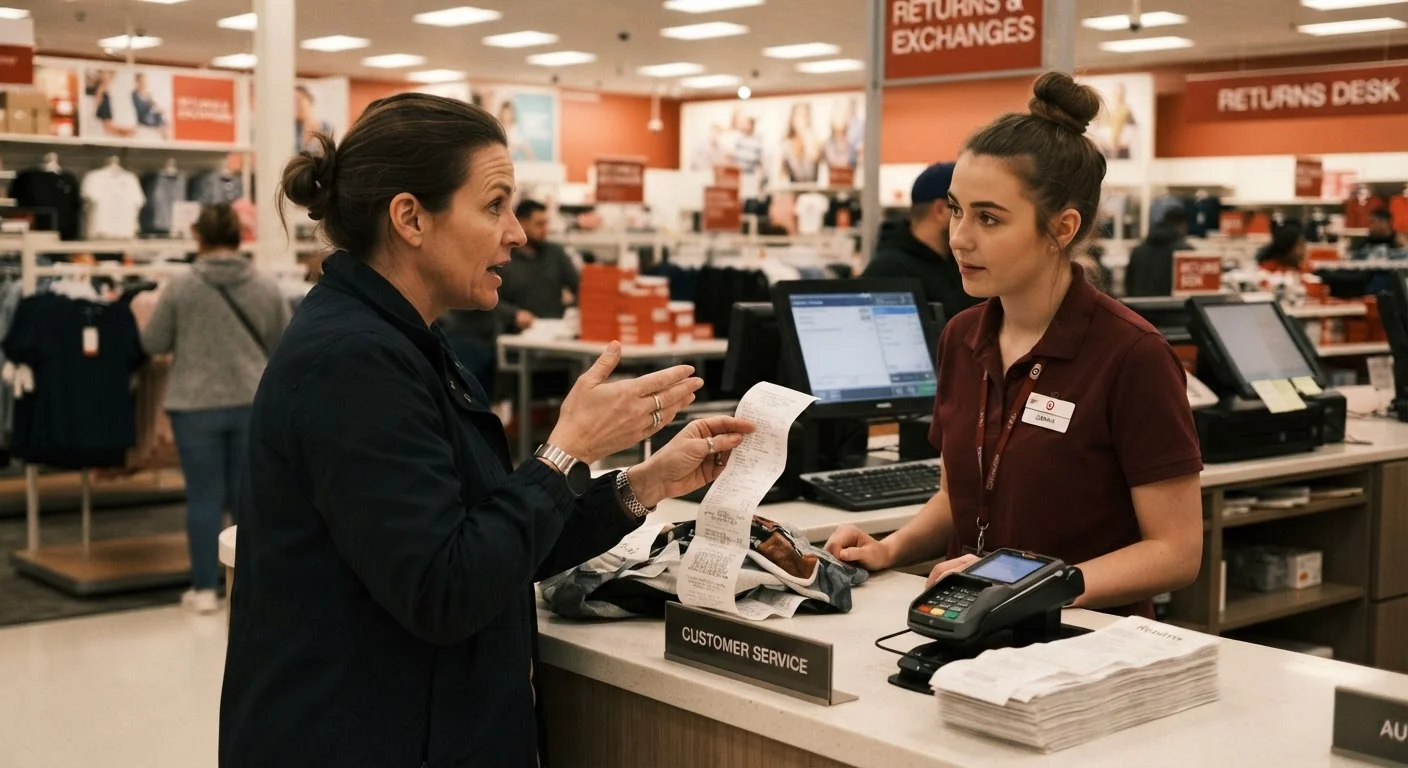
Photo credit: SearchLynk.net | Search Made Easier
In this article
From the '30-day return rule' to mandatory receipt requirements, many widely believed consumer rights turn out to be misunderstood. Here's the truth.
Key Takeaways
- There is no universal federal law requiring retailers to accept returns or issue refunds.
- You do not always need an original receipt to return a purchase - many stores accept alternatives.
- Credit card chargebacks are a legitimate consumer tool, not a last resort reserved for fraud only.
- Store policies posted at the point of sale are generally binding, so read them before you pay.
- State laws vary significantly and may offer stronger return protections than federal baseline rules.
Why Consumer Refund Myths Spread So Easily
Misconceptions about return and refund rights persist partly because retail practices vary so widely - and partly because consumers rarely read return policies until they need them. When a store declines a return, it can feel arbitrary or even illegal. Often, it isn't. But in some cases, consumers do have more recourse than the retailer lets on.
Understanding the actual legal framework - which is a patchwork of federal rules, state laws, and voluntary retailer policies - is the first step to protecting yourself. The myths below are among the most commonly repeated, and correcting them can make a real difference the next time you're standing at a customer service counter.
Myth
There's a federal '30-day return law' that guarantees every consumer the right to return any purchase within 30 days.
Fact
No such universal federal law exists. Return policies are largely set by individual retailers, not mandated by the federal government.
This is one of the most persistent myths in consumer culture. Many shoppers believe a federal statute automatically entitles them to a 30-day return window on any purchase. In reality, the U.S. federal government does not impose a general return period on most retail transactions. Retailers are largely free to set their own return windows - or have no return policy at all.
The one notable federal rule is the FTC's Cooling-Off Rule, which gives consumers three business days to cancel certain door-to-door sales or contracts signed away from a seller's permanent place of business. This narrow rule is frequently confused with a broad return entitlement, but it covers a specific and limited set of transactions.
Myth
You must have your original receipt to return any product to a store.
Fact
While a receipt helps, many retailers accept alternative proof of purchase, and some states have laws protecting consumers without receipts.
Receipts are useful but rarely the only path to a return. Many retailers can look up purchases using a loyalty account, credit card number, or order confirmation email. Bank or credit card statements often serve as acceptable proof of purchase, particularly when disputing a charge.
Some states have enacted regulations that prevent retailers from using the absence of a receipt as the sole grounds to deny a return. Policies vary considerably, so it's worth checking a retailer's stated policy and your state's consumer protection office if you're denied without one. See when no-refund policies are actually enforceable for more detail.
Myth
If a store posts a 'No Refunds' sign, there is absolutely nothing a consumer can do.
Fact
A no-refund policy limits voluntary returns but does not eliminate your rights when a product is defective or misrepresented.
A clearly posted no-refund policy generally means the retailer isn't obligated to accept change-of-mind returns. However, it does not override other consumer protections. If a product is defective, unsafe, or was sold under false pretenses, state consumer protection laws and implied warranty rules may still require the seller to provide a remedy.
Additionally, if you paid by credit card, a chargeback may be an option even when the store refuses a refund. Implied warranties - which exist automatically under state law in most cases - generally guarantee that a product will perform its basic intended function, regardless of what the return sign says.
Myth
Chargebacks are only for fraud and should not be used for return disputes.
Fact
Chargebacks are a legitimate consumer protection tool that can apply to billing errors, undelivered goods, and significantly misrepresented products.
Many consumers hesitate to initiate a chargeback because they associate it exclusively with stolen card numbers or identity theft. In fact, the Fair Credit Billing Act (FCBA) gives credit card holders the right to dispute charges for goods that were not delivered as described, never received, or billed in error.
A chargeback is not a workaround for legitimate purchases you simply regret - it is a federally backed dispute mechanism. Using it appropriately is within your rights. That said, filing chargebacks frivolously or dishonestly can result in your card account being flagged or closed, so it should be used in genuine dispute situations. For a broader look at consumer legal protections, see what the law actually guarantees American consumers.
Myth
Online purchases have the same return rules as in-store purchases at the same retailer.
Fact
Online and in-store return policies at the same retailer can differ significantly, including different windows and restocking fees.
It's common to assume that a retailer's return policy is uniform across all purchasing channels. In practice, many retailers apply separate return rules to online orders - sometimes shorter windows, shipping costs deducted from refunds, or mandatory return-by-mail rather than in-store drop-off.
Before completing an online purchase, review the e-commerce return policy specifically. It is often linked in the order confirmation email or on the checkout page. Return policies are not all created equal, and failing to read the fine print before buying online is one of the most common ways consumers end up stuck with items they cannot return cost-effectively.
What You Can Actually Do When a Refund Is Denied
If a retailer denies your return or refund request, you're not necessarily out of options. Start by documenting your purchase, the product's condition, and any communication with the store. Then consider the following paths:
- Review the posted policy: Confirm whether the denial is consistent with what was disclosed at the time of purchase. If a policy changed after your purchase, that may not be enforceable.
- Contact your card issuer: If the product was defective or significantly misrepresented, a credit card chargeback may be an option under the Fair Credit Billing Act.
- File a complaint: Your state attorney general's office or consumer protection bureau can investigate deceptive or unlawful return practices. The FTC also accepts consumer complaint reports, which help identify patterns of problematic business behavior.
- Small claims court: For higher-value disputes involving defective products or contract violations, small claims court is a low-cost legal avenue available in every U.S. state.
Read Return Policies Before You Buy
Return policies posted or disclosed at the point of sale - whether in-store or online - are generally considered binding once you complete a purchase. If a store displays a restocking fee, a final-sale designation, or a narrow return window, those terms can typically be enforced. Always review these conditions before completing a transaction, not after. Last-minute policy checks at the register are often too late to change the outcome.
Being informed about what retailers are and are not required to do is foundational consumer knowledge. For a comprehensive look at your broader rights, see the overview of consumer rights that U.S. law actually guarantees.

Author
Shopping Editorial Team
Shopping Editorial Team is the collective byline for our editorial team and contributor network. Articles published under this byline or an editorial pen name are researched, written, and reviewed according to our editorial standards for clarity, consistency, and independence before publication.
View all articles →