
Open Box, Refurbished, and Certified Pre-Owned: What Each Label Actually Means
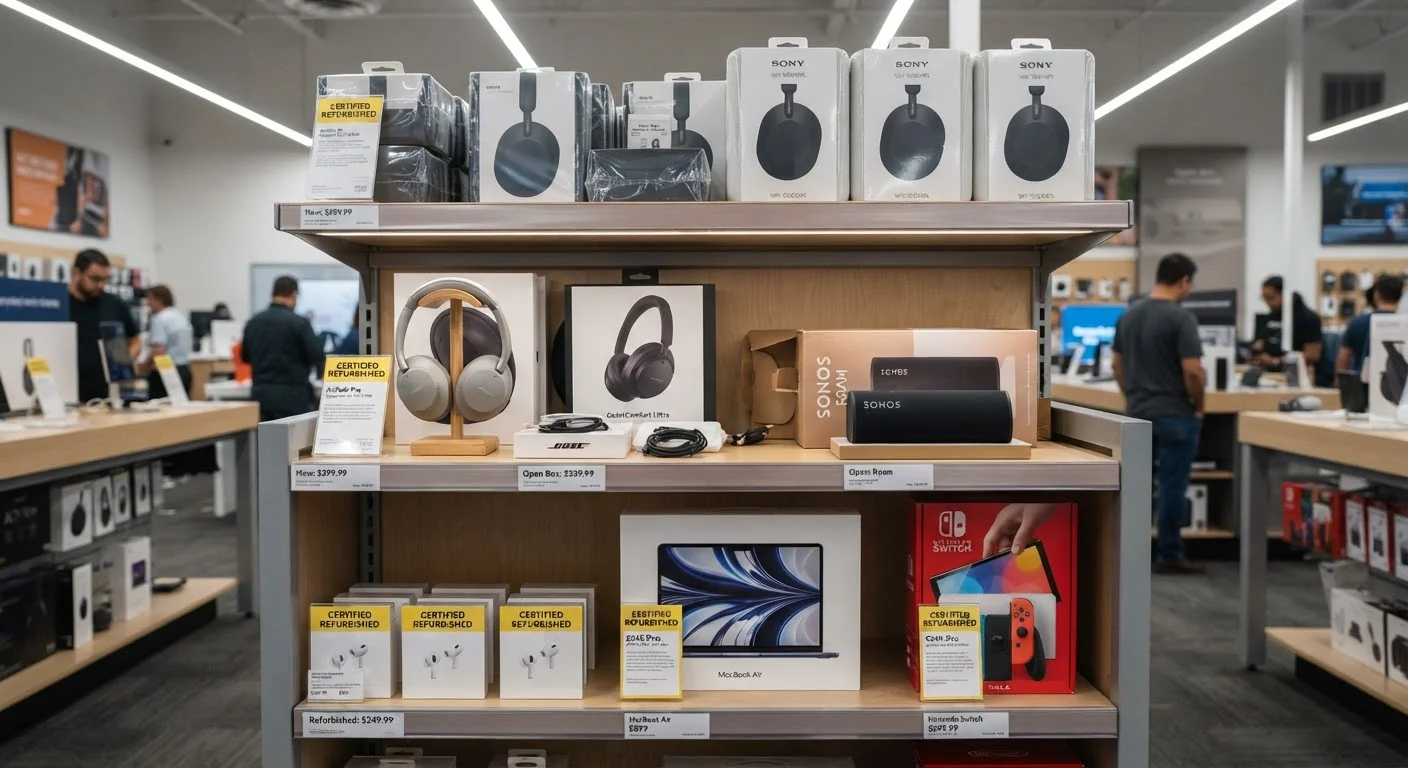
Photo credit: SearchLynk.net | Search Made Easier
In this article
These three labels sound similar but carry very different quality guarantees and risk profiles. Here's what each one means in plain language.
Three Labels, Three Very Different Promises
Walk through any major electronics retailer or scroll through an online marketplace and you'll encounter three labels that seem almost interchangeable: open box, refurbished, and certified pre-owned. They all suggest a product that isn't factory-fresh, and they all typically cost less than new. But the quality guarantees, inspection histories, and consumer protections behind each label vary considerably.
Understanding what each label actually commits a seller to - and what it doesn't - is one of the most practical skills a shopper can develop. The wrong assumption can mean buying a product with no warranty, undisclosed damage, or components that have already been replaced once.
| Open Box - Inspected? | Not always; varies by retailer |
| Open Box - Warranty? | Often limited or none; confirm before purchase |
| Refurbished - Inspected? | Yes, but standards vary by who did the work |
| Refurbished - Warranty? | Typically 90 days; manufacturer programs may offer more |
| Certified Pre-Owned - Inspected? | Yes, against a defined checklist |
| Certified Pre-Owned - Warranty? | Usually included; terms vary by program and seller |
| Highest Risk Label | Open box (least standardized) |
| Highest Assurance Label | Certified pre-owned (most structured) |
Open Box: Returned, But Not Necessarily Inspected
Open box refers to merchandise that a previous customer purchased and returned, or that was used as a floor display model. The defining characteristic is that the original packaging has been opened. Beyond that, the condition can vary widely.
Some open box items are genuinely unused - a customer changed their mind before even turning the product on. Others may have been tested, lightly used, or returned due to a defect that may or may not have been resolved before resale. The critical word here is may: open box items are not always inspected or repaired before being placed back on the shelf.
What this means in practice:
- Original accessories (cables, manuals, remotes) may be missing or substituted with generic versions.
- Cosmetic wear - scratches, scuffs - is possible and may not be fully disclosed.
- Warranty coverage varies. Some retailers extend the original manufacturer's warranty; others treat the item as-is.
Before purchasing open box, ask specifically whether the item was inspected, what accessories are included, and what warranty - if any - applies. For a deeper look at what sellers can and can't disclaim, see what 'as-is' really means when you buy something.
Refurbished: Repaired, But Standards Vary by Seller
Refurbished - sometimes labeled "reconditioned" - means the product has been returned, inspected, and repaired to a functional state before resale. This is a step up from open box in terms of process, but the word "refurbished" by itself carries no universal standard.
A refurbished item sold directly by the original manufacturer has typically gone through rigorous testing, had defective components replaced with genuine parts, and been reset to factory settings. A refurbished item sold by a third-party reseller may have gone through a far less structured process - or a minimal one.
Open Box
A product whose original packaging has been opened, typically due to a customer return or use as a display model. Condition and inspection level vary by retailer and are not guaranteed.
Refurbished
A product that has been returned, inspected, and repaired to functional condition before resale. Quality of the refurbishment process depends on who performed it - manufacturer or third party.
Certified Pre-Owned (CPO)
A used or returned product that has been inspected against a defined checklist and meets a stated condition standard, typically accompanied by a warranty. Most structured in the auto industry; less regulated in electronics.
Manufacturer-Refurbished
A product refurbished by its original maker using genuine parts and brand-specific testing protocols, generally offering more consistency than third-party refurbishment.
Grading System
A seller-defined scale (often Grade A, B, or C) used to communicate the cosmetic and functional condition of a used or refurbished product. Definitions vary between sellers.
As-Is
A sale designation indicating the product is sold in its current condition with no warranty or implied guarantee of quality. Buyers accept the item's condition at the time of purchase.
Key questions to ask about any refurbished item:
- Who did the refurbishing? Manufacturer-refurbished carries more assurance than third-party refurbished.
- What warranty is included? Many refurbished items come with a limited 90-day warranty rather than a full year. Understand what that covers - see warranty types explained for a breakdown of what each type actually promises.
- What grade is it? Some sellers use grading systems (Grade A, B, C) to indicate cosmetic condition. Ask what each grade means before assuming.
Refurbished can represent real value - particularly for electronics - but only when the seller is transparent about who performed the work and what was replaced.
Certified Pre-Owned: The Highest Bar - With Caveats
Certified pre-owned (CPO) is the most structured of the three labels. It typically indicates that the product has been inspected against a defined checklist, meets a minimum condition standard, and comes with a warranty - often one that mirrors or extends the original manufacturer's coverage.
CPO programs are most common in the automotive industry, where they are well-regulated and involve specific mechanical inspections, reconditioning requirements, and warranty terms. In consumer electronics and appliances, CPO programs exist but are less standardized. A CPO designation from the original manufacturer generally carries more weight than the same label applied by a third-party retailer.
What to verify with any CPO purchase:
- What specific inspection criteria does the program require? Ask for a checklist or report.
- Is the warranty backed by the manufacturer or by the retailer? Manufacturer-backed is generally more reliable.
- Are there mileage or usage caps that affect the warranty? This is especially relevant for vehicles.
CPO products tend to be priced closer to new, which reflects the added assurance. Whether that premium is worth it depends on the category, the seller's reputation, and the specifics of the warranty. Understanding the difference between a warranty and a guarantee can help you evaluate what you're actually getting.
Making the Call: Which Label Fits Which Purchase
No single label is universally the right choice. The decision depends on the product category, your risk tolerance, and what protections the specific seller offers.
As a general framework:
- Open box makes most sense for low-complexity items (cables, cases, accessories) where inspection matters less, or when you can physically inspect the item before buying.
- Refurbished is worth considering for mid-to-high-cost electronics when the refurbishment was performed by the manufacturer and a meaningful warranty is included.
- Certified pre-owned carries the most built-in assurance but comes at a higher price point - evaluate whether the warranty terms justify the cost difference from a standard refurbished option.
Across all three, the quality signals that matter most are rarely on the label itself. For guidance on reading product quality more accurately, see signals of quality that packaging and marketing won't tell you.
The bottom line: treat each of these labels as a starting point for questions, not a final answer about what you're getting.

Author
Shopping Editorial Team
Shopping Editorial Team is the collective byline for our editorial team and contributor network. Articles published under this byline or an editorial pen name are researched, written, and reviewed according to our editorial standards for clarity, consistency, and independence before publication.
View all articles →