
Counterfeit Goods vs. Genuine Products: How the Difference Gets Hidden From You
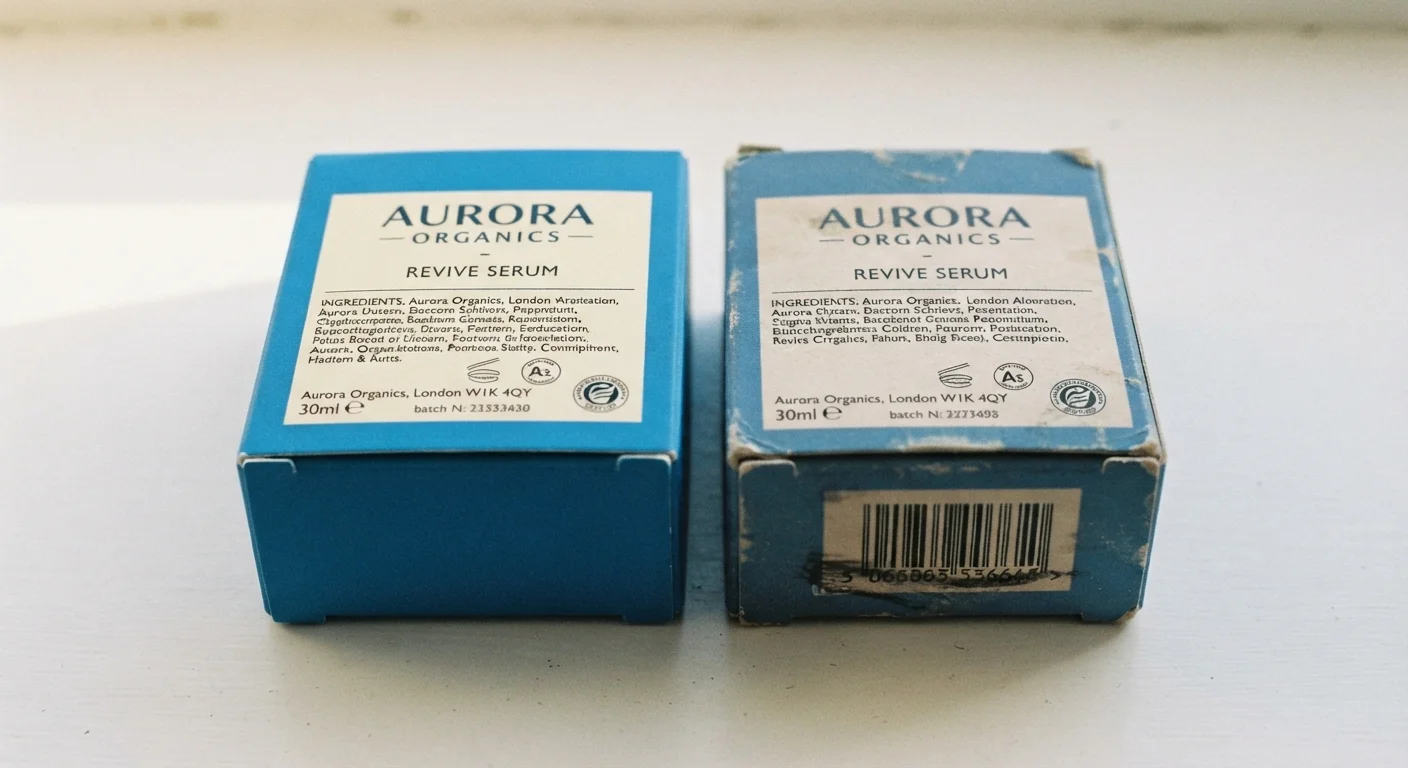
Photo credit: SearchLynk.net | Search Made Easier
In this article
Understand how counterfeit items are made to look authentic, where they typically appear, and what details to scrutinize before purchasing.
Key Takeaways
- Counterfeit products are deliberately manufactured to mimic authentic items, often copying logos, packaging, and serial numbers.
- They appear across all channels - online marketplaces, social media ads, and even physical retail environments.
- Price alone is not a reliable indicator; some counterfeits are priced close to genuine retail to appear legitimate.
- Packaging inconsistencies, missing safety certifications, and vague seller details are among the most reliable warning signs.
- Purchasing counterfeit goods carries financial, safety, and legal risks that are rarely disclosed at the point of sale.
- Verification tools provided by authorized retailers and brand manufacturers remain the most dependable safeguard.
How Counterfeiting Works - and Why It's Hard to Spot
Counterfeiting is not a corner-cutting shortcut. At the sophisticated end, it is a deliberate manufacturing process specifically designed to exploit the visual and tactile expectations consumers have for genuine products. Sellers of counterfeit goods invest in copying logos, replicating packaging typography, forging certification marks, and sometimes cloning serial numbers - all to pass a casual inspection.
The challenge for consumers is that the most dangerous counterfeits are not the obvious knockoffs. They are the ones engineered to survive a side-by-side comparison at first glance. Understanding that deception is the product's primary function is the correct starting point for protecting yourself. As our coverage of how shopping scams are structured explains, fraud depends on exploiting trust - and counterfeit goods are a physical embodiment of that principle.
| Criterion | Genuine Products | Counterfeit Goods |
|---|---|---|
| Manufacturing origin | Authorized facilities with quality controls | Unauthorized facilities, no oversight |
| Safety certifications | Verified by recognized regulatory bodies | Marks copied visually, not certified |
| Materials used | Specified to brand standards | Unknown, often substandard or hazardous |
| Warranty coverage | Manufacturer warranty included | No warranty; no recourse |
| Pricing pattern | Consistent across authorized sellers | Variable; sometimes near-retail to appear legitimate |
| Seller accountability | Traceable, licensed, regulated | Often anonymous or disappears after sale |
| Packaging quality | Consistent fonts, colors, alignment | Subtle errors in print, alignment, or materials |
| Consumer legal protections | Covered under consumer protection law | Minimal to none in practice |
Where Counterfeit Goods Enter the Market
Counterfeit products do not stay in one channel. They move through online marketplaces with third-party sellers, social media shops, discount websites, peer-to-peer resale platforms, and sometimes brick-and-mortar discount stores. Third-party marketplace listings are a particularly common vector because they allow sellers to appear alongside authorized retailers with minimal friction.
Social media advertising has made the problem more acute. An ad can direct consumers to a storefront that existed only a few weeks ago and will disappear the day after the holidays. Fraudulent e-commerce sites often lack verifiable contact information, have no meaningful return policy, and use product photography lifted directly from authorized brand pages.
Even resale platforms carry risk. A counterfeit item sold as "lightly used" from a seemingly legitimate personal account is difficult to distinguish from an authentic secondhand item without physical examination.
$509B+
Estimated global counterfeit trade annually
The OECD has estimated the global trade in counterfeit and pirated goods at hundreds of billions of dollars per year, representing a significant share of world trade.
~20%
Share of seized fakes involving safety goods
U.S. Customs and Border Protection seizure data consistently shows a substantial portion of counterfeit shipments involves products with direct safety implications, including electronics and personal care items.
Top 3
Categories most commonly counterfeited
Footwear, apparel, and electronics have historically ranked among the most frequently counterfeited product categories in global trade enforcement data.
The Details That Separate Genuine From Fake
Once you know what to scrutinize, several consistent patterns emerge. Counterfeits frequently show inconsistencies that mass production lines creating authentic goods would not allow - misaligned text, slightly off-color logos, font weights that do not match the brand's standard, or packaging that feels lighter or flimsier than expected.
Certifications are another pressure point. Genuine products sold in the U.S. carry applicable safety marks from recognized bodies - UL listing for electronics, FDA registration for health products, and CPSC compliance for children's goods. Counterfeit versions often reproduce the visual appearance of these marks without the underlying compliance. A mark that appears smudged, pixelated, or formatted differently from what is shown on the certifying body's official database is a serious warning signal.
Pricing context matters too, though not in the obvious way. Some counterfeits are priced close to retail to appear credible. What matters more is whether the price can be explained - a documented sale, an authorized clearance event, a verified refurbished listing. If it cannot be explained, that gap deserves scrutiny. Our article on why deeply discounted products often aren't real covers this pricing dynamic in detail.
Seller verification is the most actionable defense available. Many brand manufacturers maintain authorized-seller directories on their own websites. Checking whether a seller appears in that directory before purchasing takes minutes and is one of the most reliable protections available. For additional listing-level signals, see our guide on red flags hidden in plain sight on product listings.
Counterfeit vs. Generic: An Important Distinction
Counterfeits are fundamentally different from generic or store-brand products. A generic product is legally manufactured and sold under its own identity without pretending to be something else. A counterfeit deliberately misrepresents itself as a brand-name product it is not. This distinction matters for safety, legal recourse, and purchasing decisions. For a category-by-category look at legitimate generics, see our generic vs. name brand breakdown.
What's Actually at Risk When You Purchase a Counterfeit
The risks are not limited to getting a lower-quality version of what you paid for. In product categories involving electrical components, cosmetics, pharmaceuticals, children's toys, or protective equipment, counterfeits have been linked to injuries, allergic reactions, fires, and product failures. Because these goods are manufactured outside regulated supply chains, there is no quality control checkpoint ensuring materials are safe.
Financially, counterfeit purchases generally offer no recourse. Many involve non-refundable payment methods or sellers who vanish after the transaction. Consumer protection laws cover deceptive trade practices, but enforcement depends on being able to identify and reach the seller - often impossible when the storefront no longer exists.
There is also a less-discussed downstream effect: purchasing counterfeits - even unknowingly - can complicate warranty claims on genuine products from the same brand, particularly in categories where authentication is tied to serial number registration.
Developing a habit of evaluating quality signals that packaging won't reveal is a practical long-term investment in smarter purchasing decisions.

Author
Shopping Editorial Team
Shopping Editorial Team is the collective byline for our editorial team and contributor network. Articles published under this byline or an editorial pen name are researched, written, and reviewed according to our editorial standards for clarity, consistency, and independence before publication.
View all articles →