
Consumer Fraud Glossary: Terms Every Shopper Should Know
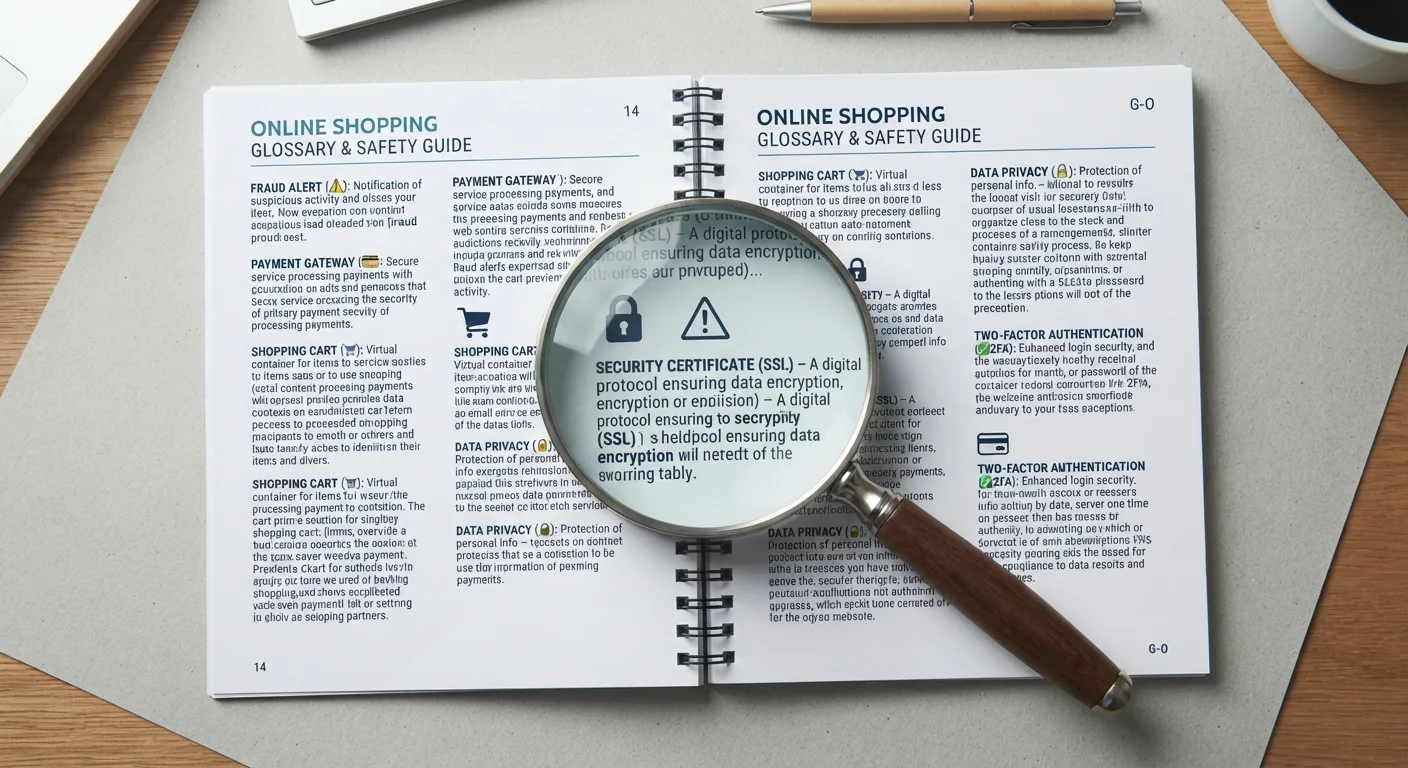
Photo credit: SearchLynk.net | Search Made Easier
In this article
From 'brushing scams' to 'triangulation fraud,' this reference defines the key terms used to describe modern shopping fraud clearly and simply.
Why Fraud Vocabulary Matters
Consumer fraud evolves constantly, but the underlying schemes tend to follow recognizable patterns - and those patterns have names. When you know what a "brushing scam" or "triangulation fraud" actually means, you're far better equipped to spot one in the wild. This glossary defines the terms most commonly used by consumer protection agencies, cybersecurity researchers, and fraud investigators so you can use that language to protect yourself.
For a deeper look at how these schemes are structured from start to finish, see The Anatomy of a Shopping Scam. For your rights when something goes wrong, the Consumer Rights hub is a practical starting point.
Brushing Scam
A scheme in which a seller ships unsolicited packages to real addresses and then posts fake verified reviews in those recipients' names. The goal is to inflate product ratings on marketplace platforms. Recipients haven't ordered or paid for anything, but their account credentials or address data may have been compromised.
Triangulation Fraud
A three-party scheme where a fraudster lists goods on a legitimate marketplace, collects payment from an unsuspecting buyer, then orders the item from a real retailer using stolen credit card data. The buyer receives the product but a fraud victim's card is charged. The fraudster pockets the difference.
Phishing
A deceptive attempt - usually via email - to trick a consumer into revealing login credentials, payment details, or personal information by impersonating a trusted brand or institution. Phishing messages often mimic order confirmations, shipping alerts, or account warnings.
Smishing
The SMS (text message) equivalent of phishing. Fraudsters send text messages that appear to come from delivery services, banks, or retailers, directing recipients to click a malicious link or call a fake number.
Vishing
Voice phishing conducted over the phone. A caller impersonates a legitimate organization - such as a bank's fraud department or a government agency - to pressure a consumer into sharing account numbers, Social Security numbers, or one-time passcodes.
Counterfeit Goods
Products manufactured to look like legitimate branded items without authorization from the brand owner. Counterfeits are illegal and often fail to meet safety standards. Sellers may use authentic-looking packaging and legitimate marketplace listings to distribute them.
Card-Not-Present (CNP) Fraud
Unauthorized use of stolen credit or debit card details for transactions where the physical card is not required - typically online or phone purchases. CNP fraud is among the most common forms of payment fraud and does not require the fraudster to have the physical card.
Chargeback
A formal dispute filed with a card issuer to reverse a charge the cardholder believes is unauthorized or fraudulent. Chargebacks are a consumer protection mechanism, not a general refund process, and have specific eligibility rules and time limits.
Account Takeover (ATO)
When a fraudster gains unauthorized access to a consumer's online account - typically through stolen credentials, data breaches, or credential-stuffing attacks - and uses it to make purchases, change contact information, or harvest stored payment data.
Drop Shipping Fraud
A variant where a seller collects payment but has no inventory and no reliable supplier, leading to indefinite delays or non-delivery. Distinct from legitimate drop-shipping businesses, this scheme is characterized by deceptive intent and no meaningful fulfillment capability.
Fake Escrow Scam
A scheme in which a fraudster directs a buyer to wire funds to a fraudulent 'escrow' service they control, rather than a legitimate third-party holder. Once funds are transferred, the scammer disappears. Common in high-value private-party transactions such as vehicles or electronics.
Synthetic Identity Fraud
The creation of a fictitious identity by combining real data (such as a legitimate Social Security number) with fabricated details. Fraudsters use synthetic identities to open accounts, accumulate credit, and make purchases before abandoning the identity - leaving victims and lenders with losses.
Common Fraud Terms at a Glance
The quick-reference card below summarizes where each type of fraud most frequently occurs and who typically bears financial responsibility. Use it alongside the full definitions above.
| Brushing Scam - Primary Venue | Third-party marketplace listings (U.S. Postal Inspection Service consumer advisories) |
| Triangulation Fraud - Who Loses | The stolen card owner; buyer usually receives goods (Federal Trade Commission fraud taxonomy) |
| Card-Not-Present Fraud - Common Entry Point | Data breaches and phishing credential theft (Payment Card Industry Security Standards Council) |
| Chargeback Time Limit | Typically 60-120 days from statement date (Varies by card network; verify with your issuer) |
| Account Takeover - Primary Attack Method | Credential stuffing using breached username/password pairs (Cybersecurity & Infrastructure Security Agency (CISA)) |
| Phishing - Most Impersonated Sector | Financial services and e-commerce platforms (Anti-Phishing Working Group (APWG) industry reports) |
Understanding these distinctions helps you respond correctly. Triangulation fraud, for example, requires contacting your card issuer immediately, while a brushing scam calls for a review of your marketplace account security. Disputes, chargebacks, and reporting steps differ depending on the scheme involved.
If you want to understand the fraudulent websites that often serve as entry points for these schemes, how to identify a fraudulent online storefront covers the technical and visual red flags. For fraud that begins before any purchase - via email, text, or phone - see phishing, smishing, and vishing explained. Building lasting habits is also worthwhile; staying scam-aware over time offers durable practices that don't require paranoia. And if a charge dispute reaches your card issuer, chargebacks explained walks through exactly what to expect.

Author
Shopping Editorial Team
Shopping Editorial Team is the collective byline for our editorial team and contributor network. Articles published under this byline or an editorial pen name are researched, written, and reviewed according to our editorial standards for clarity, consistency, and independence before publication.
View all articles →