
Auction and Resale Fraud: What Goes Wrong and Why Buyers Are Vulnerable
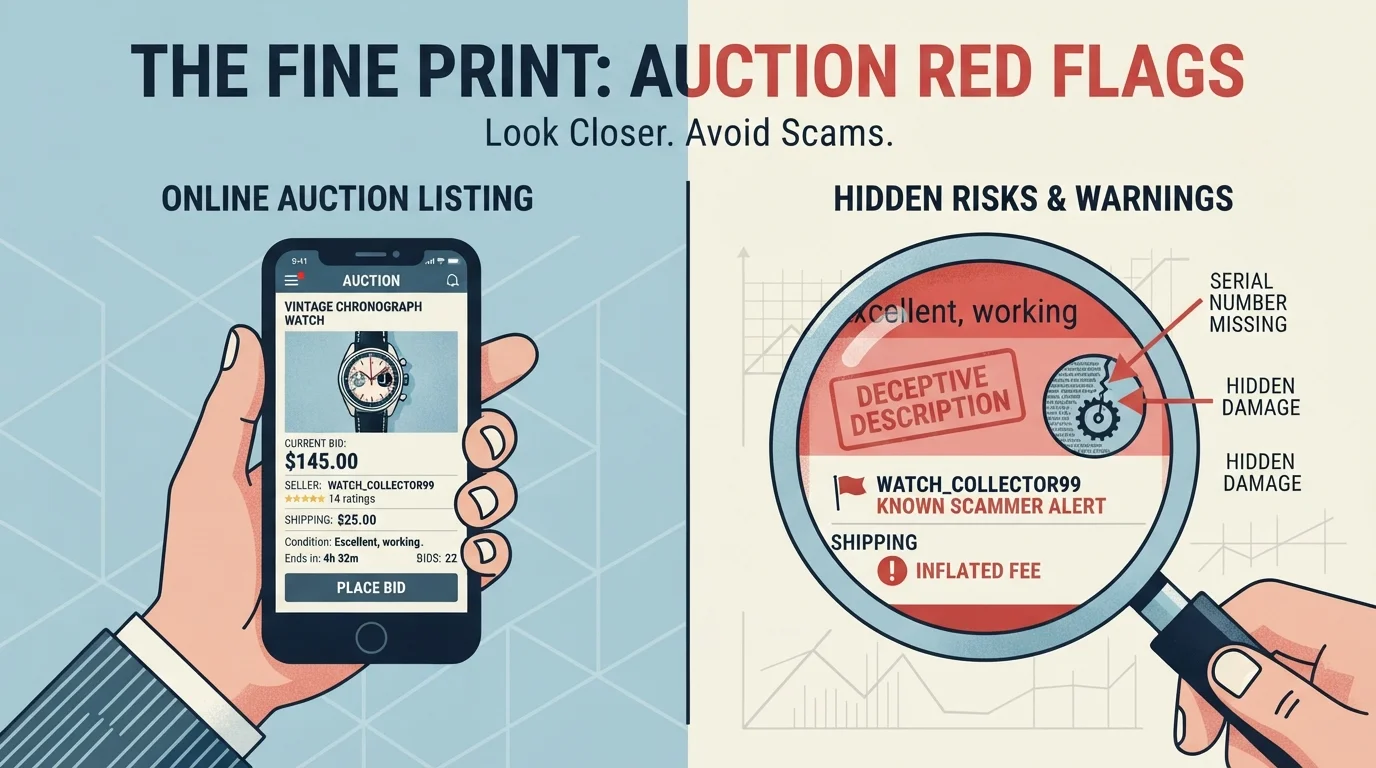
Photo credit: SearchLynk.net | Search Made Easier
In this article
Resale and auction platforms carry unique fraud risks. Understand the schemes that target secondhand buyers and how they're carried out.
Key Takeaways
- Resale platforms shift more responsibility to the buyer than traditional retail environments.
- Shill bidding, non-delivery, and counterfeit goods are the most common forms of auction fraud.
- Off-platform payment requests are a reliable signal that something is wrong.
- Listing photos and descriptions can be stolen from legitimate sources to deceive buyers.
- Understanding how these schemes work is the most effective first layer of protection.
Why Resale Environments Are Fertile Ground for Fraud
Secondhand and auction platforms are built on a tension that fraudsters understand better than most buyers: the informality that makes peer-to-peer selling appealing also makes it easy to exploit. Unlike established retailers, resale marketplaces typically do not verify that a seller actually owns what they're listing, that photos are original, or that item descriptions are accurate.
Buyers are also motivated by scarcity. When a listing shows a hard-to-find item at a price that seems attainable, the pressure to act quickly overrides careful evaluation. This urgency is a feature of the format - and a vulnerability fraudsters deliberately target. As the anatomy of a shopping scam shows, artificial urgency is a core tool across consumer fraud schemes, not just resale.
Compounding the problem is inconsistency in platform protections. Some marketplaces offer robust buyer guarantees; others offer almost none. Buyers who assume they are covered - because they've been protected before - may be caught off guard when a different platform's terms leave them with no recourse.
Platform Protections Vary Significantly
Not all resale or auction marketplaces offer the same buyer guarantees. Some provide full purchase protection on items that don't arrive or don't match the listing; others limit coverage by category, price threshold, or payment method. Reading a platform's buyer protection policy before your first purchase - not after a problem occurs - is one of the most useful precautions available.
The Most Common Schemes Targeting Auction Buyers
Fraud on auction and resale platforms follows recognizable patterns. Knowing them by name makes them easier to spot before money changes hands.
Non-Delivery
The most straightforward scheme: a seller collects payment and never ships the item. The listing disappears, the seller's account goes dark, and the buyer has no way to reach them. This is especially common with high-value electronics, tickets, and collectibles.
Shill Bidding
A seller - or someone acting on their behalf - places fake bids to drive up the auction price. Legitimate bidders end up paying far more than the item's actual market value. Many platforms have automated systems to detect this, but sophisticated shill bidding using separate accounts can evade detection.
Misrepresented or Counterfeit Goods
Items described as "authentic," "like new," or "sealed" may arrive damaged, used, or entirely fake. Counterfeit goods are particularly prevalent in categories like branded apparel, luxury accessories, and collectibles. Stolen photos from original manufacturers or authentic listings are frequently used to make fraudulent listings appear credible. Red flags hidden in product listings can help you spot these deceptions before purchasing.
Off-Platform Payment Diversion
A seller contacts a buyer outside the platform - often after a listing interaction - and asks them to complete the transaction via wire transfer, gift card, or a peer-to-peer payment app. Once the money moves, it cannot be recalled, and the platform's buyer protections no longer apply.
$392M+
Reported losses to online shopping fraud in one year
According to the Federal Trade Commission's Consumer Sentinel Network, online shopping and negative reviews fraud accounted for hundreds of millions in reported losses annually in recent years.
~40%
Share of fraud reports involving online marketplaces
Consumer protection data consistently shows that peer-to-peer and marketplace platforms account for a significant share of reported fraud incidents, reflecting the structural vulnerabilities of informal selling environments.
How These Schemes Differ from Fake Storefront Fraud
It's worth distinguishing auction and resale fraud from the counterfeit websites described in our article on fake online storefronts. Fraudulent storefronts typically impersonate real retailers and rely on a buyer trusting the brand name. Resale fraud is different: the deception happens within a legitimate platform, between individual users, where platform branding creates a false sense of security.
Similarly, social media marketplace fraud shares structural similarities - informal seller verification, peer-to-peer trust - but auction platforms add the specific pressure of competitive bidding, which accelerates decision-making in ways that benefit bad actors.
Understanding these distinctions matters because the protective behaviors differ. On a fake storefront, the right response is to verify the site itself. On an auction platform, the site is legitimate - the individual seller is the variable to scrutinize.
What Buyers Can Do to Reduce Their Exposure
No approach eliminates all risk on resale platforms, but certain habits consistently reduce exposure. Before placing a bid or making an offer, review the seller's feedback history carefully - not just the score, but the written comments. Patterns of vague praise with no specifics can indicate manufactured or incentivized reviews.
Pay using a method that offers dispute resolution. Credit cards generally provide the strongest chargeback rights. Avoid any seller who requests payment outside the platform or suggests a method that bypasses the marketplace's checkout process.
If an item is described as authenticated or certified, ask for documentation before purchasing. Sellers with legitimate provenance can generally provide it. When an item's photos look professionally shot for a listing that appears otherwise hastily assembled, run a reverse image search to check whether those images originated elsewhere.
Buyers who believe they've been defrauded should report the incident to the platform, their payment provider, the Federal Trade Commission at ReportFraud.ftc.gov, and their state attorney general's consumer protection office. Documenting all communication and transaction records from the start makes this process significantly easier. For a broader understanding of your options, the consumer rights hub covers what protections may apply to your situation.
This article is for general informational purposes only and does not constitute legal or financial advice. Readers should consult qualified professionals regarding their specific circumstances.
Frequently Asked Questions

Author
Shopping Editorial Team
Shopping Editorial Team is the collective byline for our editorial team and contributor network. Articles published under this byline or an editorial pen name are researched, written, and reviewed according to our editorial standards for clarity, consistency, and independence before publication.
View all articles →