
Month-to-Month Lease vs. Fixed-Term Lease: How They Differ
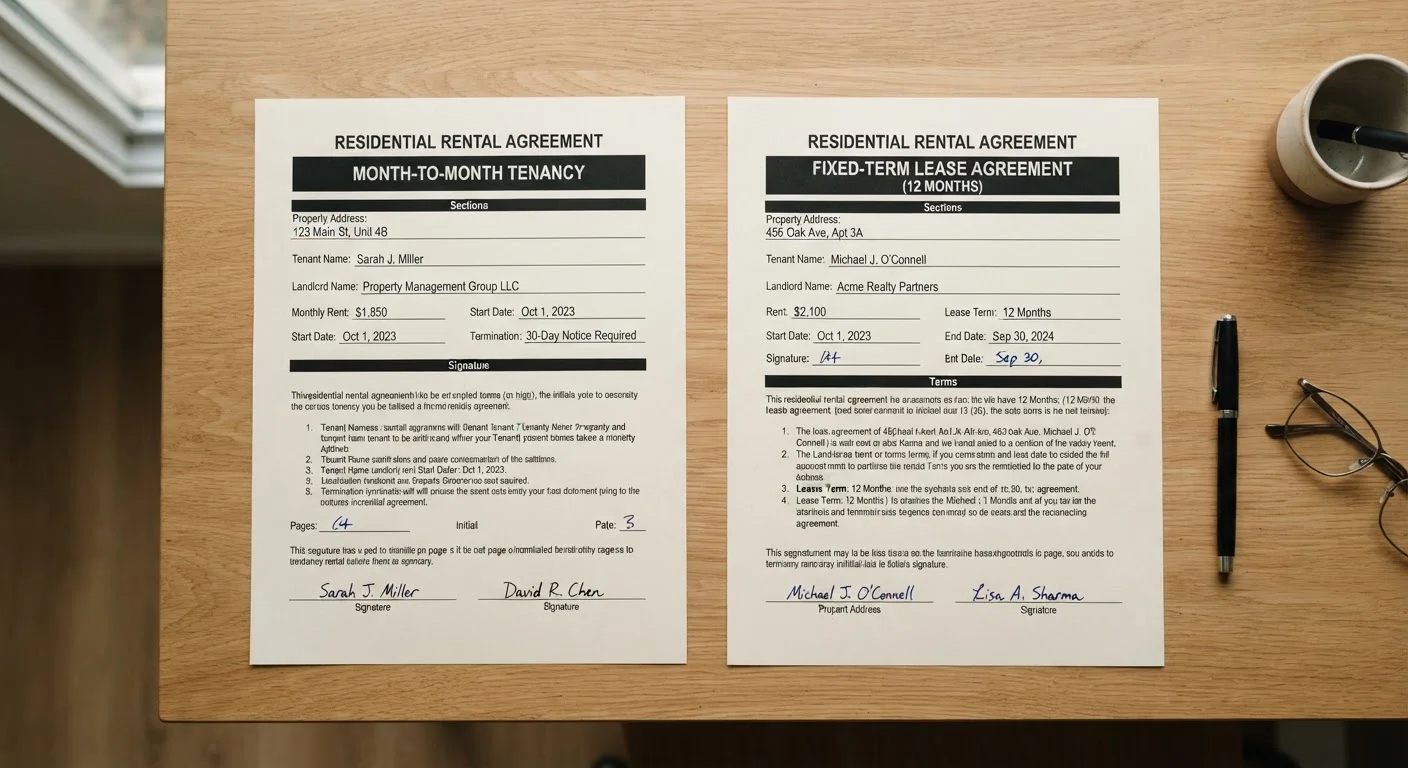
Photo credit: SearchLynk.net | Search Made Easier
In this article
Month-to-month offers flexibility; fixed-term offers stability. Here's a clear breakdown of the differences and what each means for renters.
Key Takeaways
- Month-to-month leases renew automatically each month and can be ended with relatively short notice.
- Fixed-term leases lock in rent and terms for a set period, commonly 6 to 12 months.
- Landlords may charge a premium on month-to-month agreements in exchange for offering more flexibility.
- Breaking a fixed-term lease early often comes with financial penalties outlined in the contract.
- Your lifestyle stability and financial priorities should guide which lease type you choose.
What Each Lease Type Actually Means
A month-to-month lease is a rental agreement that automatically renews each month unless either the landlord or the tenant gives notice to end it. Most states require 30 days' written notice, though this varies by jurisdiction. Because there's no fixed end date, both parties retain the ability to change or exit the arrangement relatively quickly.
A fixed-term lease establishes a defined rental period - most commonly 12 months, though 6-month or 18-month terms also exist. The rent amount, lease conditions, and both parties' obligations are locked in for the full duration. At the end of the term, the lease typically expires, converts to a month-to-month arrangement, or is offered for renewal.
For a deeper look at how lease language shapes your rights and obligations, see what a lease agreement actually says before signing anything. And if you're still deciding whether to rent at all, renting vs. buying in today's housing market offers useful context.
Key Differences: Flexibility, Cost, and Control
The central trade-off between these two lease types comes down to flexibility versus stability - and that tension shows up across cost, control, and legal exposure.
| Criterion | Month-to-Month Lease | Fixed-Term Lease |
|---|---|---|
| Lease Duration | Renews each month automatically | Set period (e.g., 6 or 12 months) |
| Flexibility to Leave | High - typically 30 days' notice | Low - penalties for early exit |
| Rent Stability | Rent can change with notice | Rent locked in for the full term |
| Monthly Cost | Often higher due to flexibility premium | Generally lower per month |
| Landlord Control | Can end tenancy with notice | Cannot remove tenant before term ends (absent cause) |
| Best Market Condition | Uncertain or transitional situations | Stable plans and tight rental markets |
Cost: Month-to-month agreements often carry a rent premium. Because landlords take on more uncertainty - a tenant could leave with 30 days' notice - they may charge 10-20% more per month compared to a comparable fixed-term unit. This surcharge varies by market and landlord policy.
Rent increases: Under a fixed-term lease, your landlord generally cannot raise the rent until the term ends (absent specific lease clauses or local regulations). Month-to-month tenants may receive rent increase notices with as little as 30 days' advance notice in many states, depending on local landlord-tenant law.
Early termination: Leaving a fixed-term lease before it ends can trigger penalties - often one to two months' rent - or liability for rent until a replacement tenant is found. Month-to-month renters typically avoid this risk, though they should always review notice requirements in their specific lease and state law.
30 days
Typical notice required to end a month-to-month lease
Most U.S. states set a 30-day minimum notice period, though some require 60 days depending on tenancy length and local law.
12 months
Most common fixed-term lease length in the U.S.
Annual leases remain the standard offering across most U.S. rental markets, according to general landlord-tenant practice.
To make sure you're reading your own lease correctly, things renters often misunderstand about their lease is a practical companion resource.
Which Lease Type Is Right for You?
Your choice ultimately depends on where you are in life and what you need from your housing situation. Here are the most common scenarios:
- Transitional periods: If you're between jobs, recently relocated, or waiting to close on a home purchase, a month-to-month lease keeps options open without the risk of breaking a long-term contract.
- Budget certainty: Renters with fixed incomes or tight monthly budgets often benefit from the rent predictability that comes with a fixed-term lease.
- Landlord preferences: Not all landlords offer month-to-month arrangements upfront. In competitive rental markets, fixed-term leases are often the default - and sometimes the only option available.
- Long-term stability: If you know you'll stay in the same city and the unit suits your needs, a fixed-term lease offers legal protections that a rolling month-to-month arrangement does not.
Whichever lease you sign, make sure you understand every clause. The rental glossary for terms every renter should know can help you decode the language before you put pen to paper.
State and Local Laws Vary Significantly
Tenant protections, required notice periods, and rent increase rules differ considerably from state to state - and sometimes city to city. What applies in California may not apply in Texas. Always review your state's landlord-tenant statutes or consult a local tenant rights organization to understand your specific rights under either lease type.

Author
Real Estate Editorial Team
Real Estate Editorial Team is the collective byline for our editorial team and contributor network. Articles published under this byline or an editorial pen name are researched, written, and reviewed according to our editorial standards for clarity, consistency, and independence before publication.
View all articles →