
What 'Pre-Approval' Actually Means - and Why It's Not a Guarantee
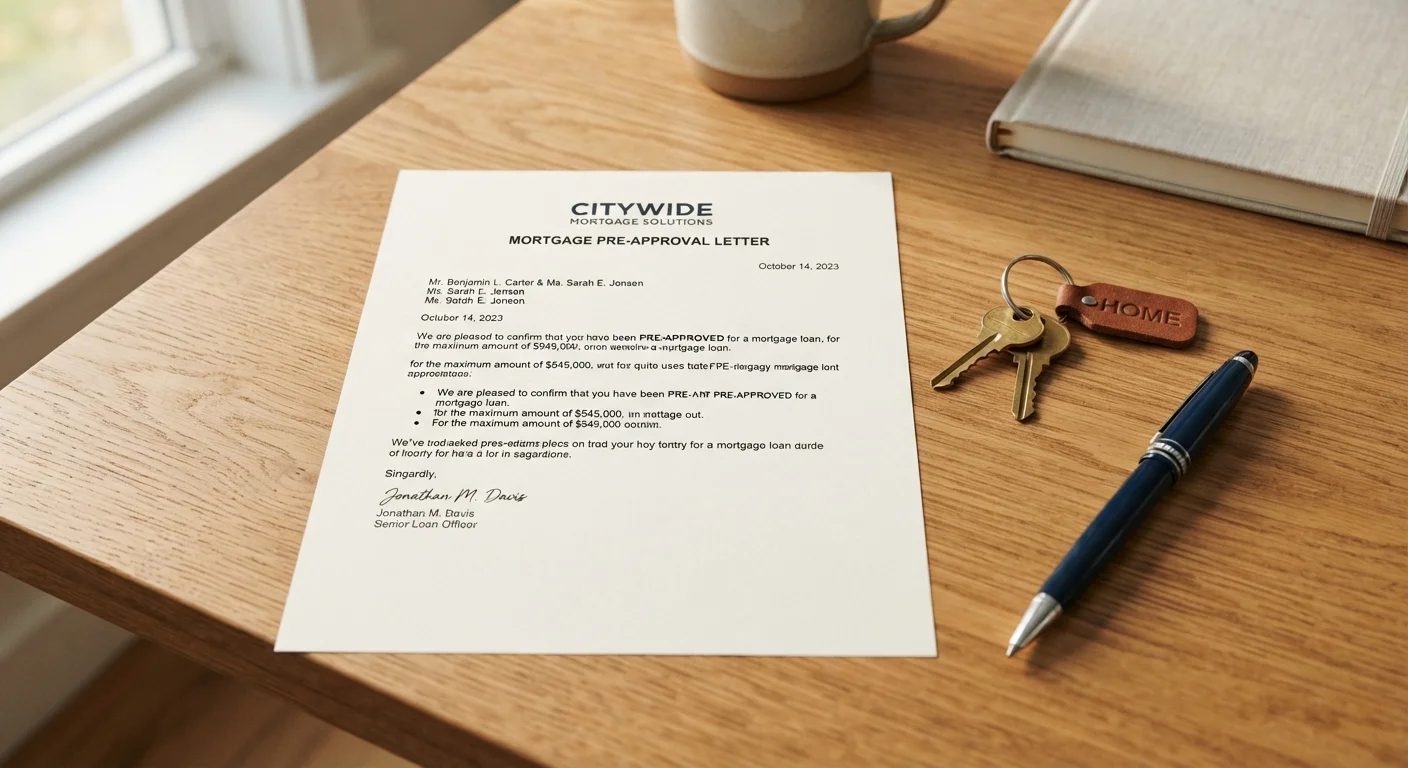
Photo credit: SearchLynk.net | Search Made Easier
In this article
Mortgage pre-approval is widely misunderstood. Learn what lenders assess, what the letter commits to, and its real limits.
Key Takeaways
- Pre-approval requires verified documents - income, assets, and credit - unlike a basic pre-qualification.
- A pre-approval letter specifies a maximum loan amount, not a guaranteed rate or final approval.
- Final loan approval depends on property appraisal, title review, and unchanged financial circumstances.
- Pre-approval letters typically expire after 60 to 90 days and may require renewal.
- Major financial changes after pre-approval - like a new job or large purchase - can jeopardize final approval.
Pre-Approval vs. Pre-Qualification: The Distinction That Matters
Many buyers use the terms pre-qualification and pre-approval interchangeably, but lenders and sellers draw a clear line between them. Pre-qualification is an informal estimate based on financial information you self-report - no documents, no credit check. Pre-approval goes further: the lender collects pay stubs, tax returns, bank statements, and employment records, and runs a hard credit inquiry to verify the picture you've presented.
The result is a formal letter stating the loan amount you appear qualified for under current conditions. Because it involves real verification, sellers and their agents treat it as meaningful evidence that you can perform on an offer. As part of the broader homebuying journey, pre-approval typically comes before you begin serious property searches - see our full walkthrough of the home purchase process for how it fits into the larger sequence of steps.
Pre-Approval Is Not a Lock on Your Rate
The loan amount stated in a pre-approval letter is based on your financial profile, not a committed interest rate. Mortgage rates fluctuate daily. To lock in a rate, you typically need to have a property under contract and formally apply for the loan. Rate lock options and their durations vary by lender.
What Lenders Actually Assess
During pre-approval, lenders evaluate several financial dimensions simultaneously:
- Credit score and history: Lenders review your FICO score and look for patterns such as late payments, collections, or high credit utilization.
- Debt-to-income ratio (DTI): This compares your monthly debt obligations to your gross monthly income. Most conventional loan programs prefer a DTI at or below 43%, though thresholds vary by loan type.
- Employment and income stability: Lenders want to see at least two years of consistent employment or verifiable self-employment income.
- Assets and reserves: Bank statements confirm you have enough for a down payment and closing costs, and some lenders look for additional cash reserves as a buffer.
The letter that results will state a maximum loan amount - not a recommended one. Borrowing at the ceiling of your pre-approval is not always advisable, and understanding the difference between what you qualify for and what fits comfortably into your budget is an important part of buyer preparation. Our buyer's preparation checklist covers this distinction in more detail.
60-90
Days a typical pre-approval letter remains valid
Most lenders issue pre-approval letters with a validity window of 60 to 90 days, after which updated documentation is required.
43%
Common maximum debt-to-income ratio for conventional loans
Many conventional loan programs use a 43% DTI ceiling as a standard guideline, though specific thresholds vary by lender and loan product.
2 years
Employment history typically required by lenders
Lenders generally look for at least two years of stable employment or documented self-employment income when assessing pre-approval eligibility.
Why Pre-Approval Is Not a Guarantee
The pre-approval letter is conditional - and those conditions matter. Final mortgage approval requires a separate, deeper underwriting process that reviews both you and the specific property you intend to buy. Several things can interrupt final approval even after a letter is in hand:
- The property appraises below the purchase price. Lenders will only finance up to a percentage of the appraised value, not the agreed sale price. A low appraisal can reduce your loan amount or kill the deal. Our article on home appraisals for buyers explains the mechanics and what to do when the number comes in low.
- Your financial situation changes. Taking on new debt - financing a car, opening a credit card - between pre-approval and closing can raise your DTI and affect your eligibility. A job change or income reduction carries similar risk.
- Title or property issues emerge. Liens, zoning violations, or title defects discovered during due diligence can halt a transaction regardless of your creditworthiness.
- The letter expires. Most pre-approvals are valid for 60 to 90 days. An extended home search may require renewal, which means updated documents and a fresh credit pull.
Understanding that a pre-approval reflects a moment in time - not a binding commitment - helps buyers protect their eligibility from pre-approval through closing.
“A pre-approval letter tells you what you might be able to borrow - the underwriting process tells you what the lender will actually commit to. Those are two different conversations separated by a lot of paperwork.”
— Consumer Financial Protection Bureau, U.S. federal agency overseeing mortgage lending disclosures and consumer protections
How to Protect Your Pre-Approval Status
Maintaining your pre-approved status from letter to closing requires financial discipline. A few practical principles apply across most situations:
- Avoid major purchases on credit until after closing. Furniture, appliances, and vehicles can all wait.
- Do not change jobs without consulting your lender first, particularly if moving from salaried to self-employed income.
- Keep your accounts stable. Large deposits that cannot be explained with documentation may trigger underwriter questions and delays.
- Respond to lender requests promptly. Underwriters frequently need additional documentation; delays in response can push back your closing date.
Pre-approval is best understood as a well-informed starting point rather than a finish line. The work of maintaining your eligibility continues until the loan is funded and keys are exchanged.
This article is for general informational and educational purposes only. It does not constitute financial, legal, or mortgage advice. Readers should consult a qualified mortgage professional or licensed financial adviser regarding their individual circumstances.
Frequently Asked Questions

Author
Real Estate Editorial Team
Real Estate Editorial Team is the collective byline for our editorial team and contributor network. Articles published under this byline or an editorial pen name are researched, written, and reviewed according to our editorial standards for clarity, consistency, and independence before publication.
View all articles →