
Paint Finish Types and Where Each One Actually Belongs
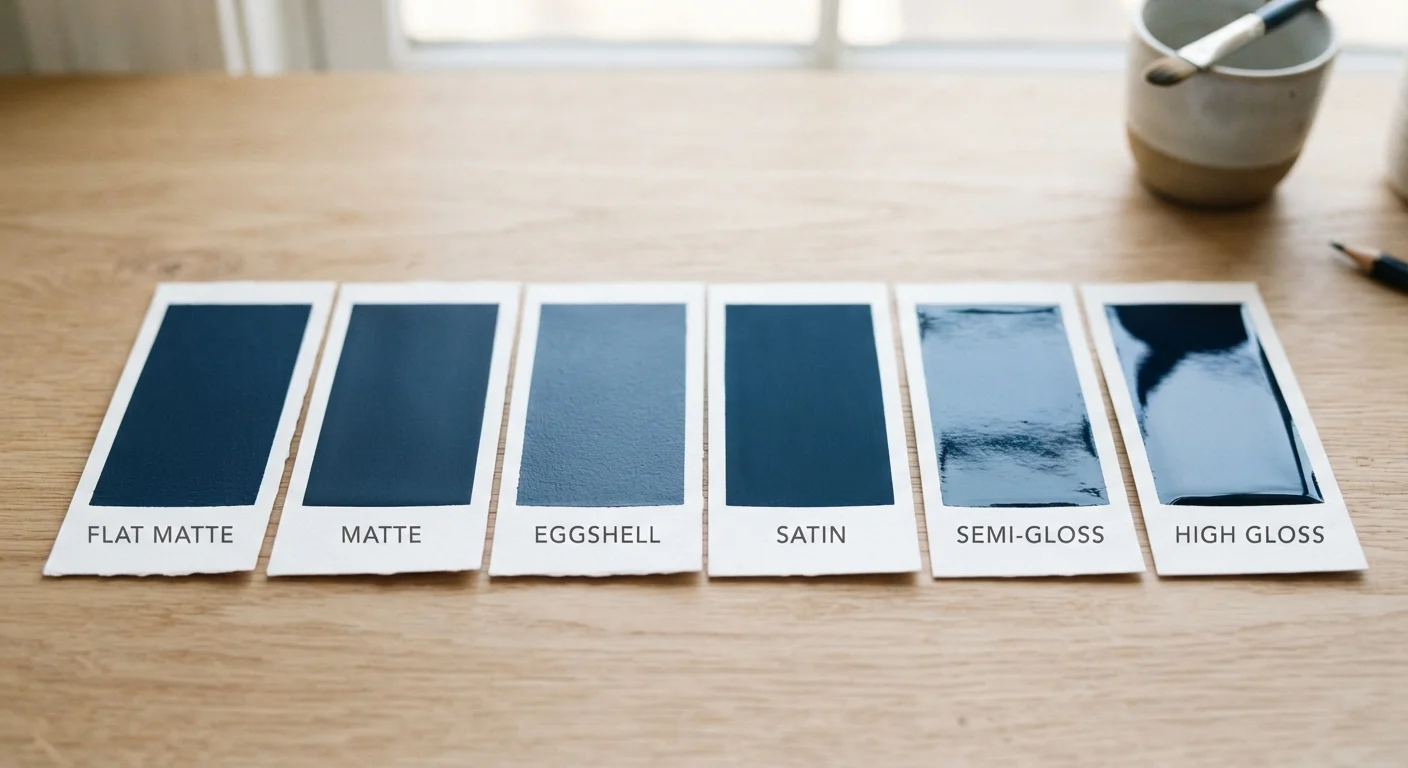
Photo credit: SearchLynk.net | Search Made Easier
In this article
Matte, eggshell, satin, semi-gloss, gloss — a clear reference to what each finish does and which rooms it suits best.
Why Finish Matters as Much as Color
Most homeowners spend considerable time choosing the right paint color - and then pick a finish almost at random. That's a costly oversight. Paint sheen affects how light bounces off your walls, how easily a surface cleans, and how long the finish holds up to daily wear. The wrong finish in the wrong room can mean scrubbable paint in a bedroom that feels clinically cold, or a flat finish in a bathroom that traps moisture and peels within a year.
Understanding the five main finish types - matte (flat), eggshell, satin, semi-gloss, and gloss - takes a few minutes and prevents expensive repaints. For a broader look at renovation terminology, see our renovation terms glossary.
| Number of standard finish levels | 5 (flat, eggshell, satin, semi-gloss, gloss) |
| Best finish for bathrooms | Semi-gloss |
| Best finish for hiding wall imperfections | Matte/Flat |
| Most versatile all-around interior finish | Satin |
| Standard finish for interior trim and doors | Semi-gloss or gloss |
| Finish typically used on ceilings | Flat (ceiling-specific formula) |
The Five Finish Types, Defined
Each finish sits on a sheen spectrum from zero reflectivity to a near-mirror shine. Here's what each one actually does:
Matte (Flat)
The lowest-sheen finish available. It absorbs light rather than reflecting it, making walls look smooth and uniform. Not washable and best reserved for low-traffic areas.
Eggshell
Slightly more sheen than matte, resembling the surface of an egg. It is marginally more durable and wipeable, making it suitable for moderate-traffic living spaces.
Satin
A mid-range sheen with a soft, velvety appearance. Satin is more washable than eggshell and holds up well in high-traffic areas like hallways and children's rooms.
Semi-Gloss
A noticeably shiny finish that repels moisture and cleans easily. It is the standard choice for kitchens, bathrooms, and all interior woodwork and trim.
Gloss (High-Gloss)
The highest-sheen option, producing a hard, reflective surface. Extremely durable and easy to clean, but it accentuates every surface flaw. Typically used on trim, cabinetry, and exterior doors.
Sheen
A measure of how much light a dried paint surface reflects. Higher sheen means more light reflection, greater durability, and easier cleaning, but also more visible surface imperfections.
The higher the sheen, the more durable and washable the surface - but also the more it highlights surface imperfections like nail pops, uneven taping, or old repairs. Low-sheen finishes are more forgiving on walls with flaws.
Matching Each Finish to the Right Room
The standard guidance breaks down simply by how much moisture, traffic, and scrutiny a surface gets:
- Matte/Flat: Best for low-traffic adult bedrooms and formal dining rooms. Ideal for hiding wall imperfections. Avoid anywhere that needs frequent wiping - even gentle scrubbing can remove the paint film.
- Eggshell: A reliable choice for living rooms and adult bedrooms where occasional cleaning is needed. It resists mild scuffs and offers a warmer look than satin without sacrificing too much durability.
- Satin: The go-to finish for hallways, children's rooms, family rooms, and stairwells - anywhere traffic is heavy and the walls will need washing. It holds up to damp cloths without dulling.
- Semi-Gloss: Standard for kitchens, bathrooms, laundry rooms, and utility spaces. It repels moisture effectively and cleans easily. Also widely used on trim, baseboards, window casings, and doors throughout the home.
- Gloss: Reserved for trim and cabinetry where maximum durability and a dramatic sheen are desired. Beautiful on front doors and built-in shelving but unforgiving - every surface flaw becomes visible.
For a detailed walkthrough of applying any of these finishes correctly, our interior painting guide covers preparation, technique, and drying times.
Paint Sheens Can Vary by Brand
The sheen levels described here reflect industry-standard categories, but the actual reflectivity of a finish labeled 'eggshell' or 'satin' can differ slightly between paint manufacturers. When comparing products, look at the sheen percentage or LRV (Light Reflectance Value) on the technical data sheet rather than relying solely on the label name. If you're repainting a specific room and want to match an existing finish, bring a paint chip to the store and test a sample on the wall before committing.
Special Situations to Consider
A few real-world scenarios call for adjustments to the standard guidelines:
- Ceilings: Almost always painted with flat paint specifically formulated for ceilings. The non-reflective surface prevents glare from overhead lighting. Standard wall flat paint can work, but ceiling-specific formulas tend to spatter less during application.
- Older homes with textured or imperfect walls: Opt for eggshell over satin, even in busier spaces, to reduce the visibility of surface irregularities.
- Renters painting with landlord approval: Stick to eggshell or satin - they're easiest to repaint over and are finishes most landlords expect. Gloss on walls can be difficult to cover without primer.
- High-humidity bathrooms without ventilation: Semi-gloss is non-negotiable. Even satin can allow moisture infiltration behind the film over time in poorly ventilated spaces.
When in doubt, go one step higher in sheen for any room that gets washed more than once a month - durability compounds over years.

Author
Home & Garden Editorial Team
Home & Garden Editorial Team is the collective byline for our editorial team and contributor network. Articles published under this byline or an editorial pen name are researched, written, and reviewed according to our editorial standards for clarity, consistency, and independence before publication.
View all articles →