
Group Fitness Classes vs. Solo Training: Which Style Fits How You Actually Work
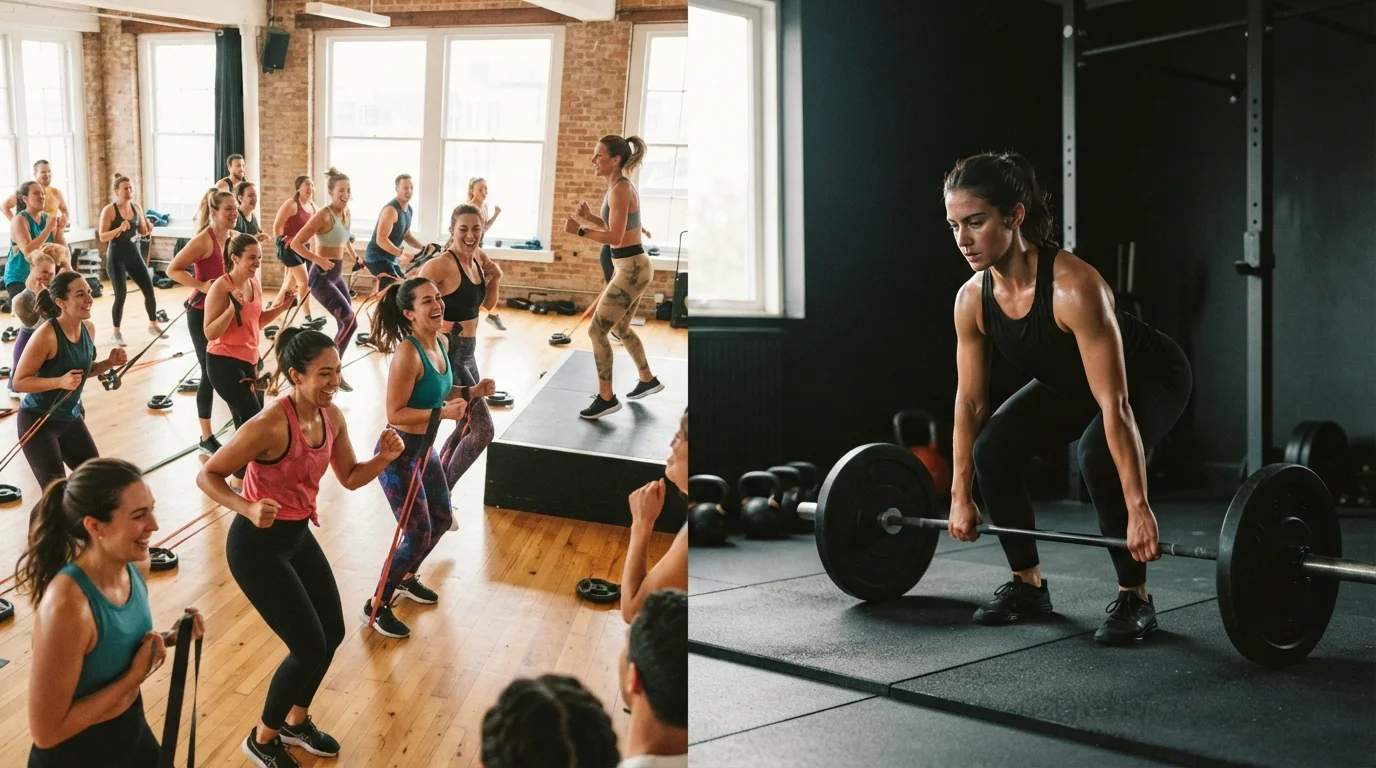
Photo credit: SearchLynk.net | Search Made Easier
In this article
Some people thrive alongside others; some prefer working alone. Here's how group and solo training differ in structure, accountability, and flexibility.
Key Takeaways
- Group classes offer built-in accountability and social motivation that many people find essential for consistency.
- Solo training provides flexibility and full customization, which suits self-motivated individuals with specific goals.
- Neither approach is universally superior - personality, lifestyle, and fitness goals all influence which works better.
- Combining both styles is a legitimate strategy that many exercisers use effectively.
- Beginners may benefit from group instruction; experienced exercisers often thrive with solo autonomy.
What Each Approach Actually Looks Like
Group fitness classes gather participants to exercise together under the direction of a certified instructor, following a shared format - whether that's cycling, dance-based cardio, yoga, HIIT, or strength circuits. The instructor sets the pace, cues form corrections, and generally keeps the energy moving forward. Class lengths and formats are fixed in advance, so participants know exactly what they're walking into.
Solo training, by contrast, means designing and executing your own sessions - or following a program you've sourced independently. You choose the exercises, the order, the rest intervals, and the duration. You might work out in a gym, at home, or outdoors. The defining feature is self-direction: no instructor, no shared rhythm, no group energy to lean into. For more on how the setting shapes the experience, see our guide to home vs. gym training.
| Criterion | Group Fitness Classes | Solo Training |
|---|---|---|
| Scheduling | Fixed class times, book in advance | Fully flexible, train when you choose |
| Accountability | External - instructor and peers | Internal - self-driven |
| Customization | Limited by class format | Fully tailored to your goals |
| Expert guidance | Instructor-led cueing and form tips | Requires self-knowledge or trainer input |
| Social element | Built-in community and shared energy | Solitary; no group dynamic |
| Barrier to entry | Low - just show up | Higher - program design needed |
| Cost | Ongoing class or membership fees | Variable; can be low-cost |
| Best for beginners | Often yes - guided and structured | Possible, but requires more planning |
Accountability, Motivation, and the Social Factor
One of the most consistent findings in exercise research is that social support influences adherence - how reliably people stick with a routine over time. Group classes create a built-in version of this: you've booked a spot, a room is expecting you, and leaving mid-session feels awkward in a way that skipping a solo gym session simply doesn't.
This social friction is a feature, not a bug, for many exercisers. The group energy - music, collective effort, an instructor who notices if you ease off - can push people to work harder than they might alone. Research has shown that exercising alongside others can increase effort output compared to exercising solo, though this effect varies by individual.
Solo training, meanwhile, demands self-motivation as a constant resource. That works well for people who are internally driven, have a clear program, and don't need external prompts to lace up their shoes. But it's a genuine hurdle for others, particularly when life gets stressful and the easiest thing to do is skip.
~20%
Increased effort when exercising with others
Research published in the Annals of Behavioral Medicine found participants worked roughly 200% longer when exercising with a partner compared to alone in some conditions, with effort gains varying by context.
50%
Adults who drop new exercise habits within 6 months
Exercise adherence research consistently estimates that roughly half of people who begin a new exercise program discontinue within six months, underscoring the importance of finding a sustainable format.
Structure, Customization, and Goal Alignment
Group classes are designed for the middle of a broad population - a format that works reasonably well for many people, but isn't tailored to any individual. Modifications are usually offered, but a cycling class is still a cycling class; you can't pivot mid-session to work on a weakness your physical therapist identified, or swap in an exercise that suits an old injury better.
Solo training is the inverse. You can build a program precisely around your goals - whether that's building strength, improving cardiovascular fitness, managing a specific condition, or simply moving more. If you're new to this kind of self-directed planning, consulting a certified personal trainer to design your initial program is worthwhile. It provides the structure of expert guidance without tying you permanently to a class schedule.
Age and life stage also matter here. Exercise needs shift across adulthood, and what suits a 28-year-old training for a 5K may look quite different from what someone managing joint changes at 60 needs. Solo training can adapt more readily to those shifts.
When Combining Both Makes Sense
The group-vs-solo framing is useful for decision-making, but in practice many people blend both approaches - attending a group class two or three times per week for accountability and community, while fitting in solo sessions when schedules allow or specific goals require it. There's no rule that says you must pick one exclusively.
Beginners, in particular, often benefit from starting with group instruction and then gradually taking on more self-directed training as their confidence and knowledge grow. If you're starting from zero, our beginner's guide to building an exercise habit covers the fundamentals of getting started safely. And if you're thinking about how cardio and strength training fit into any format, most people benefit from including both.
Ultimately, the best training style is the one you'll actually do consistently. Consistency across months and years matters far more than which method is theoretically optimal on paper.
This article is for general informational and educational purposes only and does not constitute medical or fitness advice. Consult a qualified healthcare provider or certified fitness professional before beginning a new exercise program, especially if you have any health conditions or concerns.

Author
Health & Wellness Editorial Team
Health & Wellness Editorial Team is the collective byline for our editorial team and contributor network. Articles published under this byline or an editorial pen name are researched, written, and reviewed according to our editorial standards for clarity, consistency, and independence before publication.
View all articles →