
What the Stock Market Actually Is - and How It Works
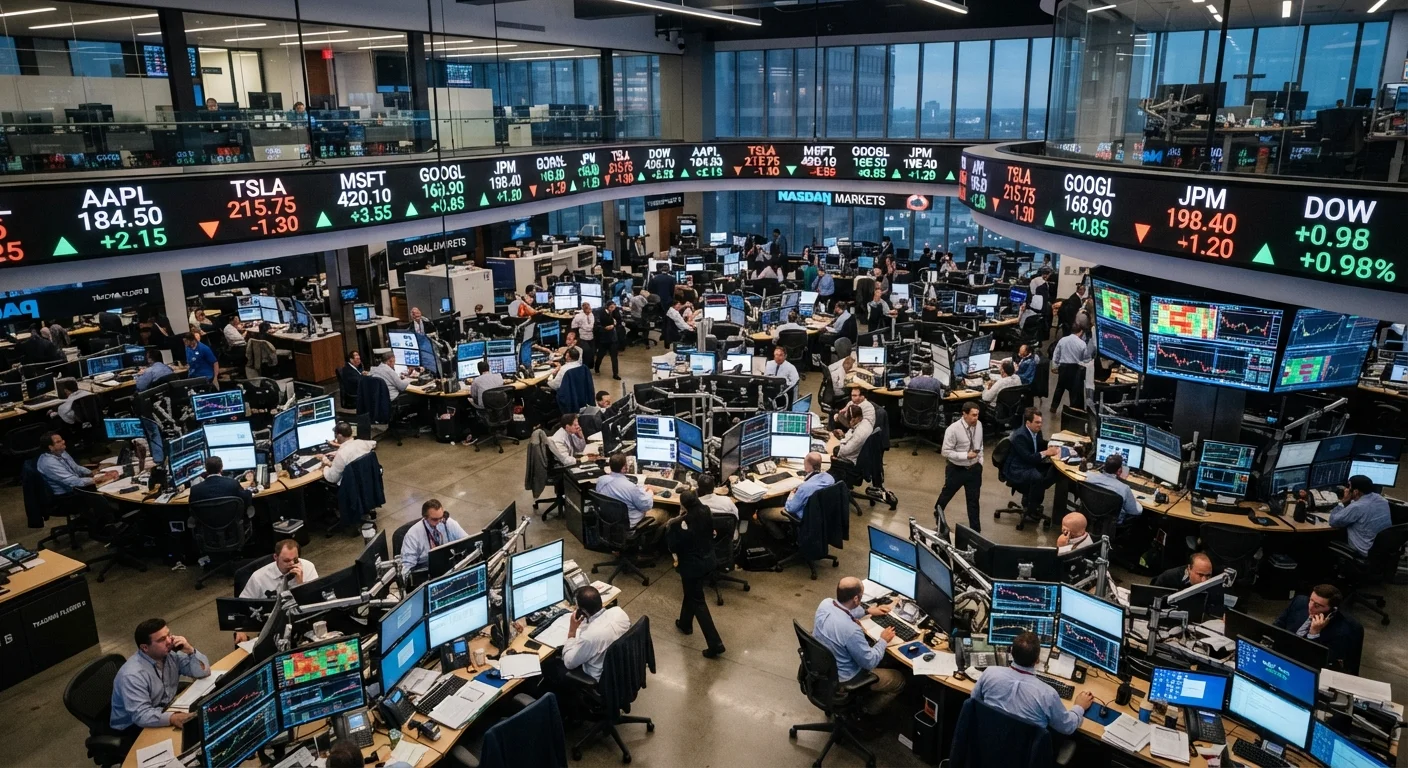
Photo credit: SearchLynk.net | Search Made Easier
In this article
Strip away the jargon: learn what the stock market really is, who participates in it, and how prices are set in plain language.
Key Takeaways
- The stock market is a regulated marketplace where shares of public companies are bought and sold.
- Prices rise and fall based on supply and demand, shaped by company performance and broader economic conditions.
- Anyone with a brokerage account can participate in the stock market as a buyer or seller.
- Stock indexes like the S&P 500 track the performance of a group of stocks as a snapshot of overall market health.
- Investing in stocks involves risk, including the possibility of losing money - past performance does not guarantee future results.
- The stock market differs significantly from the housing market in how quickly assets can be traded.
What the Stock Market Actually Is
At its core, the stock market is a marketplace - not unlike a farmers market or an auction - except what's being traded are ownership stakes in companies. When a business wants to raise money to grow, it can offer shares of itself to the public through a process called an initial public offering (IPO). Once those shares are available, they can be bought and sold by investors on exchanges like the NYSE or Nasdaq.
Unlike the housing market - where buying and selling a property can take months - the stock market operates in near real time. Trades are executed electronically within seconds during market hours, typically 9:30 a.m. to 4:00 p.m. Eastern time on weekdays. This speed and transparency make it one of the most liquid financial markets in the world. For a comparison of how these two markets differ structurally, see how the U.S. housing market actually works.
~$40 trillion
Total U.S. stock market capitalization
The combined market value of U.S.-listed companies represents one of the largest pools of investable assets in the world, according to World Bank data.
58%
U.S. adults who own stock
According to Gallup polling, roughly 58% of American adults report owning stock, either directly or through funds like 401(k)s.
~9.5%
Average annual S&P 500 return (historical)
The S&P 500 has delivered an average annual return of roughly 9-10% historically before inflation, though individual years vary widely and past results do not predict future performance.
Who Participates - and Why
The stock market isn't just for Wall Street professionals. Participants include individual investors, retirement funds, mutual funds, pension managers, insurance companies, and institutional traders. Each group has different goals, but they all interact within the same marketplace.
Companies use the market to raise capital without taking on debt. Individual investors participate to grow wealth over time. Institutional investors - like pension funds - buy and sell on behalf of large groups of beneficiaries. This diversity of participants is part of what makes markets function: buyers and sellers with different time horizons and motivations constantly interact, helping set prices that reflect a wide range of information and expectations.
“The stock market is a device for transferring money from the impatient to the patient.”
— Warren Buffett, Investor and Chairman of Berkshire Hathaway
How Stock Prices Are Set
Every stock price is ultimately the result of a negotiation between buyers and sellers. When you place an order to buy a stock, your broker matches you with someone willing to sell at that price. If more people want to buy than sell, competition pushes the price up. If sellers outnumber buyers, prices drop.
What drives that buyer-seller imbalance? A wide range of factors: a company's quarterly earnings, changes in interest rates, inflation data, geopolitical events, and even shifts in investor sentiment. In the short term, prices can swing on news or rumor. Over longer periods, prices tend to reflect the underlying financial performance of the business - though there are no guarantees.
Stock indexes like the Dow Jones Industrial Average and the S&P 500 aggregate the prices of many stocks into a single number, giving a snapshot of how the broader market is performing. It's worth noting that these indexes don't represent every company - just a curated group. For plain-language definitions of terms like these, the investing glossary every beginner needs is a useful reference.
What Stock Market Participation Looks Like in Practice
Most Americans access the stock market through a brokerage account - either a taxable account or a tax-advantaged account like a 401(k) or IRA. Through these accounts, investors can buy individual stocks, as well as other securities like bonds or mutual funds. Understanding how these asset types differ matters before investing; stocks, bonds, and mutual funds each serve different roles in a portfolio.
Owning stock doesn't guarantee a profit. Prices can and do fall - sometimes sharply and for extended periods. The potential for growth comes with the real risk of loss, which is why financial professionals generally recommend that anyone investing in the stock market do so with a long time horizon and as part of a broader financial plan tailored to their own situation.
This article is for general informational and educational purposes only and does not constitute personalized financial, investment, or tax advice. Consult a qualified financial professional before making investment decisions.
Frequently Asked Questions

Author
Finance Editorial Team
Finance Editorial Team is the collective byline for our editorial team and contributor network. Articles published under this byline or an editorial pen name are researched, written, and reviewed according to our editorial standards for clarity, consistency, and independence before publication.
View all articles →