
Envelope Budgeting vs. Digital Spending Trackers
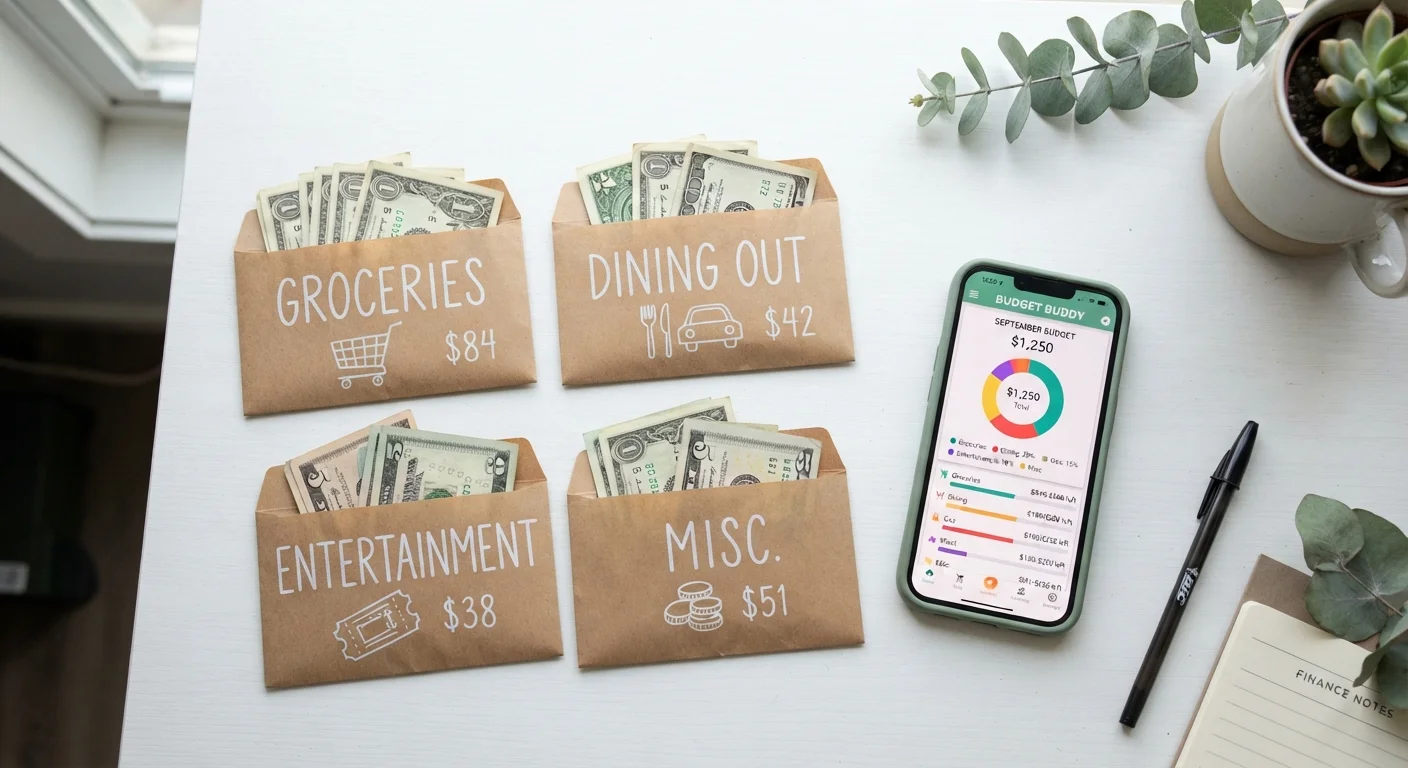
Photo credit: SearchLynk.net | Search Made Easier
In this article
Cash envelopes and app-based tracking are both popular budgeting tools. See how their mechanics, trade-offs, and ideal users compare.
Key Takeaways
- Envelope budgeting uses physical cash to create firm, category-based spending limits each month.
- Digital trackers automate transaction logging but require discipline to review and act on the data.
- Envelope budgeting works best for discretionary categories; it's impractical for bills, subscriptions, and online purchases.
- Digital apps offer broader coverage and convenience but can create a false sense of control without active engagement.
- Both methods can be combined - cash envelopes for problem spending areas, apps for overall visibility.
- The most effective budgeting system is the one you will actually use consistently.
How Each System Works
Envelope budgeting is a cash-allocation method. At the start of each pay period, you withdraw physical cash and divide it into labeled envelopes - one for groceries, one for dining, one for entertainment, and so on. When an envelope is empty, that category is done for the period. No borrowing from other envelopes unless you consciously decide to reallocate. The system's power lies in its finality: a finite stack of bills makes limits tangible.
Digital spending trackers work differently. Most connect to your bank accounts and credit cards via read-only data links, automatically importing and categorizing each transaction. You set category budgets within the app, and as you spend, the app updates your remaining balance in real time. Some platforms send alerts when you approach a category limit, while others generate monthly summaries and trend charts.
For a broader foundation before choosing either method, see our introduction to personal budgeting - it covers the income-tracking and limit-setting groundwork that both systems rely on.
| Criterion | Envelope Budgeting | Digital Spending Trackers |
|---|---|---|
| Payment method | Cash only | Cards, bank accounts, all payment types |
| Setup effort | Moderate - withdraw and label cash | Low - link accounts, set categories |
| Spending enforcement | Hard stop when envelope empties | Alerts and visual cues only |
| Covers online purchases | No | Yes |
| Covers automatic bills | No | Yes |
| Historical trend data | Manual record-keeping required | Automatic, with charts and reports |
| Security risk | Lost or stolen cash is unrecoverable | Account credentials and data privacy |
| Behavioral impact | High - physical cash triggers spending awareness | Moderate - depends on user engagement |
| Portability | Less convenient - requires carrying cash | High - smartphone access anywhere |
Strengths and Limitations of Each Approach
Envelope budgeting excels at creating behavioral friction around discretionary spending. Research in behavioral economics consistently finds that people spend less when paying with cash compared to cards - parting with physical money activates a stronger psychological response than a card tap. The envelope method channels this effect deliberately. Its limitations, however, are significant: it is nearly useless for automatic bill payments, online purchases, and subscriptions. Carrying cash also introduces security concerns, and tracking exact cents across multiple envelopes can feel burdensome.
Digital trackers eliminate those friction points. Every transaction - regardless of whether it is a card swipe, online order, or automatic transfer - is captured in one place. This comprehensive view is invaluable for a spending audit or when building a realistic budget from scratch. The trade-off is that passive monitoring can breed complacency. Seeing a bar chart turn red does not carry the same stopping force as an empty envelope. Digital users must cultivate the habit of checking and responding to their data - the app itself does not change behavior.
83%
Americans primarily using cashless payments
Pew Research Center surveys indicate a large majority of U.S. adults now make most or all purchases without cash, limiting envelope budgeting's reach for everyday transactions.
~$50
Estimated monthly savings when paying with cash
Studies in consumer behavior suggest people tend to spend measurably less per transaction when using physical money compared to debit or credit cards, though individual results vary.
1 in 3
Budget app users who rarely check the app
Consumer finance research indicates that a significant share of budgeting app users download and set up the tool but do not engage with it consistently enough to change spending behavior.
If you are weighing broader budgeting frameworks rather than just tracking tools, our comparison of the 50/30/20 rule vs. zero-based budgeting examines two popular structures that can be paired with either tracking method.
Choosing the Right Tool - or Combining Both
The honest answer is that neither system is universally superior. Your choice should reflect your spending habits, lifestyle, and the areas where you most need discipline. Ask yourself two questions: Where do I most often overspend? And how do I primarily pay for things?
If cash-based overspending on groceries or restaurants is your core problem, physical envelopes provide a hard limit no app can fully replicate. If your finances are spread across multiple accounts and cards, and you want a unified view without changing your payment methods, a digital tracker offers coverage an envelope system cannot match.
Many people find a hybrid approach most effective: cash envelopes for one or two high-risk discretionary categories, paired with an app to monitor everything else. This captures the behavioral benefits of physical cash where it matters most while keeping full visibility over fixed expenses, subscriptions, and savings contributions.
For a deeper look at how manual versus automated tracking compares in practice, our article on manual tracking vs. automatic budget apps explores the trade-offs in detail. And if you are considering a system that assigns every dollar a purpose from the start, the pros and cons of zero-based budgeting offers a balanced perspective on that level of granularity.
This article is for general informational and educational purposes only and does not constitute personalized financial advice. Consult a qualified financial professional for guidance specific to your situation.

Author
Finance Editorial Team
Finance Editorial Team is the collective byline for our editorial team and contributor network. Articles published under this byline or an editorial pen name are researched, written, and reviewed according to our editorial standards for clarity, consistency, and independence before publication.
View all articles →