
Airport Security Lines and What Actually Slows Them Down
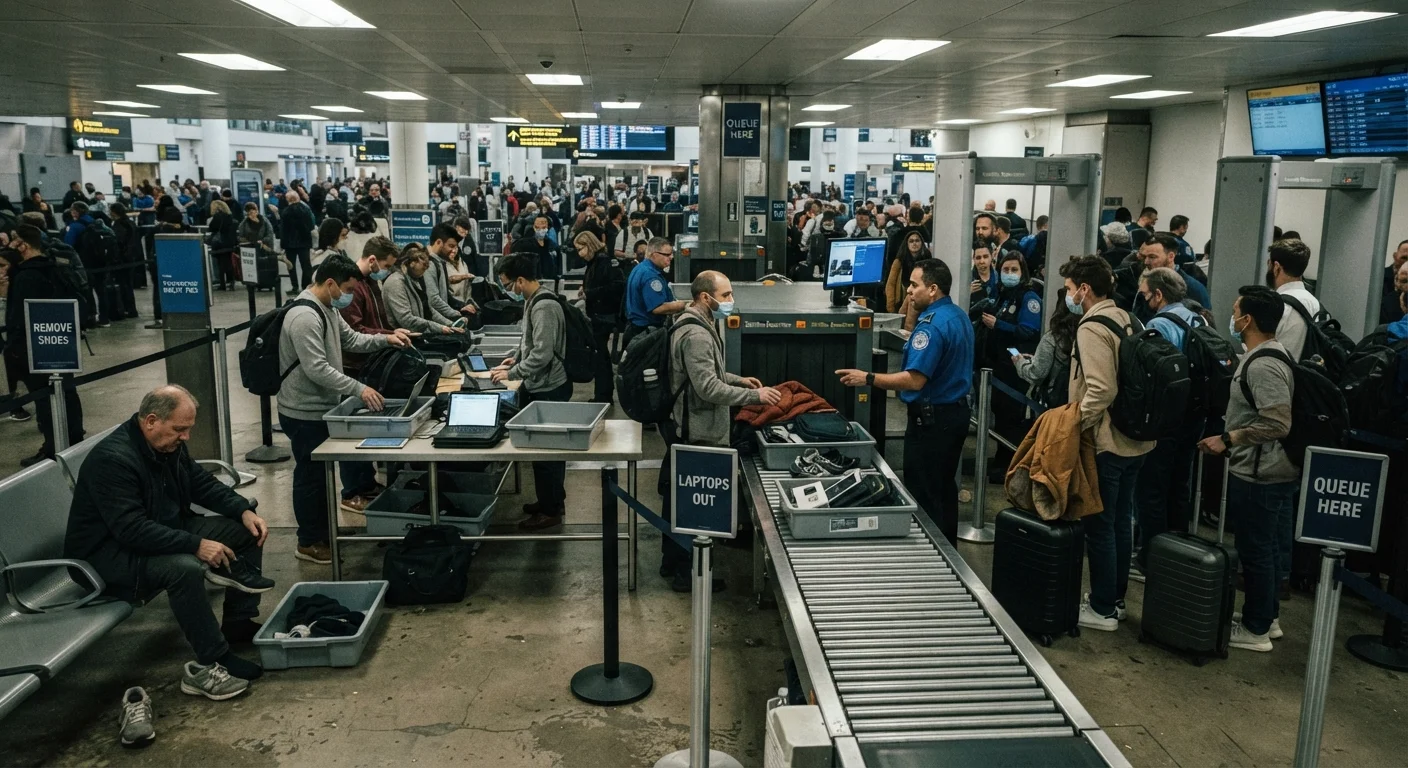
Photo credit: SearchLynk.net | Search Made Easier
In this article
Learn the most common reasons travelers get held up at TSA checkpoints—and how to move through security more smoothly.
Key Takeaways
- Unprepared carry-on bags are the single biggest cause of checkpoint slowdowns for individual travelers.
- TSA PreCheck and CLEAR can significantly reduce wait times but require advance enrollment.
- Liquids, electronics, and footwear are the most common sources of preventable screening delays.
- Arriving at least 90 minutes before a domestic flight gives a reasonable buffer for unexpected lines.
- Security rules vary by airport and checkpoint type - always verify current TSA guidelines before traveling.
Why Security Lines Stall - and Who's Actually Responsible
Airport security delays are rarely caused by TSA staffing alone. Research and traveler reports consistently show that a significant share of checkpoint slowdowns trace back to individual travelers who arrive unprepared - overpacked bags, forgotten liquids, and clothing choices that require extra screening. Understanding the actual causes puts you in control.
The screening process is designed to move quickly when every traveler in the lane is ready. Each hesitation - a bag pulled aside for manual inspection, a traveler fumbling with a belt at the belt conveyor, a water bottle flagged in an X-ray - adds seconds that compound into minutes across hundreds of passengers. Knowing what to expect, and preparing for it before you reach the checkpoint, is the most reliable way to reduce your own wait time.
~30 min
Average TSA standard lane wait time during peak periods
TSA data has historically shown peak-hour standard checkpoint waits averaging 20-40 minutes at major U.S. airports, varying significantly by location and time of day.
~5 min
Typical TSA PreCheck lane wait time
TSA has reported that the majority of PreCheck passengers wait under 10 minutes, with many lanes averaging closer to five minutes during normal operating conditions.
3.4 oz
Maximum liquid container size allowed in carry-on
The TSA 3-1-1 liquids rule limits individual containers to 3.4 ounces (100 milliliters) per item, all fitting within one quart-sized clear, resealable bag per passenger.
If you're also building a detailed trip plan, it helps to account for realistic security buffer time. Our guide on structuring a travel itinerary without overloading your schedule walks through how to factor in delays without sacrificing the experiences that matter most.
The Most Common Mistakes That Hold Up Security
The following errors are among the most frequent sources of checkpoint delays. Each one is avoidable with a small amount of planning before you leave home.
Leaving laptops and large electronics packed inside a carry-on bag.
Why it happens: Many travelers assume that placing items neatly in a bag is sufficient, not realizing that TSA officers must view electronics separately on the X-ray belt.
Carrying oversized or non-compliant liquid containers in carry-on luggage.
Why it happens: The 3-1-1 liquids rule - containers of 3.4 oz (100ml) or less, in one quart-sized clear bag - is widely known but frequently misapplied. Travelers often misjudge container sizes or forget items like full water bottles.
Wearing clothing or accessories that require extensive removal at the checkpoint.
Why it happens: Travelers dress for comfort or style without thinking through how belts, heavy boots, layered outfits, and metal-heavy jewelry interact with metal detectors.
Waiting until you reach the bin conveyor to start organizing your belongings.
Why it happens: Travelers underestimate how crowded and fast-moving checkpoint queues can be, assuming they'll have more time to prepare once they're at the belt.
Packing bags so tightly that screeners cannot clearly read the X-ray image.
Why it happens: Travelers maximize packing efficiency without realizing that dense, layered bags often require manual inspection, which adds several minutes and creates a bottleneck.
Not enrolling in trusted traveler programs before frequent or upcoming travel.
Why it happens: Many travelers assume the enrollment process is complicated or that the benefits aren't worth it for occasional trips, without knowing how dramatically TSA PreCheck can reduce wait times.
Rules Can Change - Always Verify Before You Fly
TSA screening procedures and prohibited item lists are updated periodically. What was allowed on your last trip may be restricted now. Before every flight, check the official TSA website (tsa.gov) for the most current rules on liquids, electronics, and carry-on items. Do not rely solely on memory or advice from previous trips.
First-time international travelers often carry additional misconceptions about what security involves - if that applies to you, it's worth reviewing common myths about international travel before your trip to separate fact from assumption.
Practical Habits That Make Every Checkpoint Easier
Building a consistent pre-flight routine removes the guesswork from security. A few habits applied before every trip - regardless of how often you fly - significantly reduce the chances of being pulled aside or slowing down the lane.
Forgetting ID Requirements Can Ground You
As of May 2025, REAL ID enforcement has been expanded at domestic U.S. checkpoints. A standard state driver's license may not be accepted at the security lane unless it carries the REAL ID star marking. Verify your ID's compliance well before your travel date - getting turned away at security is a situation that cannot be quickly resolved at the airport.
- Pack your carry-on with the checkpoint in mind. Liquids bag at the top, laptop accessible, no loose coins or keys rattling around.
- Check the TSA prohibited items list each time you travel, especially after changes to your usual packing habits.
- Research your specific airport's checkpoint setup. Some airports have dedicated PreCheck lanes, separate international terminals, or known bottlenecks during certain hours.
- Give yourself a realistic time buffer. For domestic flights, arriving 90 minutes early is a reasonable minimum; 2 hours is safer during holidays or at busy hub airports. International departures typically call for at least 3 hours.
Security is a predictable system. The travelers who move through it most efficiently are simply the ones who have taken a few minutes to understand how it works - and pack accordingly.

Author
Travel & Trips Editorial Team
Travel & Trips Editorial Team is the collective byline for our editorial team and contributor network. Articles published under this byline or an editorial pen name are researched, written, and reviewed according to our editorial standards for clarity, consistency, and independence before publication.
View all articles →