
Before You Sign an Internet Contract: A Checklist of Questions Worth Asking
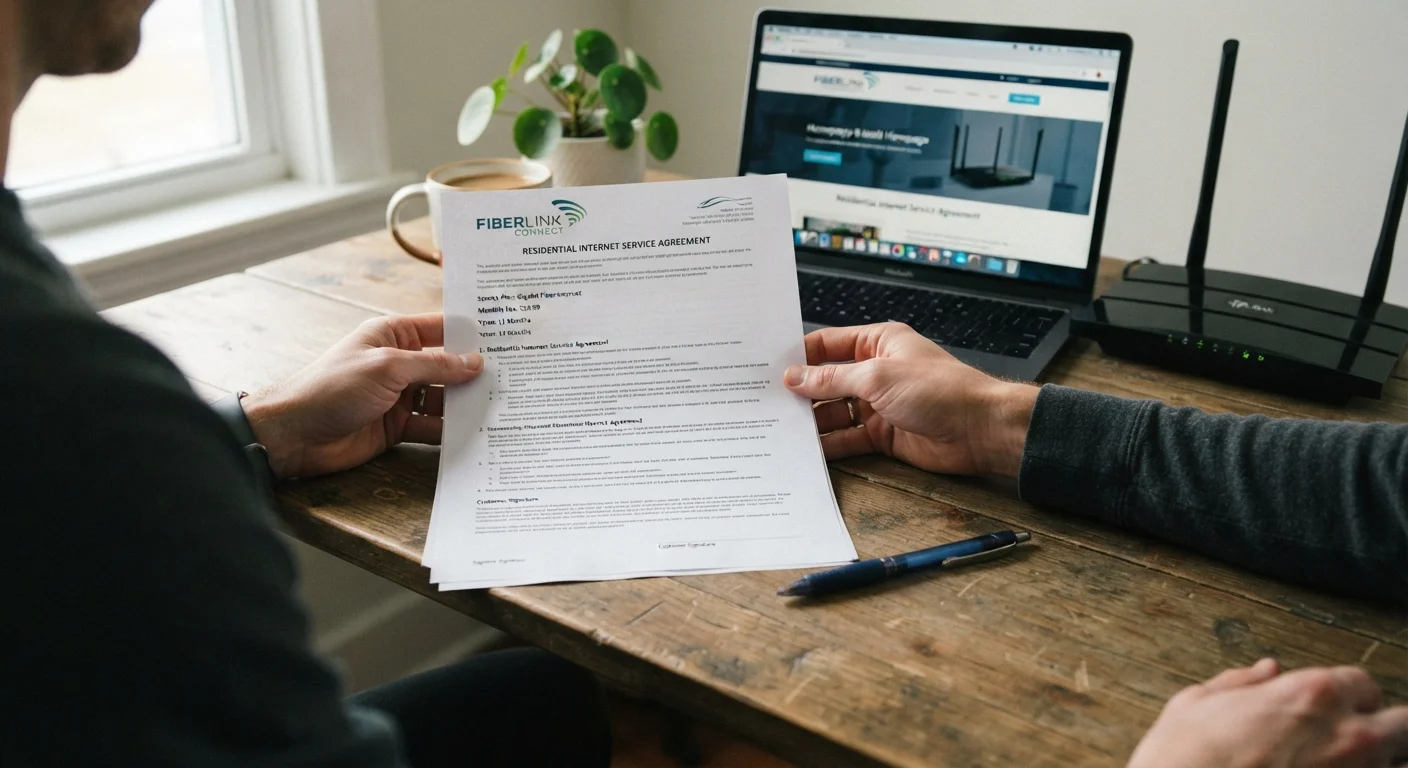
Photo credit: SearchLynk.net | Search Made Easier
In this article
Promotional rates, equipment fees, early termination clauses — use this checklist to read between the lines before agreeing to any service plan.
Key Takeaways
- Promotional pricing almost always expires - know the post-promo rate before committing.
- Early termination fees can reach hundreds of dollars; always ask for the exact figure in writing.
- Equipment rental fees add recurring costs that are easy to overlook in the headline price.
- Data thresholds and speed throttling terms matter as much as the advertised speed.
- A contract's auto-renewal clause can lock you in for another term without active notice.
Why the Fine Print Deserves More Attention Than the Ad
Internet service contracts are not complex by accident. Promotional rates, bundled equipment, and service-level language are structured in ways that can look straightforward on a sales page but carry real financial weight once you're locked in. Most households keep the same provider for two to three years - meaning a fee you missed during sign-up will compound over time.
This checklist is designed to slow that process down. Work through it before you agree to any residential internet plan, whether you're signing up for the first time, switching providers, or renewing an existing agreement. The goal isn't to be adversarial - it's to make sure you understand exactly what you're agreeing to. The same scrutiny that applies to reading a wireless plan carefully (see Reading a Phone Plan the Right Way) translates directly to home internet contracts.
Verbal Offers Don't Always Match the Contract
Sales representatives may describe promotional terms, waived fees, or included equipment that doesn't appear in the written agreement. Always ask for any special terms to be reflected in the document you sign. If you can't get it in writing before signing, treat it as though it doesn't exist.
What You'll Need to Work Through This Checklist
Before you sit down with the contract, gather a few resources so you can verify claims against independent data rather than relying solely on what the provider tells you.
FCC Broadband Map
Verify which providers are officially available at your address and compare reported speeds independent of provider claims.
A speed test tool (e.g., Speedtest.net or Fast.com)
Run baseline speed tests at different times of day to compare against the speeds promised in the contract after service starts.
Your state's public utilities commission website
Check whether your provider is regulated at the state level and whether formal complaint processes are available to residential customers.
A PDF or printed copy of the full service agreement
Review the complete contract language - not just the summary - before signing, so you can flag discrepancies between the offer and the terms.
The Full Checklist
Work through each group below before signing. Items marked must are non-negotiable to clarify. Items marked should are strongly recommended. Nice-to-have items are optional but worth raising if you have time.
Pricing & Promotional Terms
Equipment & Installation
Speed, Data & Network Policy
Contract Length & Exit Terms
Service Reliability & Support
Privacy & Account Terms
Early Termination Fees Can Be Substantial
Some residential internet contracts carry early termination fees ranging from $100 to $300 or more, depending on how early you cancel. Before signing any multi-year agreement, calculate whether the cost of leaving early exceeds the savings from any promotional rate. This is especially important if you rent, move frequently, or have uncertain housing plans.
After You've Run the Checklist
Once you have answers to the questions above, compare them side by side with the written contract - not the verbal offer. If anything the representative told you isn't reflected in the document, ask for it to be added before you sign. Verbal commitments made during a sales call are difficult to enforce after the fact.
If you're switching providers rather than signing up fresh, the timing of your cancellation matters. Leaving a contract early can trigger termination fees from your current provider even if you're unhappy with service. See our checklist on switching carriers without surprises for a process that applies to both wireless and home internet transitions.
Finally, keep a copy of everything - the signed agreement, any promotional offer documentation, and your equipment inventory. If a billing dispute arises later, that paper trail is your strongest tool. For a broader view of protections that exist even when contracts are unclear, consumer protections that apply without a written contract outlines the federal and state rules that apply by default to most service agreements.

Author
Tech & Telecom Editorial Team
Tech & Telecom Editorial Team is the collective byline for our editorial team and contributor network. Articles published under this byline or an editorial pen name are researched, written, and reviewed according to our editorial standards for clarity, consistency, and independence before publication.
View all articles →