
Furnished vs. Unfurnished Rentals: Weighing the Trade-Offs
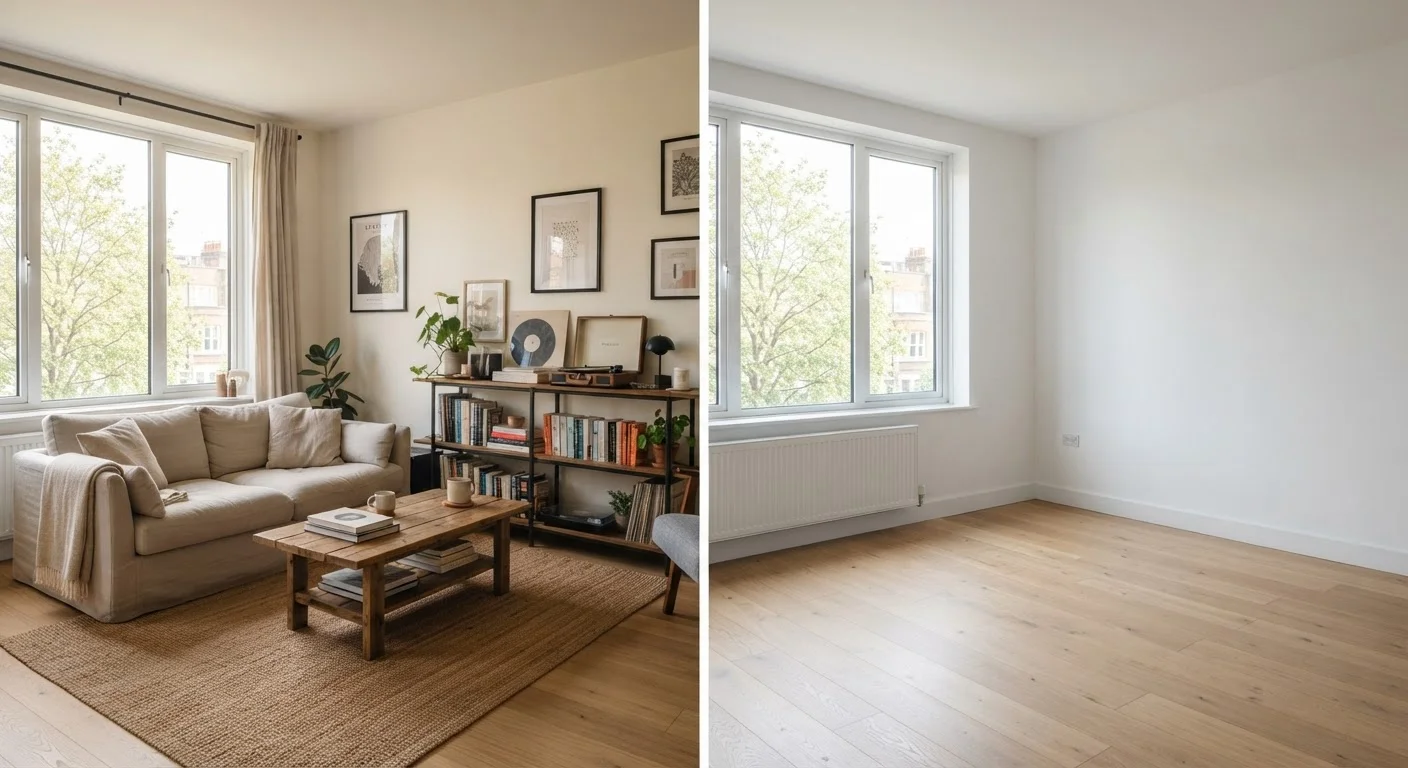
Photo credit: SearchLynk.net | Search Made Easier
In this article
Furnished apartments offer convenience; unfurnished ones offer flexibility. Here's how to think through the cost and lifestyle differences.
Key Takeaways
- Furnished rentals typically cost 15-30% more per month than comparable unfurnished units.
- Furnished apartments suit short-term stays, relocations, and renters who prefer minimal setup.
- Unfurnished rentals offer more control over your living space and often lower monthly costs.
- Security deposits for furnished units tend to be higher due to the value of included items.
- Your lease length, lifestyle, and moving budget are the key factors in this decision.
Move-in ready with no furniture sourcing required
Furnished rentals allow you to move in with just your personal belongings, eliminating the time and logistics of buying, transporting, and assembling furniture - especially valuable for cross-country or last-minute moves.
Lower upfront cash outlay for furniture
Renters avoid the several-thousand-dollar cost of furnishing an apartment from scratch, which can ease cash flow during an already-expensive move-in period.
Practical for short-term or uncertain lease lengths
When your timeline is six months or less, or you're unsure how long you'll stay, a furnished unit avoids the burden of storing or reselling furniture when you leave.
Simpler logistics when relocating frequently
Renters who move every year or two for work or personal reasons save significantly on moving costs and the hassle of transporting large items across states.
Higher monthly rent adds up over time
The 15-30% premium on furnished units becomes a significant figure over a twelve-month lease - money that could instead go toward buying your own furniture and building equity in your possessions.
Limited ability to personalize your space
Furnished units often include fixed furniture arrangements and aesthetics you didn't choose, making it harder to create a home environment that reflects your preferences.
Higher or more complex security deposits
Landlords may charge elevated deposits to cover the value of furnishings, and end-of-lease disputes over normal wear and tear on furniture can be harder to resolve than disputes over bare walls or floors.
Furniture quality is outside your control
The mattress, sofa, and dining set you live with are chosen by the landlord - and may be worn, low quality, or mismatched with your comfort needs.
What Each Option Actually Includes
The terms "furnished" and "unfurnished" cover a wide spectrum in practice, and landlords don't use them consistently. A furnished rental typically includes essential furniture - a bed frame and mattress, sofa, dining table and chairs, and basic appliances beyond a standard kitchen setup (such as a microwave or coffee maker). Some furnished units go further, providing linens, cookware, and even wall art. Others include only large pieces.
Unfurnished rentals, by contrast, typically come with built-in appliances like a refrigerator, oven, and sometimes a dishwasher or washer/dryer hookups - but nothing more. You bring, buy, or arrange everything else.
Because definitions vary, it's worth asking any prospective landlord for a complete inventory list before signing. This protects both parties: you know what you're getting, and the landlord has a documented baseline for the security deposit. If you're also working through the broader rent-or-own question, see this framework for thinking it through.
The Financial Picture: Upfront Costs vs. Monthly Outlays
Cost is usually the most immediate factor. Furnished rentals command a premium - often 15-30% above market rate for a comparable unfurnished unit in the same area - because landlords factor in depreciation, maintenance, and replacement of furniture and housewares. That premium can add up quickly on a monthly basis.
15-30%
Typical furnished rental premium over unfurnished
Industry rental market data consistently shows furnished units command this range above comparable unfurnished units in the same building or neighborhood.
$3,000-$5,000+
Estimated cost to furnish a one-bedroom from scratch
Costs vary widely by market and quality level, but this range reflects mid-range furnishings for a basic one-bedroom apartment in a US metro area.
Unfurnished rentals carry a lower monthly cost but require a larger upfront investment. Outfitting a one-bedroom apartment with basic furniture can cost several thousand dollars depending on quality and location. Renters who already own furniture, or who are moving from a previous home, absorb that cost once - and it travels with them. Those starting from scratch may find the gap between furnished and unfurnished costs narrower than it first appears over a six-month horizon.
Security deposits also differ. Furnished unit deposits are often higher - sometimes covering the estimated replacement value of included items - which affects the cash you need to move in.
Pros and Cons at a Glance
Understanding the full picture requires weighing both sides of the ledger. Here are the core advantages and drawbacks of furnished rentals.
Move-in ready with no furniture sourcing required
Furnished rentals allow you to move in with just your personal belongings, eliminating the time and logistics of buying, transporting, and assembling furniture - especially valuable for cross-country or last-minute moves.
Lower upfront cash outlay for furniture
Renters avoid the several-thousand-dollar cost of furnishing an apartment from scratch, which can ease cash flow during an already-expensive move-in period.
Practical for short-term or uncertain lease lengths
When your timeline is six months or less, or you're unsure how long you'll stay, a furnished unit avoids the burden of storing or reselling furniture when you leave.
Simpler logistics when relocating frequently
Renters who move every year or two for work or personal reasons save significantly on moving costs and the hassle of transporting large items across states.
Higher monthly rent adds up over time
The 15-30% premium on furnished units becomes a significant figure over a twelve-month lease - money that could instead go toward buying your own furniture and building equity in your possessions.
Limited ability to personalize your space
Furnished units often include fixed furniture arrangements and aesthetics you didn't choose, making it harder to create a home environment that reflects your preferences.
Higher or more complex security deposits
Landlords may charge elevated deposits to cover the value of furnishings, and end-of-lease disputes over normal wear and tear on furniture can be harder to resolve than disputes over bare walls or floors.
Furniture quality is outside your control
The mattress, sofa, and dining set you live with are chosen by the landlord - and may be worn, low quality, or mismatched with your comfort needs.
For renters focused on home organization, it's worth noting that furnished units can sometimes limit how you organize or store belongings - the existing furniture layout may not match your preferred flow.
Who Should Lean Toward Each Option
Furnished rentals make the most sense when your situation is fluid. Corporate relocation, a work assignment lasting six to twelve months, a gap between selling one home and buying another, or a move to a new city before you've decided on a neighborhood - these are all scenarios where paying a monthly premium for immediate livability is rational. Students studying abroad or in temporary graduate programs often land in furnished rentals for similar reasons.
Negotiating Partial Furnishing
Some landlords are open to hybrid arrangements - renting an unfurnished unit but leaving behind specific items like a washer/dryer, window treatments, or built-in shelving. If you find a unit that's almost right, it's worth asking whether any items can be included or excluded before assuming the listing is fixed. Get any agreed inclusions or exclusions documented in writing as part of your lease.
Unfurnished rentals are a stronger fit for renters who have a stable timeline - typically a year or more - and who already own furniture or are willing to invest in it. The ability to personalize your space, select your own furniture quality, and avoid paying monthly depreciation on someone else's sofa adds up to meaningful value over time. If you're comparing the broader financial calculus of renting versus owning, this breakdown of financial trade-offs can provide useful context.

Author
Real Estate Editorial Team
Real Estate Editorial Team is the collective byline for our editorial team and contributor network. Articles published under this byline or an editorial pen name are researched, written, and reviewed according to our editorial standards for clarity, consistency, and independence before publication.
View all articles →