
Whole Grains vs. Refined Grains: What Changes When Wheat Gets Processed
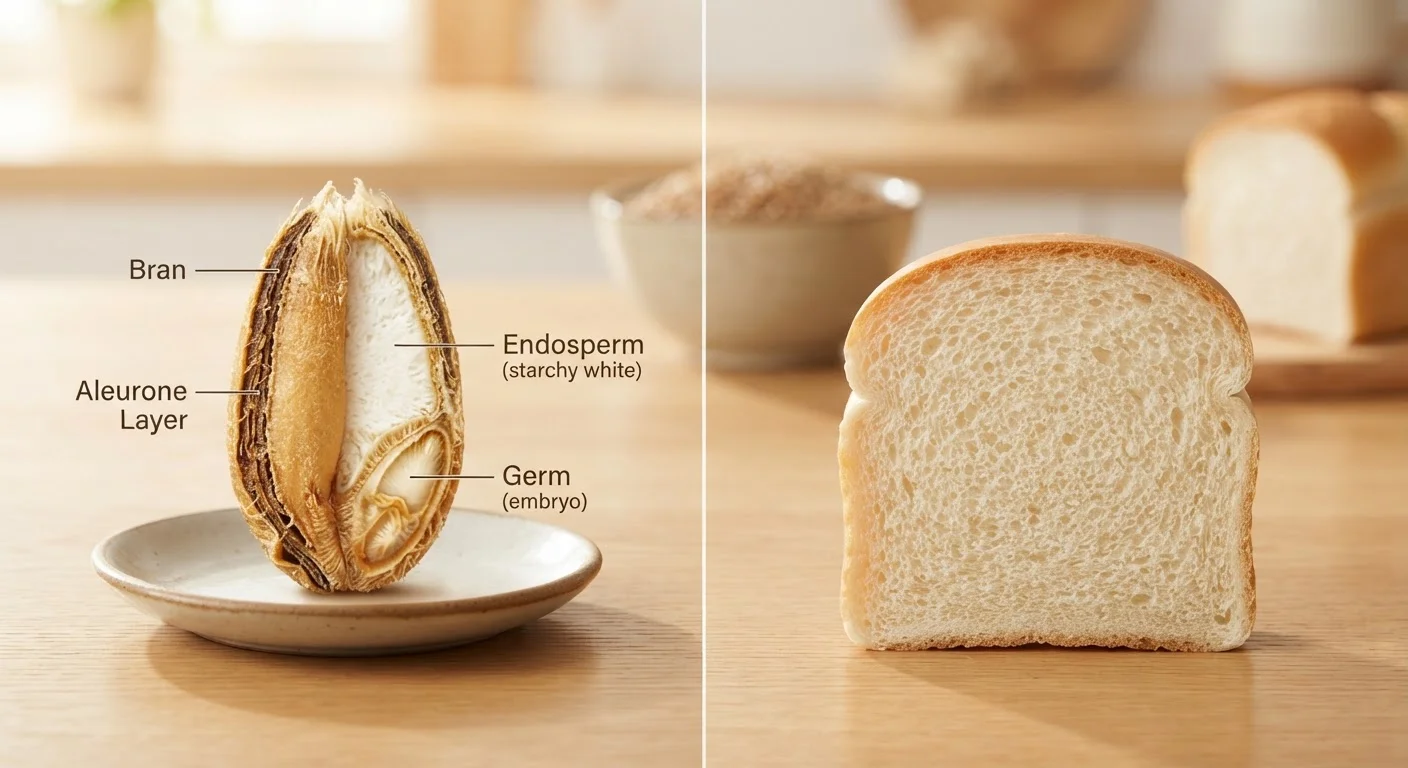
Photo credit: SearchLynk.net | Search Made Easier
In this article
White bread and whole wheat start from the same grain. Here's what's stripped away during refining and why it matters for your diet.
Key Takeaways
- Whole grains retain the bran, germ, and endosperm; refined grains keep only the starchy endosperm.
- Milling removes a significant portion of fiber, B vitamins, iron, and beneficial plant compounds.
- Many refined grain products are enriched, but enrichment replaces only select nutrients - not all of them.
- Dietary guidelines generally recommend making at least half of daily grains whole grains.
- Neither grain type is inherently toxic; context, variety, and overall diet pattern matter most.
What Happens Inside the Mill
Every wheat kernel - whether it ends up as whole wheat flour or white flour - begins as three distinct layers: the bran, the germ, and the endosperm. Together, these form what nutritionists call the "whole grain."
Refining, or milling, is the industrial process that strips away the outer bran layer and the nutrient-dense germ, leaving behind almost exclusively the starchy endosperm. That endosperm is what gives white flour its fine texture and long shelf life - bran and germ contain oils that can go rancid more quickly, making whole grain products less shelf-stable than their refined counterparts.
What gets lost in that process is substantial. The bran provides the majority of a grain's dietary fiber along with B vitamins like niacin and thiamine. The germ concentrates vitamin E, additional B vitamins, healthy fats, and a range of minerals including magnesium and zinc. Research published in nutrition literature consistently shows that these components are associated with favorable health outcomes when consumed as part of a varied diet.
Comparing the Two: A Nutritional Breakdown
To put the difference in concrete terms, consider whole wheat bread versus standard white bread. A single slice of whole wheat bread typically delivers two to three grams of fiber, while a comparable slice of white bread may contain less than one gram. Over a full day of eating, those differences add up significantly.
| Criterion | Whole Grains | Refined Grains |
|---|---|---|
| Grain layers present | Bran, germ, and endosperm | Endosperm only |
| Dietary fiber | High | Low (unless added) |
| B vitamins | Naturally present | Mostly removed; some added back |
| Vitamin E | Present (from germ) | Largely absent |
| Minerals (magnesium, zinc) | Good natural source | Significantly reduced |
| Glycemic index (typical) | Lower | Higher |
| Shelf stability | Shorter (natural oils present) | Longer |
| Texture | Denser, heartier | Lighter, finer |
It's worth noting that most refined grain products sold in the United States are enriched - meaning manufacturers add back certain B vitamins (thiamine, riboflavin, niacin, and folic acid) and iron after milling. Enrichment is a meaningful public health measure; it has historically helped reduce nutrient deficiency diseases. However, enrichment does not restore fiber, vitamin E, magnesium, zinc, potassium, or the phytochemicals naturally present in the bran and germ.
How Refining Affects Blood Sugar and Satiety
One functional difference between whole and refined grains is how each is digested and absorbed. The fiber in whole grains slows the digestion of starch, which moderates the rate at which glucose enters the bloodstream. Refined grains, having lost most of that fiber, tend to digest more quickly.
This distinction is captured in a concept called the glycemic index (GI) - a measure of how rapidly a food raises blood sugar relative to a reference food. Whole grain versions of foods generally score lower on the glycemic index than their refined counterparts, though the GI of any food changes depending on preparation method, portion size, and what else is eaten alongside it.
Glycemic Index Has Limits as a Tool
The glycemic index is a useful reference point but not a complete guide to food quality. It measures individual foods in isolation, but most people eat meals - combinations of foods that collectively affect digestion and blood sugar. Fat, protein, and acid (like vinegar or lemon juice) all slow starch absorption. Use GI as one data point among many, not a definitive ranking system.
From a satiety standpoint, fiber absorbs water and adds bulk to food, which can contribute to a feeling of fullness. This is one reason dietary guidance often points to whole grains as a practical tool for managing overall food intake - though individual responses vary and no food functions as a guaranteed appetite regulator.
Making Practical Sense of the Difference
The U.S. Dietary Guidelines for Americans recommend that at least half of all grains consumed be whole grains. Common whole grain options include oats, brown rice, whole wheat bread and pasta, bulgur, farro, and popcorn. A product labeled "whole grain" should list a whole grain as the first ingredient on its nutrition label - terms like "wheat flour" or "enriched flour" without the word "whole" indicate a refined product.
95%
Americans falling short of whole grain targets
According to the Whole Grains Council, an estimated 95% of Americans do not meet the recommended daily intake of whole grains.
25-38g
Recommended daily dietary fiber intake
The Academy of Nutrition and Dietetics recommends 25 grams per day for adult women and 38 grams for adult men, with whole grains as a key contributor.
Refined grains are not inherently harmful. They are a global staple and provide accessible calories and some nutrients, particularly when enriched. The concern in standard American eating patterns is one of proportion: most Americans consume far more refined grains than whole grains, missing out on cumulative fiber and micronutrient benefits over time.
Transitioning toward more whole grains does not require dramatic dietary changes. Gradual substitutions - mixing whole wheat pasta with regular pasta, choosing oatmeal over a refined cereal, or swapping white rice for brown - can shift overall diet quality without disrupting familiar eating habits.
This article provides general nutritional education and is not a substitute for personalized medical or dietary advice. Consult a registered dietitian or qualified healthcare professional before making significant changes to your diet, especially if you have an existing health condition.

Author
Health & Wellness Editorial Team
Health & Wellness Editorial Team is the collective byline for our editorial team and contributor network. Articles published under this byline or an editorial pen name are researched, written, and reviewed according to our editorial standards for clarity, consistency, and independence before publication.
View all articles →