
Sugar by Any Other Name: A Field Guide to Added Sugars on Ingredient Lists
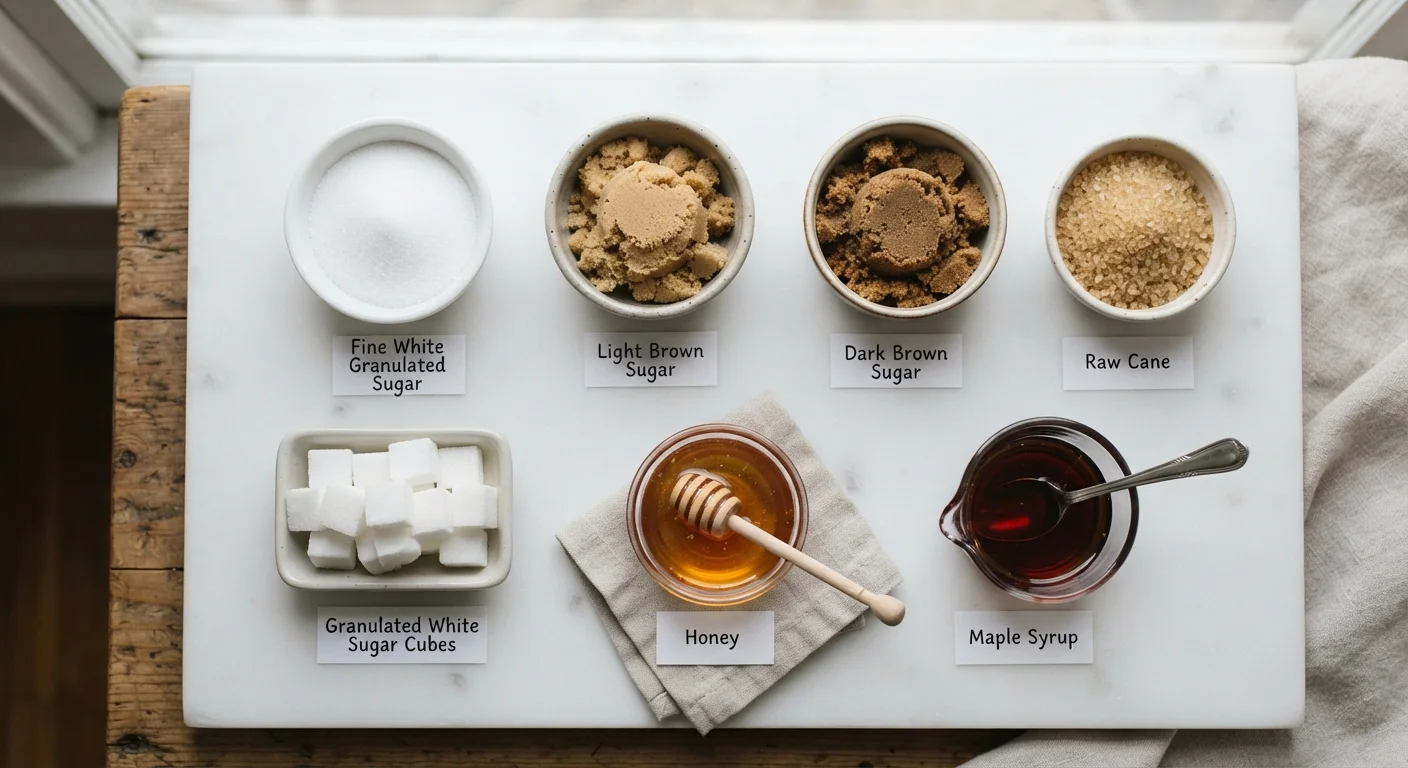
Photo credit: SearchLynk.net | Search Made Easier
In this article
High-fructose corn syrup, dextrose, agave nectar — learn the many names for added sugar so you can spot them on any label.
Why Added Sugar Hides in Plain Sight
Food manufacturers are not required to list all sweeteners under one umbrella term. Instead, each sweetener appears by its own chemical or commercial name - which means a single product can contain four or five different sugars while none of them appears high on the ingredient list. Because ingredients are listed in descending order by weight, spreading sugar across multiple names keeps any one sweetener from rising to the top.
The FDA's Nutrition Facts label now includes a dedicated "Added Sugars" line, expressed in grams and as a percentage of the Daily Value. That line is your fastest checkpoint - but reading the ingredient list tells you which sugars are present and how processed they are.
| Added Sugars Line on Label | Required on U.S. Nutrition Facts panels since 2020 (FDA Food Labeling Rule, 2016 (phased implementation)) |
| Estimated Number of Sugar Aliases | 60+ names (Commonly cited by nutrition researchers and dietitians) |
| Daily Value for Added Sugars | 50 grams per day (2,000-calorie diet) (FDA Nutrition Facts label reference) |
| AHA Suggested Limit (Women) | ≤ 25 grams per day (American Heart Association dietary guidelines) |
| AHA Suggested Limit (Men) | ≤ 36 grams per day (American Heart Association dietary guidelines) |
| Ingredient List Order | Listed by weight, highest to lowest (FDA labeling regulations) |
The Master List: Added Sugar Aliases
The following categories cover the most common names you will encounter. When any of these appear in an ingredient list, they represent added sugar - calories with little to no accompanying nutritional value.
Added Sugar
Any sugar or sweetener that is added to a food or beverage during processing or preparation, as opposed to sugars that occur naturally in whole foods like fruit or milk.
High-Fructose Corn Syrup (HFCS)
A liquid sweetener made by converting glucose in corn syrup into fructose. It is widely used in processed foods and beverages because it is inexpensive and mixes easily into liquids.
Dextrose
A common commercial name for glucose, the simplest sugar molecule. It is used in baked goods, cereals, and sports drinks and is metabolized quickly by the body.
Fructose
A simple sugar found naturally in fruit. When extracted and added to processed foods in isolated form, it functions as an added sugar and is metabolized differently than glucose.
Invert Sugar
Sucrose that has been broken down into equal parts glucose and fructose. It retains moisture well, making it popular in baked goods and confections.
Fruit Juice Concentrate
Juice from which most of the water has been removed, leaving a highly concentrated sugar solution. When used as an ingredient, it acts as an added sweetener despite its fruit origin.
Agave Nectar
A sweetener derived from the agave plant, often marketed as a healthier alternative to sugar. It contains a high proportion of fructose and is still classified as an added sugar.
Molasses
A thick, dark byproduct of sugar refining that retains some minerals. Despite this, it is still an added sugar and contributes meaningfully to total sugar intake.
Syrups and Liquid Sweeteners
- High-fructose corn syrup (HFCS) - a liquid sweetener derived from corn starch; widely used in soft drinks, bread, and condiments.
- Corn syrup - a glucose-heavy syrup; less sweet than HFCS but still an added sugar.
- Agave nectar / agave syrup - marketed as a natural alternative, but very high in fructose.
- Brown rice syrup - made by breaking down rice starch; predominantly glucose.
- Maple syrup, molasses, cane syrup, refiners' syrup - all concentrated sugar sources regardless of trace minerals.
- Malt syrup, barley malt syrup - derived from germinated grains; still added sugar.
Granulated and Crystallized Forms
- Sucrose - table sugar; a molecule of glucose bonded to fructose.
- Dextrose - another name for glucose; used in baked goods and sports drinks.
- Fructose - fruit sugar in isolated form; often used in processed foods separate from whole fruit.
- Maltose - two glucose units bonded together; found in malted products.
- Turbinado, demerara, muscovado, raw sugar - less-refined cane sugars; nutritionally similar to white sugar.
- Coconut sugar, palm sugar, date sugar - minimally processed alternatives; still metabolized as sugar.
- Beet sugar, cane sugar, invert sugar - functionally identical to sucrose in the body.
Honey and Concentrated Fruit
- Honey - natural but still an added sugar when incorporated into processed food.
- Fruit juice concentrate - stripped of fiber and many nutrients; acts as a liquid sugar in formulations.
- Dried fruit paste or puree used as sweetener - the whole-food benefit is largely lost when used purely for sweetness.
How to Use This Knowledge at the Store
Start with the Nutrition Facts panel. If the "Added Sugars" line shows 10 grams or more per serving, that product deserves closer inspection regardless of what the front of the package claims. The American Heart Association generally suggests limiting added sugars to no more than 25 grams per day for women and 36 grams for men, though individual needs vary - always discuss dietary targets with a healthcare provider or registered dietitian.
Next, scan the ingredient list for any name from the glossary above. Pay attention to how many different sugar aliases appear; multiple entries signal that the manufacturer has distributed sweeteners across several ingredients to dilute their individual ranking.
Finally, be skeptical of front-of-package health claims. Terms like "naturally sweetened," "no refined sugar," or "sweetened with fruit" do not mean a product is low in added sugar - they simply indicate which type of sweetener was chosen.
"Natural" Doesn't Mean Low in Sugar
Sweeteners like honey, maple syrup, coconut sugar, and agave nectar are often perceived as healthier because they are less processed. While they may contain trace minerals, the body metabolizes their sugars in largely the same way as refined white sugar. The FDA counts all of these as added sugars on the Nutrition Facts label. Choosing one over another is a matter of preference or flavor, not a significant health distinction for most people.
This article is for general informational and educational purposes only and does not constitute medical or dietary advice. Consult a qualified healthcare professional or registered dietitian for guidance tailored to your individual health needs.

Author
Health & Wellness Editorial Team
Health & Wellness Editorial Team is the collective byline for our editorial team and contributor network. Articles published under this byline or an editorial pen name are researched, written, and reviewed according to our editorial standards for clarity, consistency, and independence before publication.
View all articles →