
The Science Behind Why Sleep Deprivation Hits So Hard
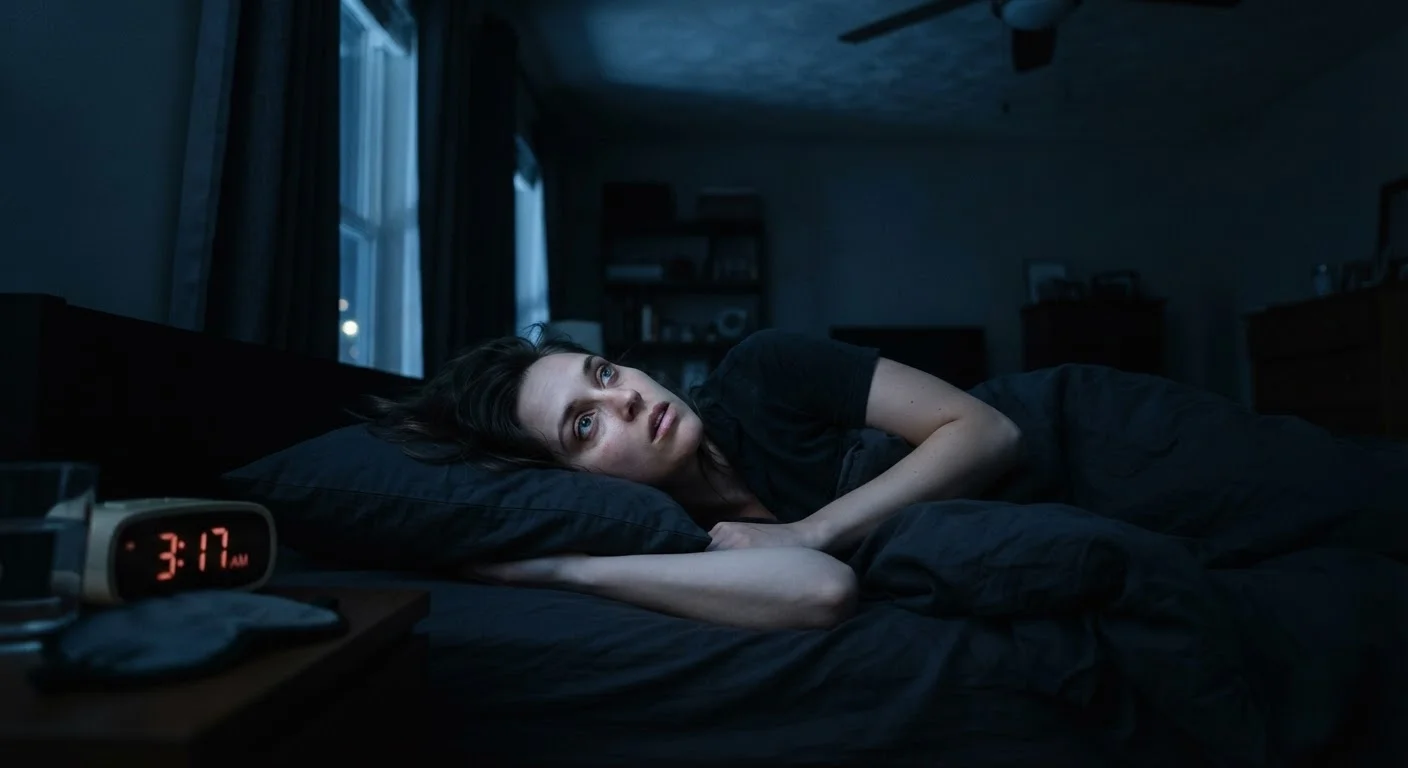
Photo credit: SearchLynk.net | Search Made Easier
In this article
Poor sleep does more than make you tired. Explore how sleep deprivation disrupts mood, memory, decision-making, and emotional regulation.
Key Takeaways
- Sleep deprivation impairs memory consolidation, decision-making, and emotional regulation simultaneously.
- Even losing one to two hours of sleep per night can accumulate into significant cognitive deficits over days.
- The brain's prefrontal cortex - responsible for judgment - is especially vulnerable to sleep loss.
- Sleep deprivation and chronic stress share overlapping biological pathways that can reinforce each other.
- Consistent sleep hygiene practices are among the most evidence-supported strategies for protecting mental wellness.
What Happens in the Brain When You Don't Sleep Enough
Sleep is not passive downtime - it is a period of intense neurological activity. During sleep, the brain cycles through distinct stages, including deep slow-wave sleep and rapid eye movement (REM) sleep, each serving critical functions. When those cycles are cut short, the consequences extend far beyond grogginess.
One of the most significant processes during sleep is memory consolidation. The hippocampus - a structure central to learning and memory - transfers new information into longer-term storage during sleep. Without adequate rest, this transfer is disrupted, which is why cramming the night before an exam is demonstrably less effective than reviewing material followed by a full night's sleep.
The glymphatic system - the brain's waste-clearance network - is also primarily active during sleep. Research published in journals such as Science has suggested that this system flushes out metabolic byproducts that accumulate during waking hours. Disrupted sleep may impair this process, though the long-term implications are still an active area of research.
1 in 3
U.S. adults regularly sleep less than 7 hours
According to the Centers for Disease Control and Prevention (CDC), insufficient sleep is considered a public health concern in the United States.
~24 hrs
Equivalent impairment from 6 hrs/night for 10 days
Research by David Dinges and colleagues at the University of Pennsylvania found that 10 days of six-hour sleep produced deficits comparable to total sleep deprivation for 24 hours.
40%
Reduction in memory consolidation after poor sleep
Studies from the University of California, Berkeley found that sleep deprivation significantly reduced the hippocampus's ability to form new memories compared to well-rested participants.
The Prefrontal Cortex: Your Brain's First Casualty
The prefrontal cortex (PFC) - the region governing judgment, impulse control, planning, and rational thought - is particularly sensitive to sleep loss. Studies using functional neuroimaging have shown that even one night of restricted sleep measurably reduces activity in this region.
This matters enormously for daily functioning. A fatigued PFC means decisions feel harder, risks seem less obvious, and short-term rewards become disproportionately appealing. This is partly why sleep-deprived people are more prone to poor financial choices, overeating, and impulsive reactions in interpersonal situations.
Compounding this, the amygdala - the brain's threat-detection center - becomes hyperreactive when the PFC isn't properly regulating it. Sleep-deprived individuals show significantly amplified emotional responses to negative stimuli, a phenomenon well-documented in cognitive neuroscience research. The feeling that everything is worse when you're exhausted isn't just subjective - it reflects measurable changes in brain circuitry.
“Sleep is the single most effective thing we can do to reset our brain and body health each day - Mother Nature's best effort yet at contra-death.”
— Matthew Walker, Professor of Neuroscience and Psychology, University of California, Berkeley, and author on sleep science
The Stress Connection: A Reinforcing Cycle
Sleep deprivation and stress share overlapping biological pathways, and they can easily become mutually reinforcing. Poor sleep elevates cortisol - the primary stress hormone - and elevated cortisol in turn makes it harder to fall or stay asleep. Over time, this loop can escalate from occasional restless nights into a more entrenched pattern.
For a deeper look at how sustained physiological stress compounds over time, see our article on what chronic stress actually does to your body and mind. The mechanisms described there - including HPA axis dysregulation and inflammatory signaling - overlap significantly with those activated by chronic sleep loss.
Sleep deprivation also suppresses immune function, affects insulin sensitivity, and disrupts appetite-regulating hormones like leptin and ghrelin. These effects don't require total sleep loss - even consistently getting six hours instead of eight can trigger measurable changes over a week or more.
Practical Strategies to Protect Your Sleep
Understanding the science of sleep deprivation makes the case for treating sleep as a non-negotiable health priority - not a luxury. Several evidence-supported behavioral strategies can meaningfully improve sleep quality over time.
- Consistent sleep and wake times: Your circadian rhythm - the internal biological clock that regulates sleepiness and alertness - responds strongly to schedule regularity. Even on weekends, keeping timing consistent helps anchor this rhythm.
- Managing light exposure: Bright light, particularly blue-spectrum light from screens, suppresses melatonin production in the evening. Dimming screens and lights in the hour before bed signals the brain that sleep is approaching.
- Temperature and environment: Core body temperature naturally drops during sleep onset. A cooler sleep environment generally supports this process and improves sleep depth.
- Limiting stimulants strategically: Caffeine has a half-life of roughly five to seven hours in most adults, meaning an afternoon coffee can still meaningfully affect sleep architecture at bedtime.
If you experience disrupted sleep following travel across time zones, the biology of circadian misalignment also plays a central role. Our jet lag science guide outlines evidence-based recovery strategies relevant to understanding how powerfully timed light, food, and activity can reset your internal clock.
This article is for general informational and educational purposes only and does not constitute medical advice. If you are experiencing persistent sleep difficulties, please consult a qualified healthcare professional.
Frequently Asked Questions

Author
Health & Wellness Editorial Team
Health & Wellness Editorial Team is the collective byline for our editorial team and contributor network. Articles published under this byline or an editorial pen name are researched, written, and reviewed according to our editorial standards for clarity, consistency, and independence before publication.
View all articles →