
Mindfulness vs. Meditation: Two Practices Worth Telling Apart
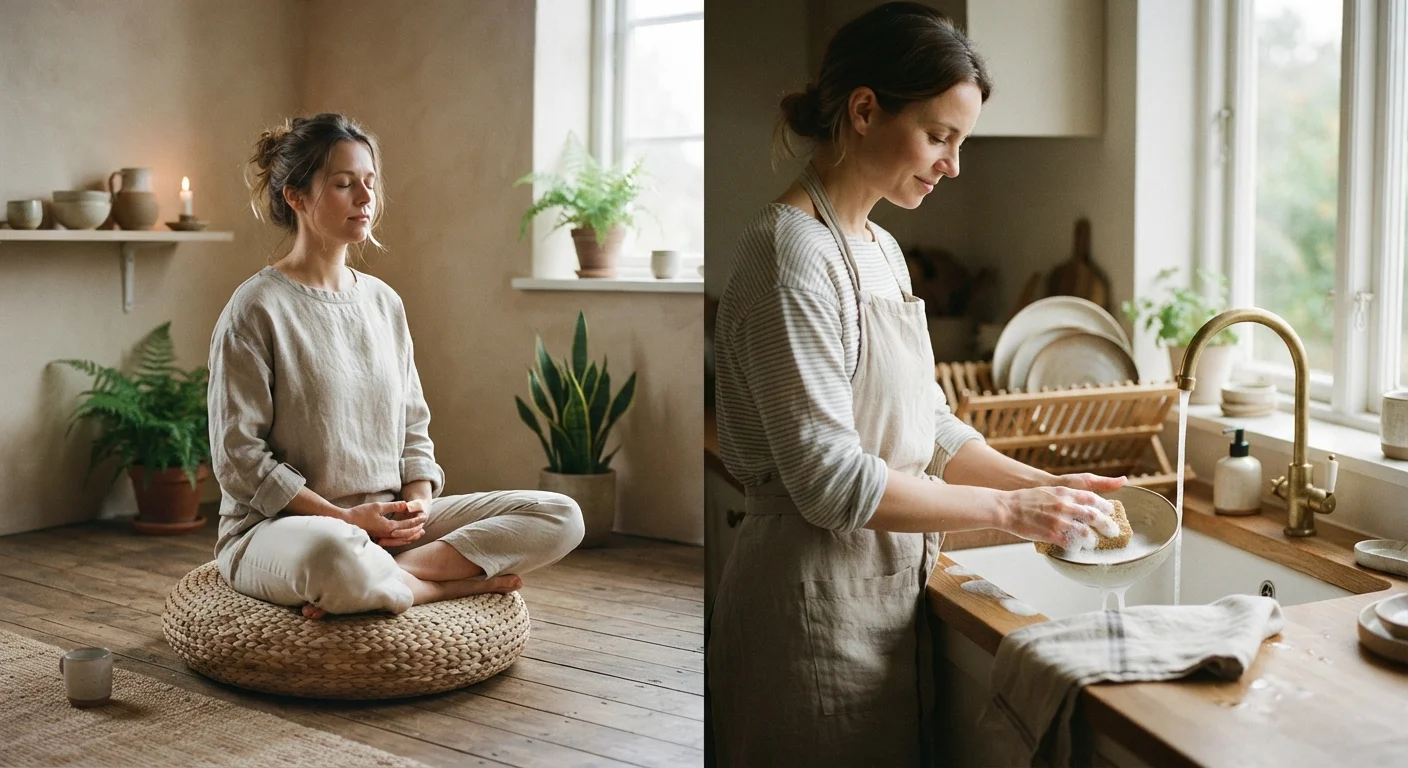
Photo credit: SearchLynk.net | Search Made Easier
In this article
Mindfulness and meditation are often used interchangeably, but they aren't the same thing. Here's how they differ and what each actually involves.
Key Takeaways
- Mindfulness is a mental quality - present-moment, non-judgmental awareness - not a technique.
- Meditation is a formal practice; many (but not all) forms use mindfulness as their foundation.
- You can be mindful while doing everyday tasks; meditation typically requires setting aside dedicated time.
- Neither replaces professional mental health care when that level of support is needed.
- Both practices have meaningful evidence behind them, though the research quality varies by application.
The Core Distinction: Quality vs. Practice
The terms mindfulness and meditation are used interchangeably so often that many people assume they mean the same thing. They don't - and understanding the difference can help you choose the right approach for your goals.
Mindfulness is a mental quality: the ability to pay deliberate, non-judgmental attention to what is happening right now. It is something you can bring to almost any activity - eating, listening to a colleague, or even folding laundry. You don't need a cushion, an app, or a quiet room. You need only the intention to notice your present experience without immediately reacting to or evaluating it.
Meditation, by contrast, is a set of structured practices - deliberate exercises performed with the specific purpose of training the mind. Many meditation techniques use mindfulness as their core mechanism (focusing on the breath, body sensations, or sounds, for example), but meditation also encompasses practices that are not primarily mindfulness-based, such as loving-kindness meditation, visualization, mantra repetition, or certain forms of concentration practice.
A useful shorthand: mindfulness is a skill or quality; meditation is a method for developing it (among other things). You can be mindful without meditating. You can also meditate in ways that don't emphasize mindfulness at all. For a broader look at mental health vocabulary, see plain-language mental health terms.
| Criterion | Mindfulness | Meditation |
|---|---|---|
| What it is | A quality of present-moment awareness | A structured mental training practice |
| Requires dedicated time | No - woven into daily activity | Yes - typically a set-aside session |
| Requires specific technique | No formal technique needed | Yes - breath, body scan, mantra, etc. |
| Primary goal | Non-judgmental present awareness | Varies: focus, calm, insight, compassion |
| Always uses mindfulness? | It is mindfulness | Not necessarily - depends on technique |
| Entry barrier | Very low | Low to moderate |
| Clinical research base | Growing, especially in MBSR programs | Moderate, varies by technique |
What the Evidence Actually Shows
Both practices have attracted meaningful scientific attention, though the strength of the evidence varies considerably depending on the specific application and the quality of the study design.
Mindfulness-based interventions - particularly MBSR, an eight-week structured program developed at the University of Massachusetts Medical School - have accumulated a substantial body of research. Reviews published in journals such as JAMA Internal Medicine and Psychological Medicine have found evidence of benefit for anxiety, depression, and pain, though researchers frequently note that many individual studies have methodological limitations.
Informal mindfulness practice (the kind woven into daily tasks) is less studied but is generally considered a low-risk complement to other wellness strategies. Meditation research is similarly promising but similarly nuanced: effect sizes are often modest, and comparison-controlled trials remain relatively rare.
~14%
U.S. adults who meditate regularly
According to a 2017 National Health Interview Survey, roughly 14% of American adults reported meditating in the past 12 months, up from about 4% in 2012.
8 weeks
Standard MBSR program length
Mindfulness-Based Stress Reduction, one of the most researched mindfulness interventions, is structured as an eight-week program with weekly group sessions and daily home practice.
~0.4
Typical effect size for mindfulness on anxiety
A 2014 meta-analysis in JAMA Internal Medicine found a moderate effect size (around 0.4) for mindfulness programs on anxiety and depression symptoms across multiple trials.
The practical takeaway is that both practices have genuine support behind them - neither is pseudoscience - but neither is a cure-all. They work best as part of a broader approach to mental well-being. For habits that complement these practices, explore daily habits for a calmer mind.
Choosing Between Them - and Knowing When to Seek More
Deciding whether to focus on mindfulness, meditation, or both depends largely on your lifestyle, goals, and current mental health needs.
If carving out dedicated time each day feels unrealistic, starting with informal mindfulness is both practical and evidence-informed. Pause before responding to an email. Notice the temperature of your coffee. Take three deliberate breaths at a red light. These micro-practices build the attentional muscle that formal meditation later deepens.
If you prefer a structured system - or if you want to work toward a specific outcome, such as better sleep or less reactive behavior under stress - a defined meditation practice, ideally guided at first, gives you clear form and progression. Many people find that one naturally leads to the other over time.
Importantly, neither mindfulness nor meditation is a substitute for professional mental health care. If you're experiencing persistent anxiety, depression, trauma responses, or other significant symptoms, these practices can be valuable alongside appropriate professional support - not instead of it. For guidance on when self-directed strategies are enough and when professional help is warranted, see therapy vs. self-help.
This article is for general informational and educational purposes only. It is not a substitute for professional medical or mental health advice, diagnosis, or treatment. If you have concerns about your mental health, please consult a qualified healthcare professional.

Author
Health & Wellness Editorial Team
Health & Wellness Editorial Team is the collective byline for our editorial team and contributor network. Articles published under this byline or an editorial pen name are researched, written, and reviewed according to our editorial standards for clarity, consistency, and independence before publication.
View all articles →