
Building a Monthly Budget That You'll Actually Stick To
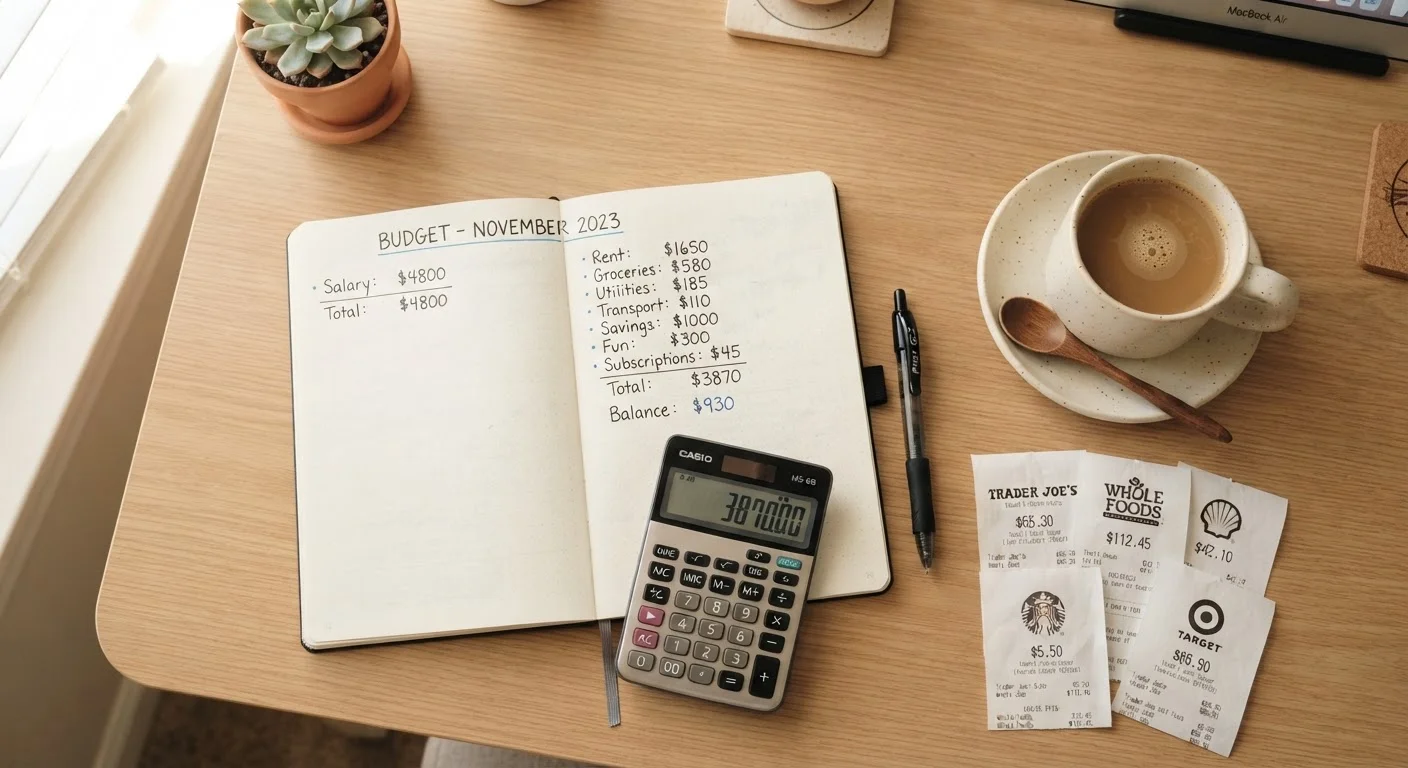
Photo credit: SearchLynk.net | Search Made Easier
In this article
A practical, step-by-step walkthrough for creating a monthly budget around your real income, fixed bills, and everyday spending habits.
Key Takeaways
- Start with your actual take-home pay, not gross income, to set realistic spending limits.
- Separate fixed expenses from variable ones so you know where you have flexibility.
- Assign every dollar a job - including savings - before the month begins.
- Build in a small buffer for irregular costs so surprises don't derail the whole plan.
- Review and adjust your budget monthly; rigid plans are more likely to fail.
Why Most Budgets Break Down Early
Most people don't fail at budgeting because they lack discipline. They fail because they start with unrealistic numbers - income that's overstated, expenses that are underestimated, and no room for the unpredictable costs that come every single month. A budget built on wishful thinking won't survive contact with real life.
The goal of this guide is to help you build a plan grounded in your actual financial picture: real take-home pay, real spending history, and real room for error. If you're new to budgeting entirely, our foundational budgeting overview provides helpful context before you dive into the steps here.
This Is General Financial Education
This article provides general budgeting information for educational purposes only. It is not personalized financial, tax, or investment advice. For guidance specific to your situation, consult a qualified financial professional.
Once you've built your budget, sustaining it long-term is its own skill. Our articles on why budgets fall apart by week two and habits that support lasting money management are useful next reads.
What You'll Need Before You Start
Gathering the right information upfront saves time and makes your budget far more accurate. You don't need any specialized software - a notebook and a calculator work fine. That said, if you're weighing whether to track manually or use an app, it's worth understanding the trade-offs. See our comparison of manual tracking vs. automatic budget apps for an honest look at both approaches.
What you will need
Bank or credit card statements
Reveals your real spending patterns across categories over recent months.
Spreadsheet software or notebook
Used to organize income, expense categories, and monthly totals in one place.
Budgeting app
Automates transaction tracking and can alert you when you approach a category limit.
Pay stubs or income records
Confirms your actual net monthly income as the foundation for all budget math.
Use a Simple Framework to Start
The 50/30/20 rule - 50% needs, 30% wants, 20% savings and debt repayment - is a reasonable starting point for many budgeters. Treat it as a rough guide, not a hard rule. Your numbers will likely look different, and that's fine.
Step-by-Step: Building Your Monthly Budget
Follow these steps in order. Each one builds on the last, and skipping ahead - particularly before you've established your real income and real spending history - tends to produce a budget that looks good on paper but doesn't hold up in practice.
Avoid Budgeting on Gross Income
A common mistake is planning around your gross (pre-tax) paycheck rather than your actual take-home pay. Doing so will almost always leave you short. Always use the net amount that lands in your account.
Calculate your real monthly take-home income
Add up every source of income you reliably receive each month - your paycheck after taxes and deductions, any consistent side income, or regular transfers from other sources. Use the net figure, not gross. If your income varies, use a conservative estimate based on your lowest recent months.
If you have an irregular income, this step requires extra care. See our guide to budgeting on an irregular income for strategies tailored to fluctuating pay.
List all fixed monthly expenses
Fixed expenses are the bills that stay the same every month: rent or mortgage, car payment, insurance premiums, minimum loan payments, and any fixed subscriptions. Write down the exact dollar amount for each. These are non-negotiable line items that come out first.
Add them up and subtract the total from your take-home income. What's left is your discretionary pool - the income available for variable spending and savings.
Track and categorize your variable spending
Pull two to three months of statements and categorize every transaction: groceries, dining out, gas, clothing, household supplies, personal care, entertainment, and so on. Calculate the monthly average for each category. These numbers reflect your actual habits - not what you think you spend.
This step is often eye-opening. Most people underestimate spending in at least one category, particularly dining out and convenience purchases.
Set realistic spending limits by category
Using your averages as a baseline, set a monthly target for each variable category. Be honest: if you've spent an average of $400 on groceries, a $150 target isn't a budget - it's a wish. Small reductions are sustainable; dramatic cuts often aren't.
The goal is a plan you can actually follow. For context on common budgeting frameworks, our introductory budgeting guide covers how to set spending limits from scratch.
Assign savings and debt repayment as fixed line items
Savings and any above-minimum debt payments should appear in your budget before discretionary spending - not as whatever is left over at month's end. Decide on a target amount, even if modest, and treat it as a bill you pay yourself first.
If you carry high-interest debt, consider how that fits into your overall plan. Our guide to building a budget around debt repayment walks through how to prioritize payments alongside other financial goals.
Add a buffer for irregular and unexpected costs
Car maintenance, medical copays, annual fees, and holiday gifts are predictable in type, even if not in exact timing. Build a modest monthly buffer - or use a sinking fund approach - to absorb these costs without wrecking your plan.
A sinking fund sets aside a small amount each month for known irregular expenses, so the money is ready when the bill arrives.
Review and adjust at the end of each month
At month's end, compare what you planned to what you actually spent. Identify any categories that ran over consistently - those limits need to be adjusted, not ignored. A budget is a living document; revise it until it reflects your real life.
For a structured way to do this review, our monthly financial health checklist covers what to look at each month, from account balances to progress toward savings goals.
If your financial situation involves life changes - a new job, growing family, or approaching retirement - budgeting priorities shift significantly. Our guide to budgeting at every stage of adult life covers how to adapt your approach over time.
This article is for general informational and educational purposes only. It does not constitute personalized financial, tax, or investment advice. Consult a qualified financial professional for guidance specific to your circumstances.

Author
Finance Editorial Team
Finance Editorial Team is the collective byline for our editorial team and contributor network. Articles published under this byline or an editorial pen name are researched, written, and reviewed according to our editorial standards for clarity, consistency, and independence before publication.
View all articles →